
Organic Gardening Guide
Grow food the natural way. Learn to build healthy soil, use organic fertilizers, control pests without chemicals, and create a thriving garden ecosystem that sustains itself year after year.
Core Principles of Organic Gardening
Organic gardening is a philosophy, not just a set of products to use.
Feed the Soil, Not the Plants
Build healthy soil biology first. Healthy soil = healthy plants = fewer pests.
Prevention Over Treatment
Use resistant varieties, crop rotation, and companion planting before reaching for any spray.
Work With Nature
Encourage beneficial insects, build biodiversity, and let natural systems maintain balance.
Close the Loop
Compost waste, save seeds, and minimize external inputs. The garden should become self-sustaining.
Natural & Organic Fertilizers
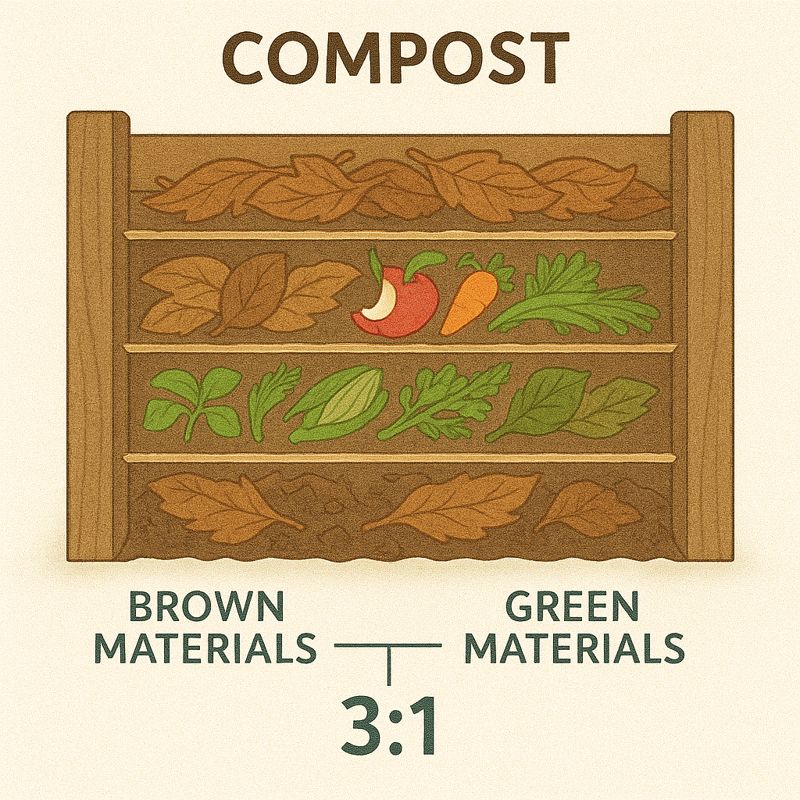
Proper layering is key to successful composting - alternate brown (carbon) and green (nitrogen) materials
Application: Work 1-2" into soil; side-dress during season
Best for: Everything - foundation of organic gardening
Application: Spray on leaves or drench soil every 2-4 weeks
Best for: Boosting plant health and disease resistance
Application: Dilute per label; apply every 2-4 weeks
Best for: Leafy greens, heavy feeders, quick boost
Application: Scratch into soil surface; water in
Best for: Nitrogen-hungry crops, correcting deficiency
Application: Mix into planting hole; slow release
Best for: Root crops, bulbs, flowering plants, tomatoes
Application: Foliar spray or soil drench
Best for: Transplant stress, overall plant health
Application: Mix into soil or top-dress
Best for: Seedlings, containers, all plants
Application: Add in fall; never use fresh
Best for: Building new beds, heavy feeders
What to Avoid
| Item | Why to Avoid |
|---|---|
| Synthetic fertilizers | Kill soil biology, cause nutrient runoff, create dependency |
| Synthetic pesticides | Kill beneficial insects, persist in environment, health concerns |
| Synthetic herbicides | Disrupt soil microbiome, persist in compost, health concerns |
| Treated seeds | Neonicotinoid coatings harm pollinators |
| Non-organic transplants | May contain systemic pesticides in plant tissue |
| Sewage sludge (biosolids) | May contain heavy metals, pharmaceuticals |
| GMO seeds | Not allowed in certified organic production |
Finding Organic Seeds & Supplies
- Johnny's Selected Seeds (organic section)
- High Mowing Organic Seeds
- Seed Savers Exchange
- Baker Creek Heirloom Seeds
- Fedco Seeds (organic section)
- Local seed libraries and swaps
Quick Organic Tips
Compost Tea Recipe
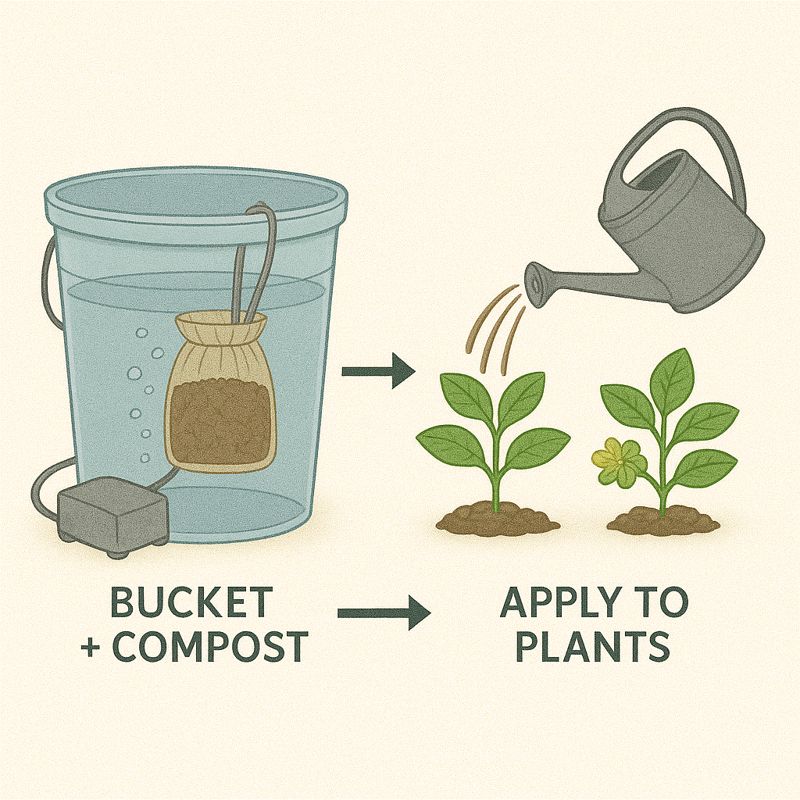
Follow these steps to brew nutrient-rich compost tea
- 1. Fill bucket 1/3 with finished compost
- 2. Add water to fill, stir well
- 3. Let steep 3-7 days, stirring daily
- 4. Strain through burlap
- 5. Dilute to tea color, spray or drench
Beneficial Insect Garden
Plant these to attract pest predators: