
Pruning & Training
Maximize your harvest with proper pruning techniques. Learn when and how to prune different crops, plus trellising systems for vertical growing.
Why Prune Your Vegetables?
Pruning isn't just for ornamental plants. Strategic pruning of vegetables can increase yields, improve fruit quality, reduce disease, and make harvesting easier. Combined with proper support systems, pruning transforms your garden into a highly productive growing space.
Improved Air Circulation
Reduces fungal diseases by allowing leaves to dry quickly
Better Light Penetration
Sunlight reaches more leaves for increased photosynthesis
Larger Fruits
Energy goes to fewer fruits, making each one bigger
Earlier Ripening
Concentrated energy means faster maturation
Tomato Pruning: The Complete Guide
Tomatoes benefit the most from pruning. Indeterminate (vining) tomatoes especially respond well to sucker removal and training.
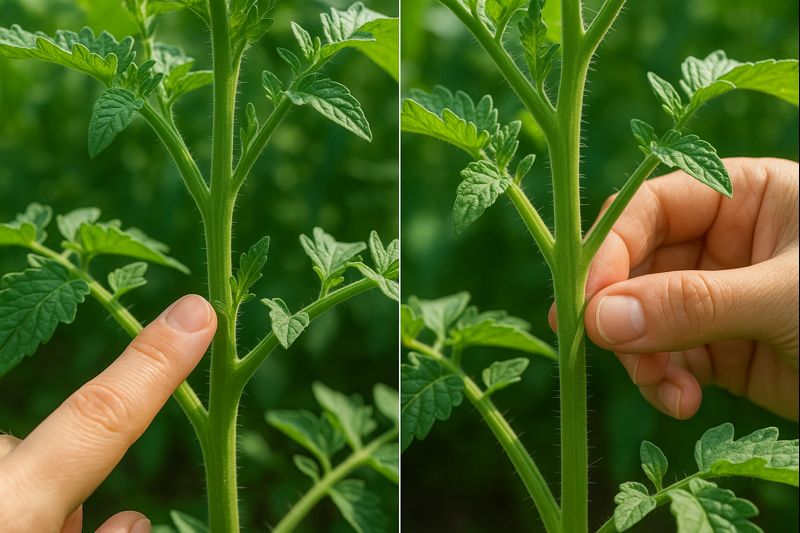
Suckers grow in the "armpit" between the main stem and branches.
- Look for new growth at 45-degree angles
- Suckers below first flower cluster should be removed
- Upper suckers can be left or pruned depending on your goals
Leaves touching the ground invite disease.
- Remove leaves within 12" of soil
- Improves air circulation
- Prevents soil splash diseases
Stop upward growth 4 weeks before first frost.
- Cut the main growing tip
- Allows existing fruits to ripen
- Redirects energy from new growth to ripening
A compromise method that removes sucker tips but leaves some foliage.
- Pinch out the tip of suckers after 2 leaves
- Provides more leaf cover in hot climates
- Good balance of fruit size and sun protection
Pruning Guide by Crop
Trellising & Support Systems
Vertical growing saves space, improves air circulation, and makes pruning and harvesting easier. Choose the right system for your crops and space.
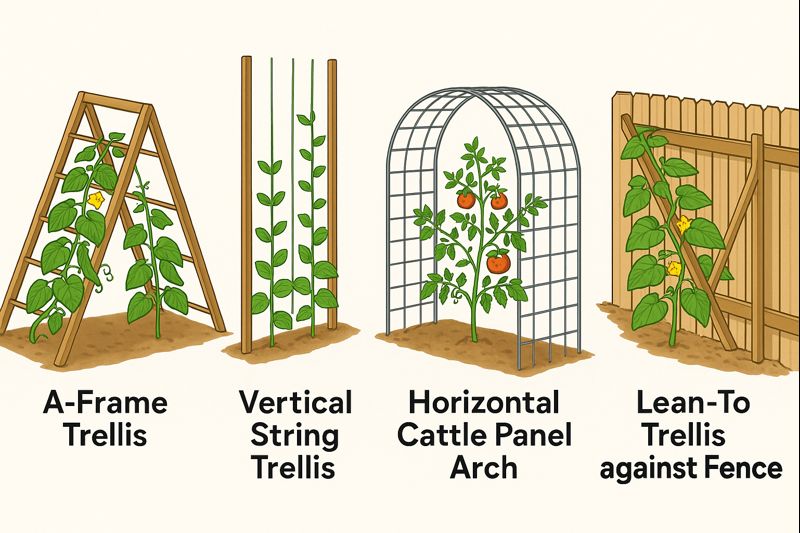
Different trellis styles suit different crops and garden spaces
String weaving between stakes for tomatoes
Materials: T-posts or wooden stakes, twine
Pros:
- • Economical
- • Easy to set up
- • Good for many plants
Cons:
- • Requires regular weaving
- • Not as sturdy in wind
One stake per plant with ties
Materials: Wooden or metal stakes, soft ties
Pros:
- • Simple
- • Good for small spaces
- • Easy access
Cons:
- • Need many stakes
- • Must tie regularly
Wire cage surrounds plant
Materials: Concrete reinforcing wire or commercial cages
Pros:
- • Low maintenance
- • No tying needed
- • Reusable
Cons:
- • Expensive
- • Hard to store
- • Can be flimsy
Angled panels meeting at top
Materials: Wood or metal frames, netting or string
Pros:
- • Space efficient
- • Easy harvest from both sides
- • Shade underneath
Cons:
- • Fixed height
- • Requires construction
Strings hanging from overhead support
Materials: Overhead structure, twine, clips
Pros:
- • Clean
- • Easy to prune
- • Maximum light
Cons:
- • Needs overhead support
- • Daily training required
Common Pruning Mistakes
Pruning determinate tomatoes
Pruning too late in the day
Using dull or dirty tools
Removing too much at once
Pruning during or after rain
For Light Pruning:
- • Clean fingers (for small suckers)
- • Sharp scissors or snips
- • Pruning shears for stems up to 1/2"
Best Practices:
- • Clean tools with rubbing alcohol between plants
- • Sharpen blades regularly for clean cuts
- • Cut at 45-degree angle, 1/4" above node
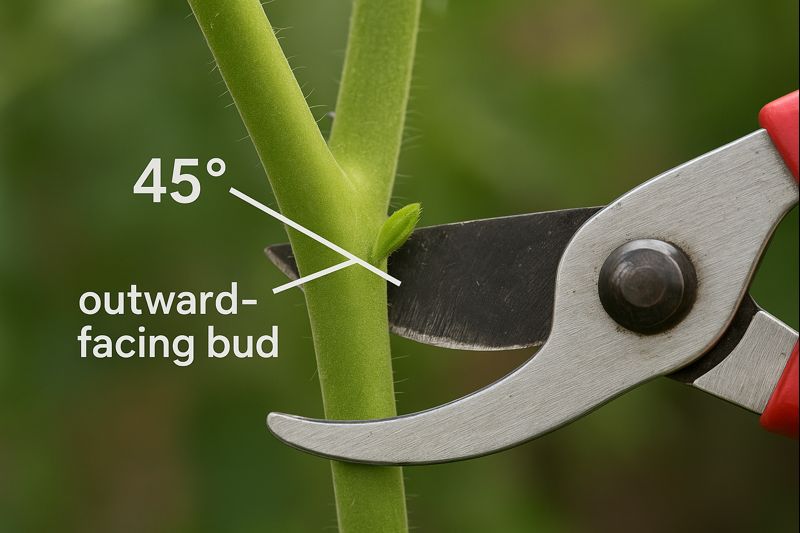
Cut at 45° angle just above an outward-facing bud
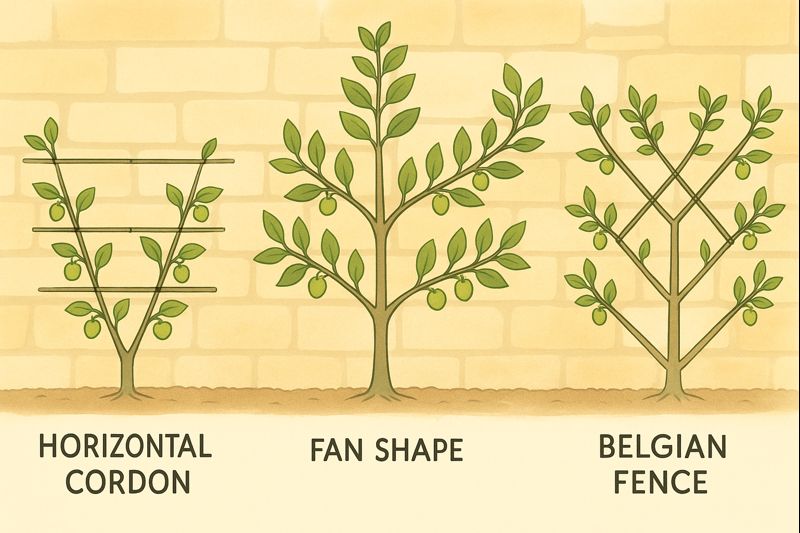
Espalier patterns for training fruit trees on walls