
Raised Bed Gardening
Build productive raised beds for your garden. Learn material selection, optimal dimensions, soil mixes, and intensive planting techniques to maximize your harvest.
Why Raised Beds?
Raised beds offer significant advantages over in-ground gardening, especially for challenging soils.
Better Drainage
Raised soil drains faster, preventing root rot and waterlogging.
Warmer Soil
Soil warms earlier in spring, extending your growing season.
Less Bending
Higher beds reduce strain on back and knees.
Weed Control
Start with clean soil and defined edges keep weeds out.
Soil Control
Create perfect soil regardless of native conditions.
Higher Yields
Intensive planting produces more food per square foot.
Material Comparison
Cedar
15-20 years$$$Pros
- Naturally rot-resistant
- No chemicals needed
- Beautiful appearance
Cons
- Most expensive wood option
- Can be hard to find
Redwood
15-20 years$$$Pros
- Excellent rot resistance
- Beautiful color
- Sustainable if FSC certified
Cons
- Very expensive
- Limited availability
Untreated Pine/Fir
3-5 years$Pros
- Very affordable
- Easy to find
- Safe for food gardens
Cons
- Rots quickly
- Needs replacement often
Composite Lumber
20+ years$$$$Pros
- Extremely durable
- No maintenance
- Consistent appearance
Cons
- Expensive
- Can get hot in sun
- Not as natural looking
Galvanized Steel
20+ years$$Pros
- Very durable
- Modern look
- No chemicals
Cons
- Heats up in sun
- Can be sharp edges
- Conducts cold
Concrete Blocks
50+ years$$Pros
- Extremely durable
- Can plant in holes
- Good for curved beds
Cons
- Heavy
- Can leach lime
- Industrial look
Stone/Rock
Forever$-$$$$Pros
- Natural look
- Holds heat
- Free if gathered
Cons
- Labor intensive
- Not precise edges
- Hard to mow around
Avoid: Pressure-treated lumber (chemicals can leach into soil), railroad ties (creosote), and tires (chemicals break down over time).
Optimal Dimensions
| Dimension | Recommendation |
|---|---|
| Width: 3-4 feet | Can reach center from both sides without stepping in |
| Length: 4-12 feet | Any length works; 4x8 fits standard lumber |
| Height: 6 inches | Minimum for shallow-rooted crops like lettuce, herbs |
| Height: 12 inches | Ideal for most vegetables including carrots, beets |
| Height: 18-24 inches | Best for deep roots, accessibility, poor native soil |
| Height: 30-36 inches | Wheelchair accessible, no bending required |
Soil Mix Recipes
The right soil mix is crucial for raised bed success. Choose based on your budget and goals.
- 1/3 Peat moss or coco coir
- 1/3 Vermiculite
- 1/3 Blended compost (5+ sources)
Original Square Foot Gardening recipe. Light, well-draining, nutrient-rich.
- 60% Quality topsoil
- 30% Compost
- 10% Perlite or coarse sand
Balanced and affordable. Good drainage with nutrient retention.
- 50% Native soil (if decent)
- 40% Compost
- 10% Aged manure
Uses existing soil to reduce costs. Test native soil first.
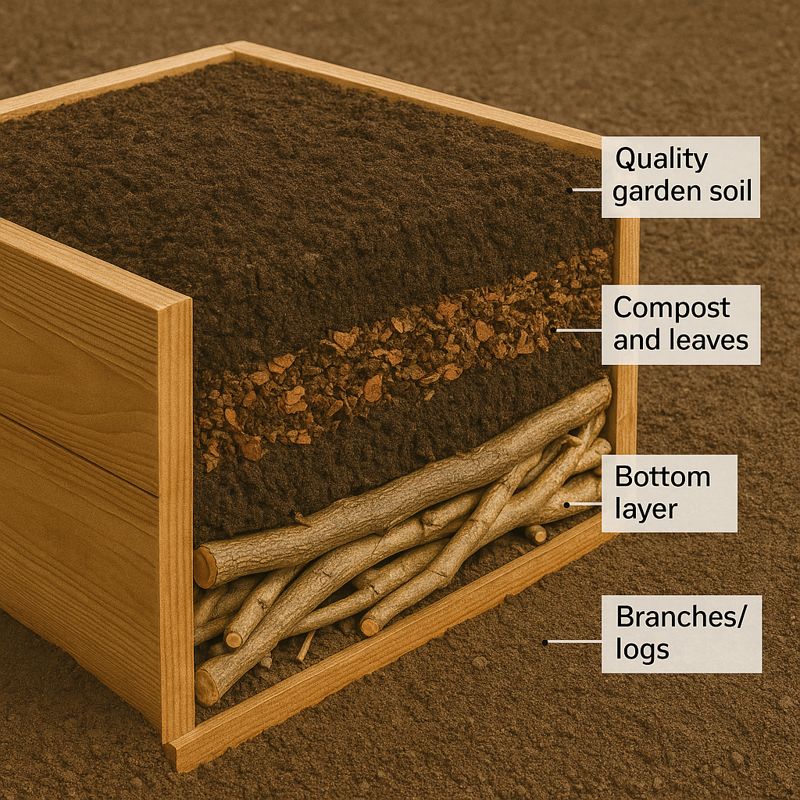
- Bottom: Logs and branches
- Middle: Leaves, grass, kitchen scraps
- Top 6": Quality soil/compost mix
Fills deep beds affordably. Self-watering as wood decomposes.
Step-by-Step Building Guide
Choose Your Location
- Minimum 6-8 hours direct sunlight for vegetables
- Level ground or plan to level the bed
- Access to water (hose reach)
- Away from tree roots and structures
- Consider prevailing winds and microclimates
Prepare the Site
- Mark bed outline with stakes and string
- Remove sod if present (or cover with cardboard)
- Level the ground as much as possible
- Consider laying landscape fabric or cardboard on bottom
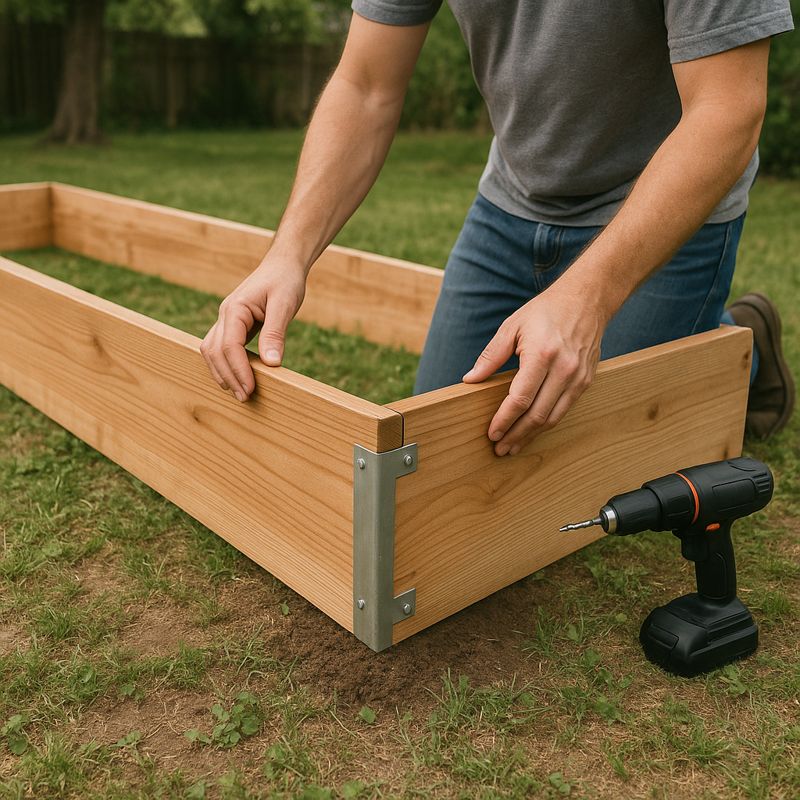
Build the Frame
- Cut lumber to length (or buy pre-cut)
- Pre-drill screw holes to prevent splitting
- Use 3" deck screws or corner brackets
- Check corners with a square
- Stack additional boards for taller beds
Line the Bed
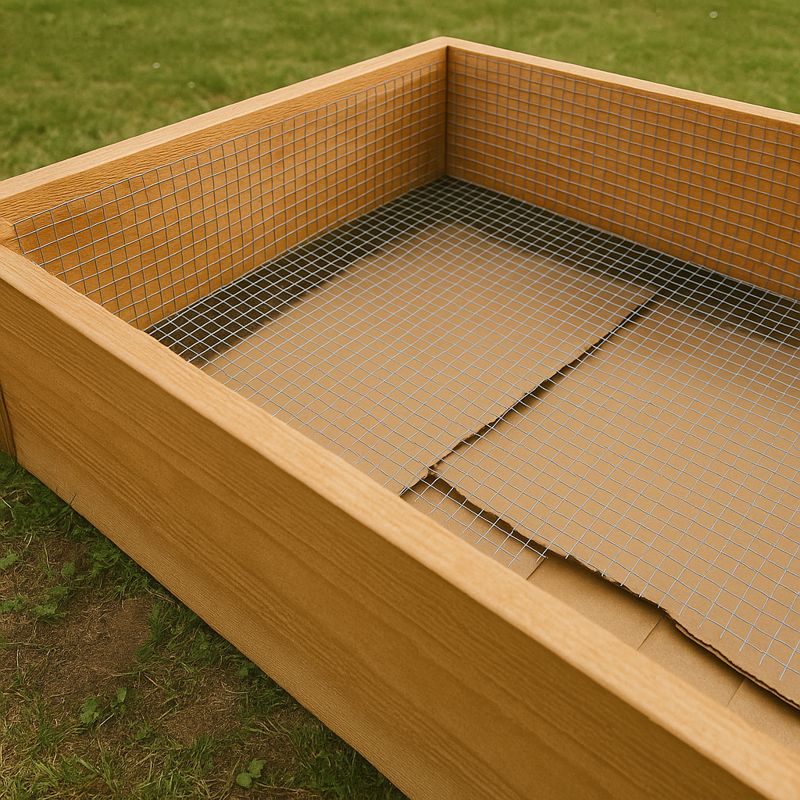
- Place frame in position and check for level
- Add hardware cloth on bottom to deter gophers/moles
- Layer cardboard to suppress weeds
- Shim or dig as needed to level
- Stake corners if bed is tall or on slope
Fill with Soil
- For deep beds, layer logs/branches on bottom (hugelkultur)
- Add leaves, compost, and organic matter
- Fill with your chosen soil mix
- Water deeply to settle soil
- Final level should be 1-2" below rim
Plan and Plant
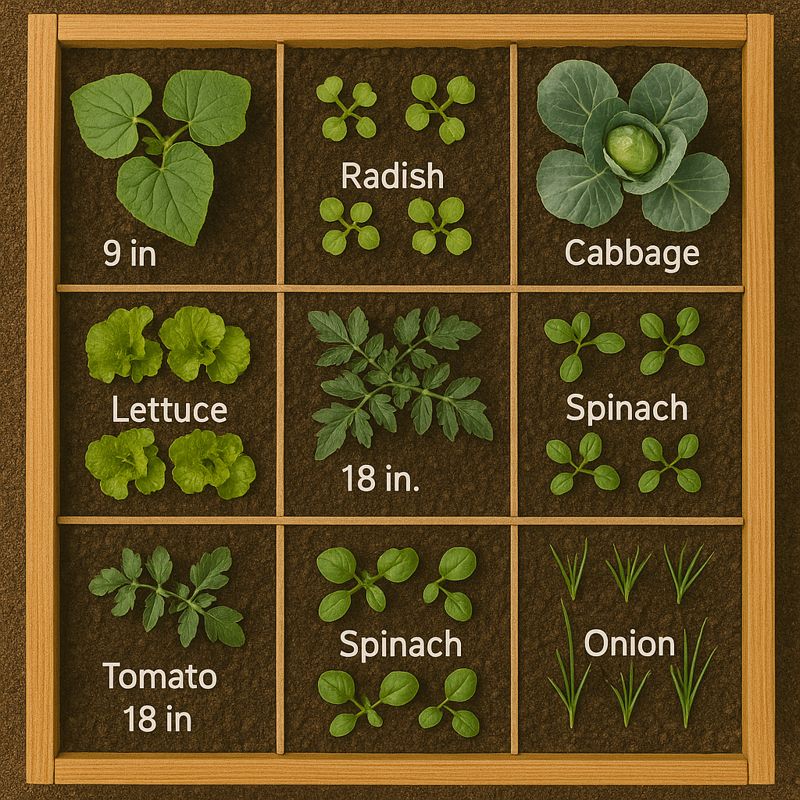
- Use a grid for square foot gardening
- Place tall plants on north side
- Group by water and sun needs
- Leave access paths between beds
- Add mulch after planting
Square Foot Planting Guide
Maximize yields by planting in a grid pattern. Each square foot gets a specific number of plants.
| Plants per Square | Crops |
|---|---|
1 per square | TomatoPepperEggplantBroccoliCabbage |
2 per square | CucumberSquash (vertical)Melon (vertical) |
4 per square | LettuceSwiss ChardLarge HerbsKale |
9 per square | BeansPeasBeetsTurnipsSpinach |
16 per square | CarrotsRadishesOnionsGarlic |
A 4x8 raised bed has 32 square feet. Using intensive planting, you can grow 60+ plants in that space!
Maintenance Tips
- Add 1-2" compost each spring
- Rotate crop families each year
- Check and repair frame corners
- Refresh mulch layer
- Plant cover crops in fall
- Soil settling: Add more compost
- Wood rotting: Line interior with plastic
- Gaps in corners: Add metal brackets
- Weeds around edges: Weed barrier + mulch