
Watering & Irrigation
Learn proper watering techniques and set up efficient irrigation systems. Master the art of giving your plants exactly what they need.
The Most Common Gardening Mistake
Improper watering is the number one cause of plant problems in home gardens. Most gardeners water too often and too shallowly, creating weak, shallow-rooted plants that are dependent on constant care and susceptible to drought stress.
Learning to water correctly is perhaps the most important skill you can develop as a gardener. The good news? It's not complicated once you understand the basics.
The Four Rules of Smart Watering
Deep watering encourages roots to grow down, making plants more drought-tolerant.
- Aim for 1 inch of water per week (including rain)
- Better to water once deeply than lightly every day
- Water should penetrate 6-8 inches into soil
- Use a trowel to check soil moisture depth
Morning watering reduces disease and evaporation.
- Leaves dry before evening, preventing fungal diseases
- Less evaporation than midday watering
- Plants are hydrated for the heat of the day
- If mornings are impossible, late afternoon is second best
Direct water to the root zone where plants can actually use it.
- Wet leaves promote fungal diseases
- Overhead watering wastes water to evaporation
- Use drip irrigation, soaker hoses, or hand water at base
- Mulch helps keep soil moist and prevents splash-up
Weather, soil type, and plant stage all affect water needs.
- Hot, windy days increase water needs dramatically
- Sandy soil needs more frequent watering than clay
- Newly planted seedlings need consistent moisture
- Established plants are more drought-tolerant
How to Know When to Water
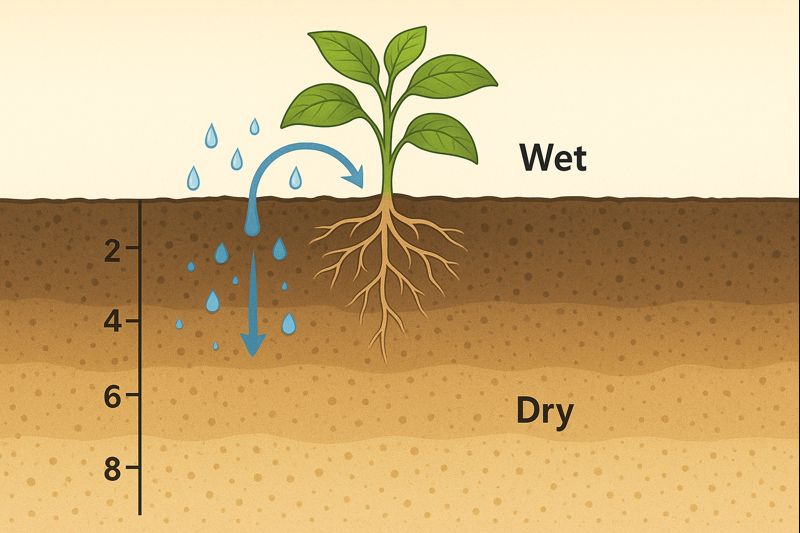
Check moisture at root depth (4-6 inches) - surface appearance can be deceiving
Stick your finger 2-3 inches into the soil. If it feels dry at that depth, it's time to water. If still moist, wait another day.
Use a trowel to dig 4-6 inches. Check the color and feel of the soil at root level. Dark, cool soil is moist; light, warm soil is dry.
Inexpensive soil moisture meters take the guesswork out. Insert probe to root depth and read the dial. Water when reading is low.
For containers: lift the pot. Heavy = moist. Light = needs water. You'll quickly learn the difference with practice.
Water Needs by Crop
| Crop | Water Needs | Notes |
|---|---|---|
| Tomatoes | High | Consistent moisture prevents blossom end rot. 1-2 inches/week. |
| Peppers | Moderate | Even moisture, but slightly drier than tomatoes. 1 inch/week. |
| Lettuce | High | Shallow roots need frequent watering. Bolts in drought. |
| Squash | Moderate | Deep roots tolerate some drought once established. |
| Beans | Moderate | Most critical during flowering and pod development. |
| Carrots | Moderate | Consistent moisture for even root development. |
| Cucumbers | High | Mostly water! Need constant moisture for crisp fruits. |
| Herbs | Low-Moderate | Most prefer slightly dry conditions. Don't overwater. |
| Onions | Moderate | Reduce watering as bulbs mature and tops fall. |
| Melons | High | Reduce water as fruits ripen for sweeter flavor. |
Irrigation Methods Compared
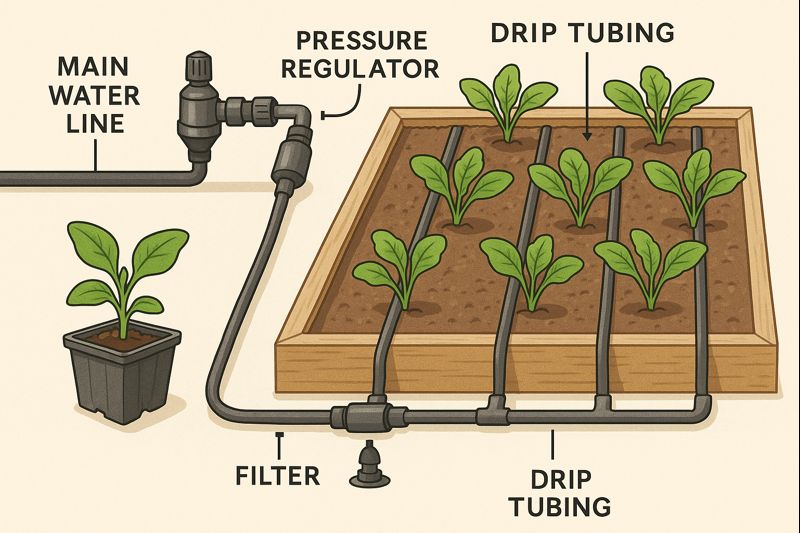
Drip irrigation delivers water directly to plant roots - the most efficient method for vegetable gardens
A 2-4 inch layer of organic mulch is the best thing you can do to reduce watering needs. Straw, leaves, wood chips, or grass clippings all work well.