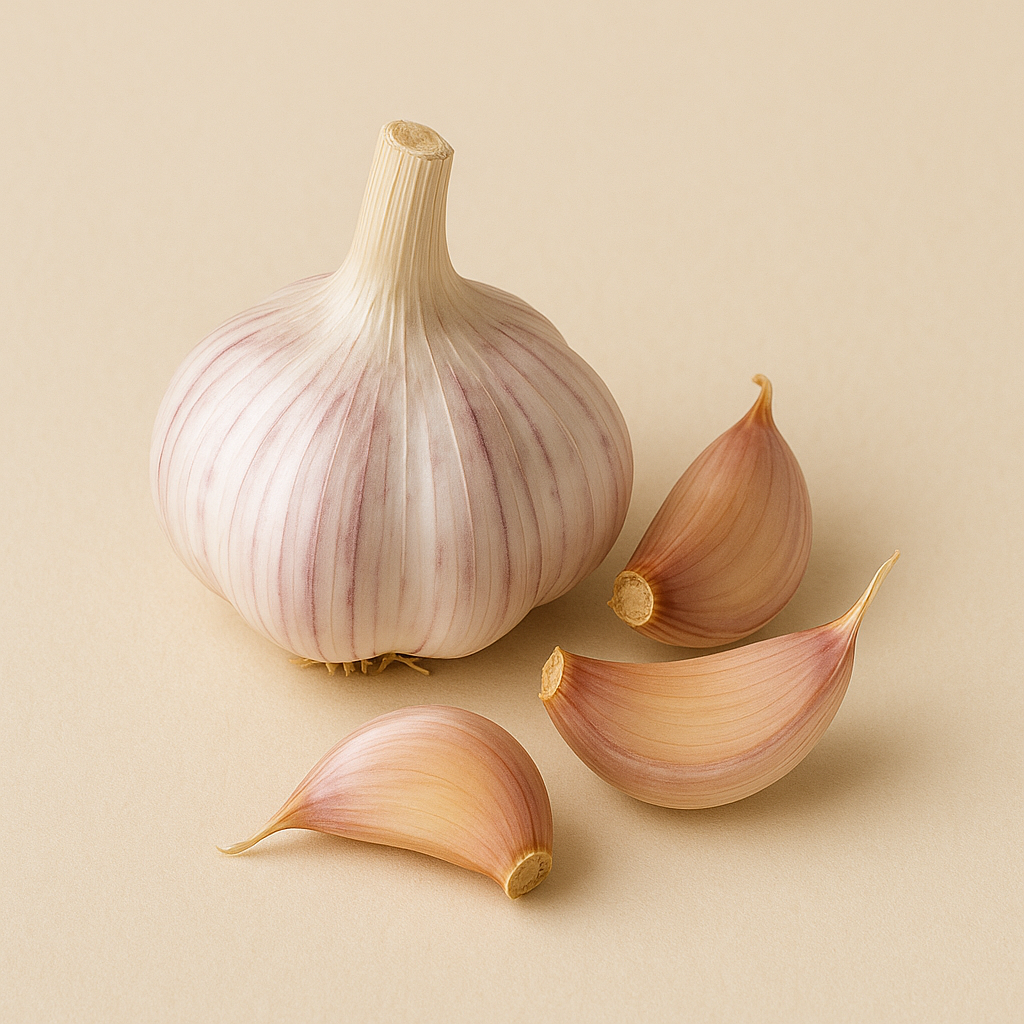
Garlic
Allium sativum
Family: Amaryllidaceae
Garlic is a kitchen essential that's incredibly easy to grow. Plant cloves in fall and harvest the following summer. Hardneck varieties produce delicious scapes as a bonus crop. Homegrown garlic has far superior flavor to store-bought.
Days to Harvest
210-270 days
Sun Needs
Full Sun (6+ hours)
moderate
Germination Temp
50°F optimal
Start Indoors
0 weeks before last frost
Germination
14-30 days
Seed Depth
2 inches (cloves)
Light to Germinate
No
💡 Tip: Plant individual cloves (not seeds) in fall, 4-6 weeks before ground freezes. In mild climates, plant in late fall or winter. Cover with 4-6 inches of mulch.
Soil Type
Well-draining, loose soil rich in organic matter
pH Range
6 - 7
Spacing
6 inches between cloves, 12 inches between rows
⚠️ Avoid planting near:
History
Garlic's story is one of near-universal reverence across human civilizations, stretching back over 5,000 years to its origins in the mountains of Central Asia. Ancient Egyptians held garlic sacred, feeding it to pyramid builders for strength and stamina—a near-mutiny occurred when garlic rations ran short. The Egyptians placed garlic bulbs in tombs, including six bulbs found in Tutankhamun's burial chamber. Greek athletes consumed garlic before Olympic competitions, believing it enhanced performance, while Roman soldiers ate it before battle for courage. The Sanskrit word for garlic, "bhutagna," translates to "slayer of monsters," reflecting beliefs in its protective powers against evil—traditions that evolved into European vampire folklore. In medieval Europe, garlic served as both medicine and protection during plague outbreaks, while also becoming essential to Mediterranean cuisines developing during the Renaissance. Chinese and Korean medicine have employed garlic therapeutically for millennia, treatments now validated by modern research into allicin's antimicrobial and cardiovascular benefits. Garlic traveled to the Americas with Spanish conquistadors, eventually becoming central to Latin American and Caribbean cuisines. The town of Gilroy, California, claims the title "Garlic Capital of the World," hosting an annual festival attracting 100,000 visitors. Today garlic is cultivated on every continent except Antarctica, with China producing 80% of the world's supply.
Nutritional Benefits
- ✓Contains allicin (health compound)
- ✓High in manganese
- ✓Good source of Vitamin B6
Optimal Growing Temp
32°F - 50°F
Garlic needs cold exposure (vernalization) below 40°F for 4-8 weeks to trigger bulb formation. Active growth occurs at 32-75°F, with best growth at 50-70°F.
Survival Range
0°F - 90°F
Can survive these temperatures
Frost Note: Garlic is extremely frost tolerant. Young plants can withstand temperatures down to 0°F with snow cover or mulch. In fact, garlic requires cold winter temperatures to develop properly sized bulbs.
Best USDA Zones
Humidity
50-70%
Moderate humidity during growth. Low humidity required during curing (below 60%). High humidity can promote rust, white rot, and other diseases.
Height
18-24 inches
Spread
4-6 inches
Growth Habit
upright
Germination
7-14 days
Planted cloves send up shoots in fall, about 1-2 weeks after planting. First green shoot emerges from soil like a grass blade.
Seedling Stage
Duration: 4-8 weeks
True leaves: Each clove sends up a single shoot that produces flat, blade-like leaves
Transplant ready: Garlic is grown from cloves, not transplanted from seedlings
Vegetative Growth
Duration: 6-8 months (fall through spring)
Garlic grows slowly through fall, goes dormant in winter, then resumes active growth in spring producing 8-12 leaves. Each leaf equals one wrapper layer on the bulb.
Flowering
Timing: Hardneck varieties produce scapes in late spring (May-June)
Duration: 2-3 weeks
Garlic scapes (flower stalks) should be removed to direct energy to bulb formation. The scapes are edible and delicious.
Harvest Maturity
Timing: 8-9 months from planting (June-July harvest in most regions)
- Lower 3-4 leaves turn brown and dry
- 50-60% of leaves still green
- Bulb wrappers are visible and papery
- Individual cloves are well-defined when bulb is squeezed
Per Plant
1 bulb per clove planted, typically 1-3 oz
Per Square Foot
8-9 bulbs per square foot at 6-inch spacing
Harvest Frequency
Single harvest in early summer
Factors Affecting Yield
- •Clove size at planting - larger cloves produce larger bulbs
- •Variety selection - some varieties naturally grow larger
- •Vernalization - adequate cold exposure for bulb development
- •Scape removal in hardneck types directs energy to bulbs
- •Soil fertility - garlic is a heavy feeder
- •Timely harvest - too early or too late reduces storage quality
Seedling Stage
Keep moderately moist after planting until frost
Established Plants
1 inch per week during spring growth
During Fruiting
Stop watering 2-3 weeks before harvest to allow curing
Preferred Method
Drip irrigation or soaker hoses preferred. Avoid overhead watering which promotes rust and other foliar diseases. Water early in day.
⚠️ Critical Watering Periods
- • Spring vegetative growth
- • Early bulbing stage
Pro Tips
- Reduce watering as bulbing begins (May-June)
- Stop watering completely 2-3 weeks before harvest
- Garlic needs less water than onions overall
- Mulch conserves moisture and prevents weeds
Feeding Schedule
At Planting (Fall)
Compost or aged manure mixed into soil
Once
Spring Growth
Blood meal, fish emulsion, or 10-10-10
Every 3-4 weeks
When Scapes Appear
Stop nitrogen fertilization
None
Organic Options
Mix compost into soil before planting. Side-dress with blood meal or apply fish emulsion in early spring. Add wood ash in late spring for potassium during bulbing.
Minimum Size
8 inches deep, 12-inch diameter
Recommended Size
12-18 inches deep for best results
Depth Required
At least 10 inches deep
Best Varieties for Containers
Container Tips
- Use containers that can withstand freezing temperatures
- Excellent drainage is critical - add gravel to bottom
- Space cloves 4-6 inches apart in containers
- Mulch heavily to prevent freeze-thaw cycles
- Move containers to sheltered location during extreme cold
- Hardneck varieties are more suitable than softneck for containers