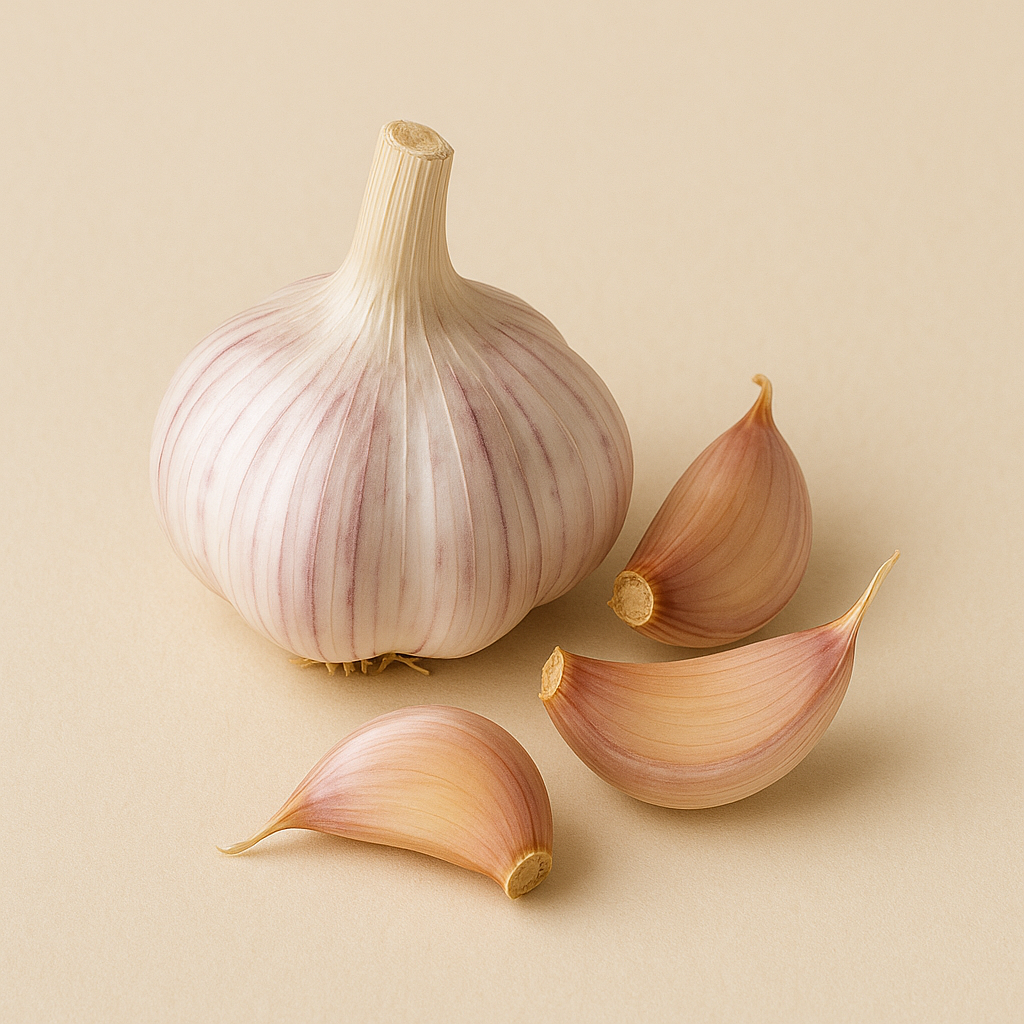
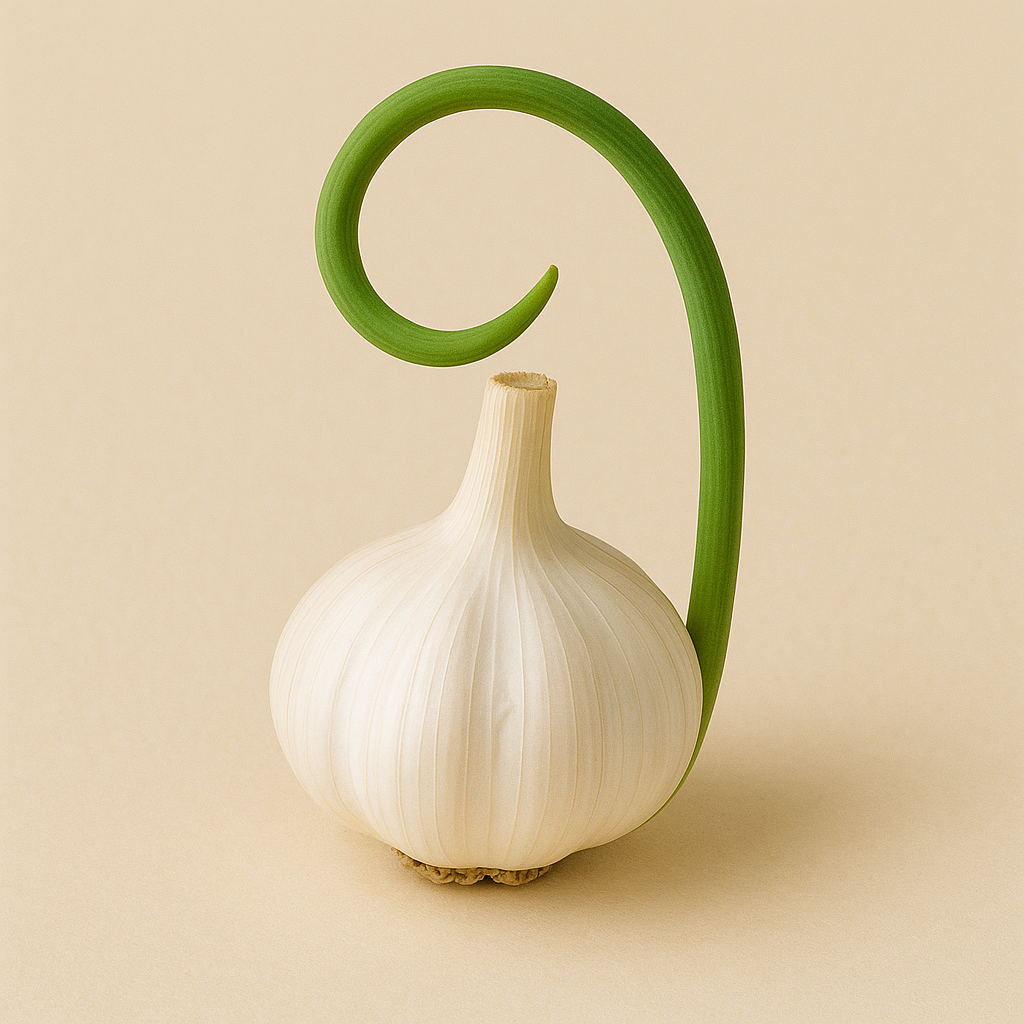
Hardneck Garlic
Allium sativum var. ophioscorodon
Family: Amaryllidaceae
Hardneck garlic is prized by chefs for its complex, bold flavor and larger, easier-to-peel cloves. It produces edible flower stalks called scapes in spring. While it has shorter storage life than softneck, the flavor is superior.
Days to Harvest
210-270 days
Sun Needs
Full Sun (6+ hours)
moderate
Germination Temp
50°F optimal
Start Indoors
0 weeks before last frost
Germination
14-30 days
Seed Depth
2 inches (cloves)
Light to Germinate
No
💡 Tip: Plant cloves in fall, 4-6 weeks before ground freezes. Hardneck garlic requires cold vernalization (6-8 weeks below 40°F) to form bulbs. Mulch heavily.
Soil Type
Well-draining, loose soil rich in organic matter
pH Range
6 - 7
Spacing
6 inches between cloves, 12 inches between rows
⚠️ Avoid planting near:
History
Hardneck garlic represents the more ancient, less domesticated branch of the garlic family tree, closer to wild Allium species than the softneck varieties that dominate commercial production. Its botanical name "ophioscorodon" means "serpent garlic," referring to the coiling flower stalk (scape) that emerges in spring—a trait that softneck garlic has lost through millennia of selection. Hardneck varieties evolved in the harsh continental climates of Central Asia and the Caucasus mountains, requiring cold winters to trigger proper bulb formation. This same cold requirement kept hardneck garlic regional for centuries while softneck spread along Mediterranean trade routes. Different hardneck types developed in isolation: Rocamboles in Mediterranean mountain regions, Porcelains in eastern Europe, Purple Stripes in the Caucasus, and each group developed distinct flavor profiles and growing characteristics. The famous "Music" garlic came to North America via Italian immigrants, while "German White" traveled with German settlers. American garlic enthusiasts have revived interest in hardneck varieties since the 1990s, championing their superior flavor complexity, easier peeling, and the bonus harvest of scapes—curling green shoots prized in farmers' markets. Seed garlic from named hardneck varieties has become a thriving specialty crop, with some bulbs commanding premium prices from dedicated growers who maintain these heirloom genetics.
Nutritional Benefits
- ✓High in allicin (health compound)
- ✓Contains manganese
- ✓Good source of Vitamin B6
Optimal Growing Temp
32°F - 70°F
Hardneck garlic requires a cold period (vernalization) to form bulbs. Plant in fall; roots develop in cool weather, tops grow in spring. Heat above 90°F can damage developing bulbs.
Survival Range
-30°F - 90°F
Can survive these temperatures
Frost Note: Extremely cold-hardy, surviving -30°F or colder with mulch. Requires 6-8 weeks of temperatures below 40°F for proper bulb development. Perfect for northern climates.
Best USDA Zones
Humidity
40-60%
Moderate humidity preferred. High humidity during curing causes fungal issues. Good air circulation essential.
Height
18-24 inches
Spread
4-6 inches
Growth Habit
upright
Germination
N/A - grown from cloves
Cloves sprout 2-4 weeks after fall planting. Green shoots emerge before winter, then go dormant.
Seedling Stage
Duration: Fall through winter
True leaves: Initial leaves emerge in fall. Growth pauses over winter, then resumes vigorously in early spring.
Transplant ready: Not transplanted—grown from cloves planted directly in final location.
Vegetative Growth
Duration: Spring through early summer
Rapid leaf growth in spring. Hardneck varieties produce a scape (flower stalk) which should be cut for larger bulbs and eaten as a delicacy.
Flowering
Timing: Late spring
Duration: Scapes appear 4-6 weeks before harvest
Remove scapes when they curl (before straightening) to direct energy to bulb. Scapes are edible and delicious.
Harvest Maturity
Timing: Mid to late summer, 8-9 months from planting
- Lower 3-4 leaves are brown and papery
- Upper leaves still green
- Bulbs are full-sized with cloves pushing against wrapper
- Hard central stalk characteristic of hardneck
Per Plant
1 bulb (4-10 large cloves) plus 1 scape per plant
Per Square Foot
4-9 bulbs per square foot
Harvest Frequency
Single harvest; cure for storage
Factors Affecting Yield
- •Scape removal increases bulb size 20-30%
- •Cold winters are essential for bulb development
- •Fewer but larger cloves than softneck varieties
- •Proper curing essential for storage
Seedling Stage
Water after planting; keep moist but not wet
Established Plants
Deep watering every 7-10 days during spring growth, 1 inch per week
During Fruiting
Reduce watering in final 2-3 weeks before harvest; stop when leaves begin to brown
Preferred Method
Water at soil level. Drip irrigation ideal. Mulch helps maintain even moisture.
⚠️ Critical Watering Periods
- • Spring growth period
- • Must dry down before harvest
Pro Tips
- Good drainage essential—garlic rots in soggy soil
- Spring is the critical watering period
- Stopping water 2-3 weeks before harvest improves storage
- Mulch helps maintain consistent moisture
Feeding Schedule
At planting (fall)
Compost and balanced fertilizer
Once at planting
Early spring
High nitrogen fertilizer
Once when growth resumes
Late spring
Side-dress with compost
Once, 4-6 weeks before harvest
Organic Options
Apply compost at planting, blood meal in early spring, stop fertilizing 4 weeks before harvest.
Minimum Size
8 inches wide, 10 inches deep for 3-4 cloves
Recommended Size
12 inches wide, 12 inches deep
Depth Required
10-12 inches for proper bulb development
Best Varieties for Containers
Container Tips
- Container garlic works but needs cold exposure—don't bring indoors
- Protect from extreme freezing below -10°F with bubble wrap or moved to cold garage
- Ensure excellent drainage
- Plant cloves 4 inches apart, 2 inches deep
- May produce smaller bulbs than ground-grown
Why Prune
When
Cut scapes when they curl but before they straighten (usually late spring).
How Often
Once per plant, when scapes appear
Technique
Cut or snap scapes off at the base where they emerge from the leaves. Don't pull—this can damage the plant.
Remove
- ✗ Flower scapes (hardneck only)
- ✗ Yellowing lower leaves at harvest
Keep
- ✓ All green leaves until harvest
- ✓ Don't remove healthy leaves