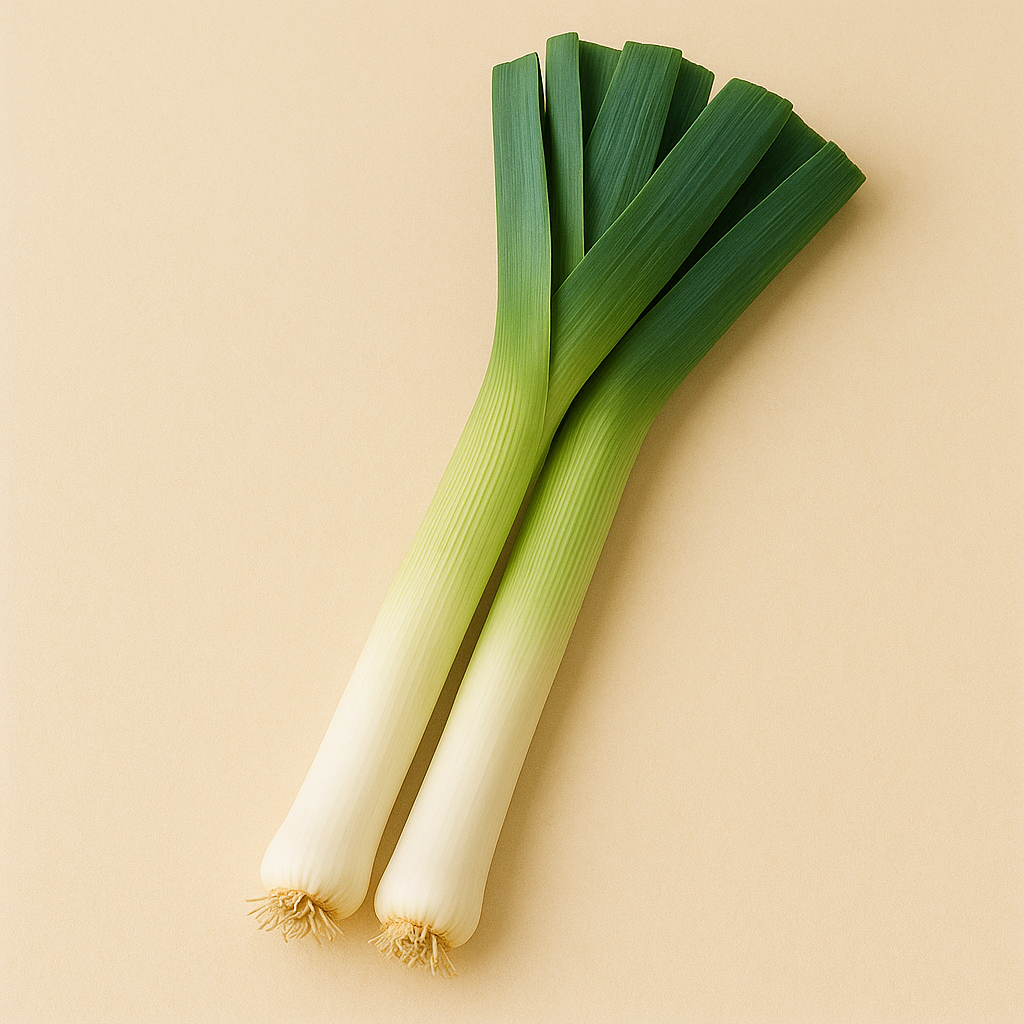
Leeks
Allium ampeloprasum var. porrum
Family: Amaryllidaceae
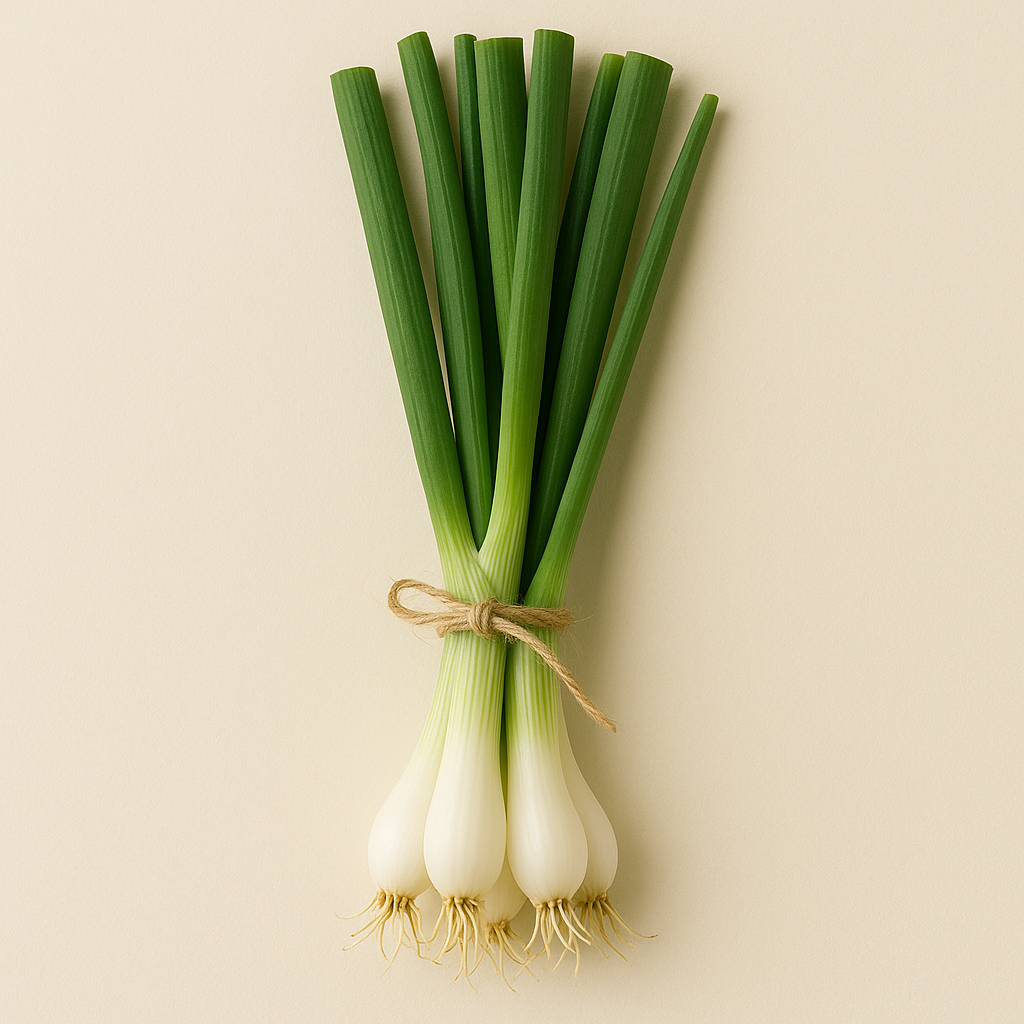
Leeks are the mild, elegant cousin of onions, prized for their sweet, delicate flavor. The blanched white stem is the prized part, achieved by hilling soil around the plant. Cold-hardy leeks can be harvested well into winter.
Days to Harvest
70-150 days
Sun Needs
Full Sun (6+ hours)
moderate
Germination Temp
70°F optimal
Start Indoors
10 weeks before last frost
Germination
7-14 days
Seed Depth
1/4 inch
Light to Germinate
No
💡 Tip: Start seeds very early indoors (10-12 weeks before last frost). Transplant deep (up to first leaf junction) or in trenches for blanching.
Soil Type
Rich, loose, well-draining soil
pH Range
6 - 7
Spacing
6 inches between plants, 12-18 inches between rows
⚠️ Avoid planting near:
History
Leeks trace their cultivated origins to the eastern Mediterranean and Near East, where they have been grown for over 4,000 years. Ancient Egyptians, Greeks, and Romans all prized leeks—the Roman Emperor Nero earned the nickname "Porrophagus" (leek-eater) for his habit of consuming leeks in oil to strengthen his singing voice. Leeks appear in Sumerian clay tablets and in the Hebrew Bible as one of the foods the Israelites missed during their exodus from Egypt. The vegetable became deeply entwined with Welsh identity: according to legend, Saint David advised Welsh soldiers to wear leeks in their caps during a 7th-century battle against the Saxons to distinguish friend from foe. The leek became the national emblem of Wales, worn on St. David's Day (March 1st), and Welsh regiments traditionally eat raw leeks to honor the tradition. Medieval European cuisine featured leeks prominently, and the famous leek and potato soup evolved in both French (vichyssoise) and Welsh traditions. Scotland developed its own leek culture, with the town of Musselburgh lending its name to a famously hardy variety still grown today. Leeks fell somewhat out of fashion in American cooking but have experienced a renaissance with the farm-to-table movement, prized for their elegant appearance and refined, sweet flavor compared to onions.
Nutritional Benefits
- ✓High in Vitamin K
- ✓Good source of Vitamin A
- ✓Contains manganese
Optimal Growing Temp
55°F - 75°F
Leeks prefer cool to moderate temperatures (55-75°F). They are among the hardiest alliums, tolerating both cold and moderate heat. Growth slows in extreme heat but continues in cool weather when other crops have stopped.
Survival Range
10°F - 85°F
Can survive these temperatures
Frost Note: Extremely cold-hardy, surviving temperatures down to 10°F or colder with mulch protection. Flavor actually sweetens after frost exposure. Many varieties can be overwintered in the ground in zones 5-8.
Best USDA Zones
Humidity
50-70%
Moderate humidity preferred. Good air circulation helps prevent fungal diseases. In humid climates, wider spacing improves airflow.
Height
24-36 inches
Spread
6-8 inches
Growth Habit
upright
Germination
10-14 days
Seeds germinate slowly in cool soil (50-70°F). Single grass-like shoot emerges, bent at first then straightening.
Seedling Stage
Duration: 6-10 weeks
True leaves: Leaves emerge individually from the center, developing the characteristic flat, fan-like arrangement. Early leaves are pencil-thin.
Transplant ready: Ready when pencil-thick (1/4 inch diameter) and 6-8 inches tall. This typically takes 10-12 weeks from seed.
Vegetative Growth
Duration: 10-16 weeks
Slow, steady growth as shaft thickens. Blanching (hilling soil or using collars) creates the white portion. Leaves continue to fan outward from center.
Harvest Maturity
Timing: 90-150 days from transplant depending on variety
- Shaft is 1-2 inches in diameter
- White blanched portion is 6-10 inches long
- No seed stalk forming in center
- Firm texture when squeezed
Per Plant
0.5-1.5 lbs per leek depending on variety and blanching success
Per Square Foot
1-2 lbs per square foot (plants spaced 6 inches apart)
Harvest Frequency
Harvest as needed from fall through spring; leeks hold well in ground
Factors Affecting Yield
- •Blanching technique determines length of white shaft
- •Long season allows for larger leeks
- •Fall frost sweetens flavor significantly
- •In-ground winter storage provides fresh harvest for months
Seedling Stage
Keep consistently moist but not waterlogged
Established Plants
Deep watering every 4-7 days, 1-1.5 inches per week
During Fruiting
Continue consistent moisture through harvest season
Preferred Method
Water at soil level to keep moisture from pooling in leaf bases. Drip irrigation ideal. Mulch to maintain consistent moisture.
⚠️ Critical Watering Periods
- • Transplanting establishment
- • Shaft thickening (midseason)
Pro Tips
- Consistent moisture produces tender, mild leeks
- Water stress causes tough, stringy texture
- Reduce watering slightly in fall for winter storage leeks
- Mulching is essential for moisture retention and blanching
Feeding Schedule
At transplanting
Compost in planting trench
Once at planting
Monthly
Balanced fertilizer or compost side-dress
Monthly through growing season
Organic Options
Apply compost at planting, side-dress monthly, foliar feed with fish emulsion every 3 weeks
Minimum Size
6 inches wide, 12 inches deep per leek
Recommended Size
12-14 inch wide, 12 inch deep container for 3-4 leeks
Depth Required
12 inches minimum to allow blanching and root development
Best Varieties for Containers
Container Tips
- Deep containers essential for proper blanching
- Use cardboard collars around each leek to increase white portion
- Group several leeks in larger containers for efficiency
- Keep containers in cooler locations during summer heat
- Container leeks may be smaller than ground-grown but still flavorful
Why Prune
When
Trim at transplanting. Hill soil throughout growing season as plants grow.
How Often
Hill every 2-3 weeks during active growth
Technique
Cut top third of leaves at transplanting. Hill soil or add mulch gradually as leeks grow, being careful not to get soil between leaves.
Remove
- ✗ Top third of leaves at transplanting
- ✗ Damaged or yellowing outer leaves
- ✗ Any seed stalks that appear
Keep
- ✓ Center growing point
- ✓ Healthy green leaves
- ✓ Developing shaft