Red Onion
Allium cepa
Family: Amaryllidaceae
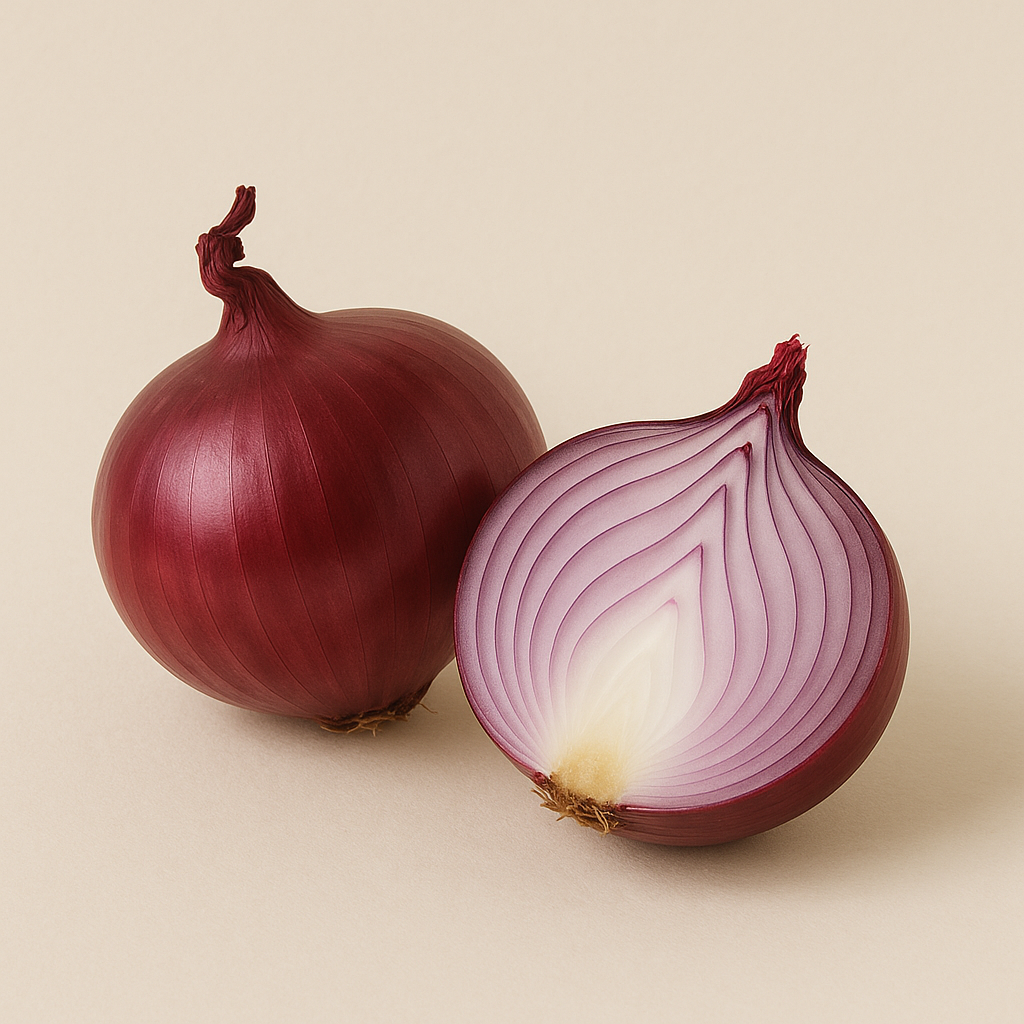
Red onions are prized for their beautiful purple-red color and milder, slightly sweeter flavor than yellow onions. They're perfect for fresh eating in salads, sandwiches, and salsas where their color shines.
Days to Harvest
90-120 days
Sun Needs
Full Sun (8+ hours)
moderate
Germination Temp
70°F optimal
Start Indoors
10 weeks before last frost
Germination
4-14 days
Seed Depth
1/4 inch
Light to Germinate
No
💡 Tip: Start seeds 10-12 weeks before last frost, or plant sets. Choose day-length variety appropriate for your latitude.
Soil Type
Loose, well-draining soil rich in organic matter
pH Range
6 - 7
Spacing
4-6 inches between plants, 12-18 inches between rows
⚠️ Avoid planting near:
History
Red onions have colored kitchens since the earliest days of onion cultivation, with archaeological evidence suggesting red varieties were grown alongside white and yellow onions in ancient Mesopotamia, Egypt, and Central Asia over 4,000 years ago. The striking purple-red coloration comes from anthocyanins, the same antioxidant pigments found in red wine, blueberries, and red cabbage—and like those foods, red onions change color based on pH (turning blue in alkaline conditions, bright red in acidic). Mediterranean cultures particularly favored red onions, making them central to Greek, Italian, and Middle Eastern cuisines where their milder, slightly sweeter flavor suited fresh preparations. The Italian "Cipolla di Tropea" from Calabria gained Protected Geographic Indication status for its legendary sweetness, while Bermuda developed famous sweet red onions that became America's first "gourmet" onions in the late 19th century. Red onions fell somewhat out of favor in mid-20th-century American cooking, when yellow storage onions dominated, but the farm-to-table movement and interest in colorful, antioxidant-rich foods brought red onions back to prominence. Today they're essential for Mexican salsas and pickled cebollas, Indian chutneys, Greek salads, and wherever a cook wants visual impact alongside mild allium flavor. Research increasingly suggests red onions' anthocyanin content provides health benefits beyond those of yellow or white varieties.
Nutritional Benefits
- ✓Higher in antioxidants than yellow onions
- ✓Contains anthocyanins (red pigment)
- ✓High in quercetin
Optimal Growing Temp
55°F - 75°F
Red onions grow best in cool weather between 55-75°F. Bulbing is triggered by day length combined with temperature. Young plants tolerate frost down to 28°F.
Survival Range
28°F - 85°F
Can survive these temperatures
Frost Note: Red onion seedlings and sets can tolerate light frosts down to 28°F. However, hard freezes below 20°F can damage plants.
Best USDA Zones
Humidity
50-70%
Moderate humidity is best. High humidity can promote fungal diseases. Low humidity during curing is essential for good storage.
Height
12-18 inches
Spread
4-6 inches
Growth Habit
upright
Germination
7-14 days
Seeds germinate at 50-85°F, optimal at 70-75°F. First grass-like loop emerges from soil.
Seedling Stage
Duration: 6-8 weeks
True leaves: Hollow, tubular leaves emerge sequentially
Transplant ready: When pencil-thick with 3-4 true leaves
Vegetative Growth
Duration: 8-12 weeks after transplant
Plants focus on producing leaves. Each leaf produces one ring of the bulb. More leaves = larger bulb.
Harvest Maturity
Timing: 90-120 days from transplant
- Tops fall over naturally
- Neck softens
- Deep red-purple color fully developed
- Outer scales become papery
Per Plant
1 bulb per plant, 4-12 oz depending on variety
Per Square Foot
9-16 onions per square foot with proper spacing
Harvest Frequency
Single harvest when bulbs mature
Factors Affecting Yield
- •Day-length matching is critical
- •Consistent moisture during vegetative growth
- •Weed control due to shallow roots
- •Proper spacing for bulb development
Seedling Stage
Keep consistently moist but not waterlogged
Established Plants
About 1 inch per week through deep watering
During Fruiting
Reduce watering as tops fall; stop when 50% down
Preferred Method
Drip irrigation or soaker hoses. Avoid overhead watering which promotes disease.
⚠️ Critical Watering Periods
- • Bulb initiation and swelling
Pro Tips
- Consistent moisture during bulb formation is critical
- Mulch helps maintain even soil moisture
- Reduce watering as harvest approaches
- Red onions need adequate water to develop full color
Feeding Schedule
At planting
Balanced fertilizer or compost
Once
Vegetative growth
Nitrogen-rich fertilizer
Every 2-3 weeks
Bulbing
None
Stop all fertilizing
Organic Options
Side-dress with compost at planting, apply fish emulsion every 2-3 weeks during leaf growth
Minimum Size
6 inches deep, 12-inch diameter
Recommended Size
12-18 inches deep container
Depth Required
At least 8-10 inches deep
Best Varieties for Containers
Container Tips
- Use well-draining potting mix
- Space bulbing onions 3-4 inches apart
- Check moisture daily—containers dry quickly
- Fertilize every 2-3 weeks with half-strength liquid fertilizer