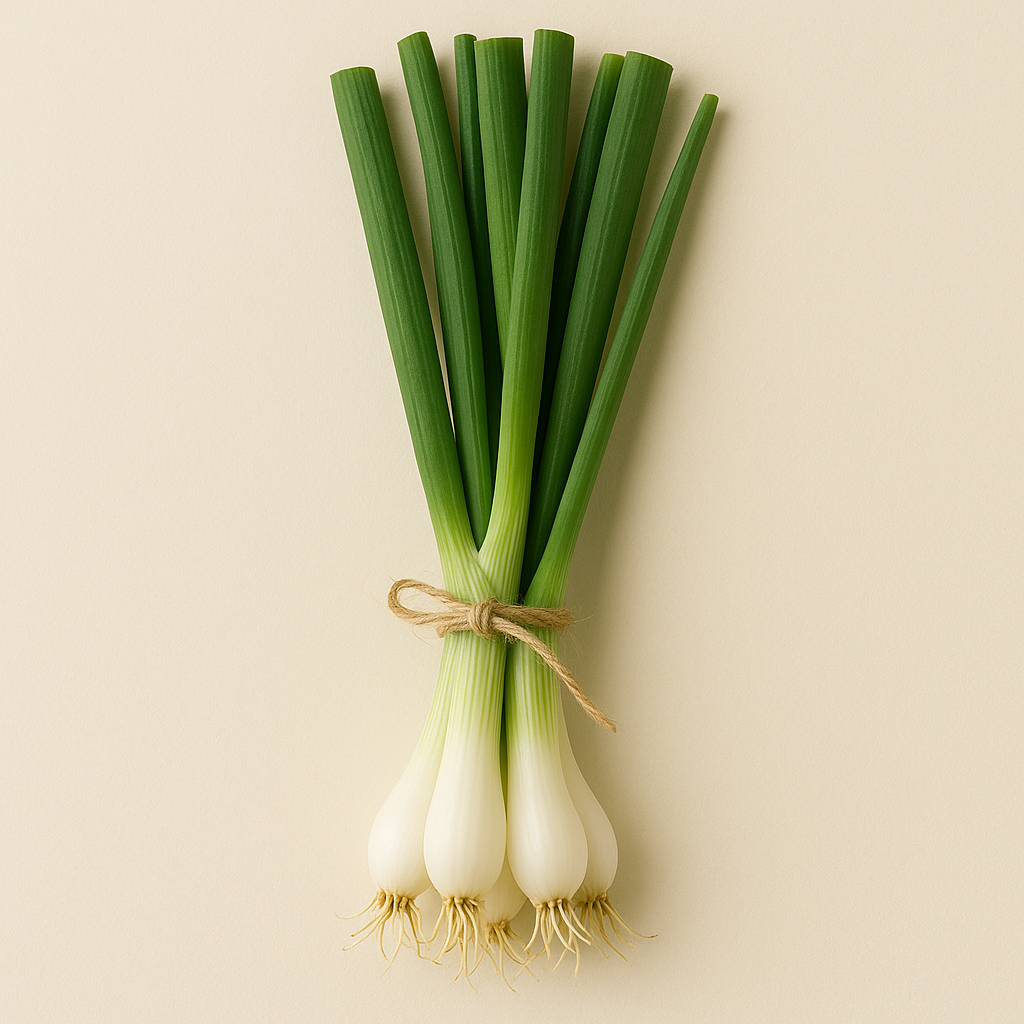
Scallions (Green Onions)
Allium fistulosum
Family: Amaryllidaceae
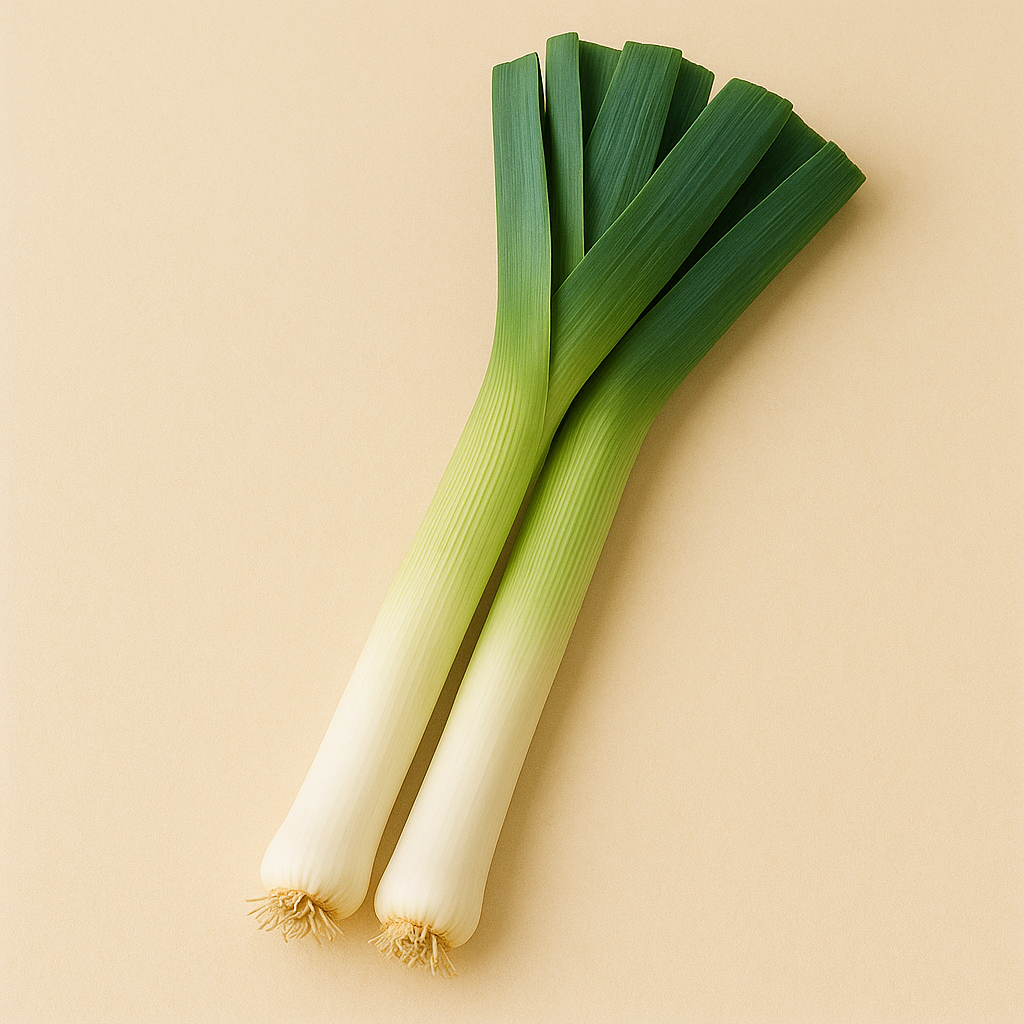
Scallions (green onions, bunching onions) are mild, quick-growing onions harvested for their tender green tops and white stems. Unlike bulbing onions, they don't form bulbs and can be harvested continuously. Perfect for small spaces and containers.
Days to Harvest
50-75 days
Sun Needs
Full Sun to Partial Shade (4-6 hours)
moderate
Germination Temp
70°F optimal
Start Indoors
8 weeks before last frost
Germination
7-14 days
Seed Depth
1/4 inch
Light to Germinate
No
💡 Tip: Direct sow as soon as soil can be worked. Can also regrow from store-bought scallions—place root ends in water or soil.
Soil Type
Loose, well-draining soil
pH Range
6 - 7
Spacing
1-2 inches between plants (or clumps of 3-4)
⚠️ Avoid planting near:
History
The bunching onion (Allium fistulosum) originated in northwestern China and has been cultivated in East Asia for at least 2,000 years, making it one of the oldest cultivated alliums. Unlike common onions, bunching onions evolved to produce clusters of tillering shoots rather than single bulbs—a growth habit ideally suited to the "cut and come again" harvesting favored in Chinese and Japanese kitchen gardens. The vegetable became absolutely central to Chinese cuisine, appearing in virtually every regional cooking style, from Cantonese stir-fries to Sichuan mapo tofu to northern scallion pancakes (cong you bing). Japanese cultivation refined specific varieties for different purposes: negi for sukiyaki and ramen, wakegi for garnishes, and various regional types prized for their particular flavor profiles. Korean cuisine developed its own scallion traditions, from pa-jeon (scallion pancakes) to the ubiquitous use of chopped green onions as a finishing garnish. The confusion of terminology—scallions, green onions, spring onions, Welsh onions—reflects the vegetable's spread across cultures and languages. European "Welsh onion" has nothing to do with Wales; the name derives from German "welsch" meaning foreign. American home gardeners prize scallions for their speed (harvestable in 60 days), continuous production, and suitability for containers and small spaces.
Nutritional Benefits
- ✓High in Vitamin K
- ✓Good source of Vitamin C
- ✓Contains folate
Optimal Growing Temp
55°F - 75°F
Scallions grow in a wide temperature range (55-75°F is ideal). They tolerate both frost and heat better than most alliums, making them a nearly year-round crop in many climates.
Survival Range
20°F - 95°F
Can survive these temperatures
Frost Note: Tolerates light frost (down to 20°F). Can overwinter in zones 6+ with mulch protection. The Japanese bunching types (Allium fistulosum) are especially cold-hardy.
Best USDA Zones
Humidity
40-70%
Adaptable to various humidity levels. Good air circulation prevents fungal issues.
Height
12-18 inches
Spread
2-3 inches per plant
Growth Habit
upright
Germination
7-14 days
Seeds germinate in cool to warm soil (45-85°F). Single grass-like shoot emerges, often bent at first.
Seedling Stage
Duration: 3-4 weeks
True leaves: Additional hollow, tubular leaves emerge from center. Growth is slow initially then accelerates.
Transplant ready: Thin or transplant when 4-6 inches tall. Can also be grown in clumps.
Vegetative Growth
Duration: 6-8 weeks
Rapid leaf growth producing tender white/green stems. Bunching types multiply to form clumps. No bulb formation—the entire plant remains green and edible.
Harvest Maturity
Timing: 60-70 days from seed, faster from sets or divisions
- White portion is 4-6 inches long
- Stem diameter is pencil-thick or larger
- Green tops are sturdy and upright
Per Plant
1 bunch per plant or continuous from dividing clumps
Per Square Foot
16-36 scallions per square foot (intensive spacing)
Harvest Frequency
Continuous—harvest as needed; regrows from base or divisions
Factors Affecting Yield
- •Quick maturity allows multiple harvests per season
- •Perennial types can be divided for endless supply
- •Cut-and-come-again harvesting extends production
- •Succession planting ensures year-round harvest
Seedling Stage
Keep evenly moist for good germination
Established Plants
Water when top inch of soil dries, every 3-5 days
During Fruiting
Consistent moisture throughout growth
Preferred Method
Water at soil level. Light, frequent watering works better than heavy watering for shallow-rooted scallions.
⚠️ Critical Watering Periods
- • Germination and establishment
- • During hot weather
Pro Tips
- Consistent moisture produces tender, mild scallions
- Water stress makes scallions more pungent and fibrous
- Shallow roots dry quickly—check often in hot weather
- Container scallions may need daily watering in summer
Feeding Schedule
At planting
Compost mixed into soil
Once at planting
Monthly
Dilute liquid fertilizer
Monthly during active growth
Organic Options
Apply compost at planting. Light monthly feeding with fish emulsion.
Minimum Size
6 inches wide, 6 inches deep
Recommended Size
8-10 inches wide, 8 inches deep
Depth Required
6-8 inches adequate for shallow roots
Best Varieties for Containers
Container Tips
- One of the easiest container vegetables
- Can grow on windowsills year-round
- Perfect for beginners and small spaces
- Regrow grocery store scallions by placing roots in water
- Plant densely—scallions don't need much space
Why Prune
When
Harvest when pencil-thick or larger, 60-70 days from seed.
How Often
Harvest as needed; plants regrow from base
Technique
Cut at soil level to harvest whole plant, or cut 2 inches above base to allow regrowth.
Remove
- ✗ Entire plant at harvest
- ✗ Yellowing outer leaves
- ✗ Flower stalks if they appear
Keep
- ✓ Base with roots for regrowth
- ✓ At least 2 inches of stem if regrowing
Plant Every
2-3 weeks
Sowings/Season
6-8 sowings for continuous harvest
Duration
Year-round in mild climates; spring through fall elsewhere
Tips
- Fastest way to continuous scallion supply
- Small sowings every 2-3 weeks prevent waste
- Skip midsummer sowings in hot climates
- Perennial types eliminate need for succession once established