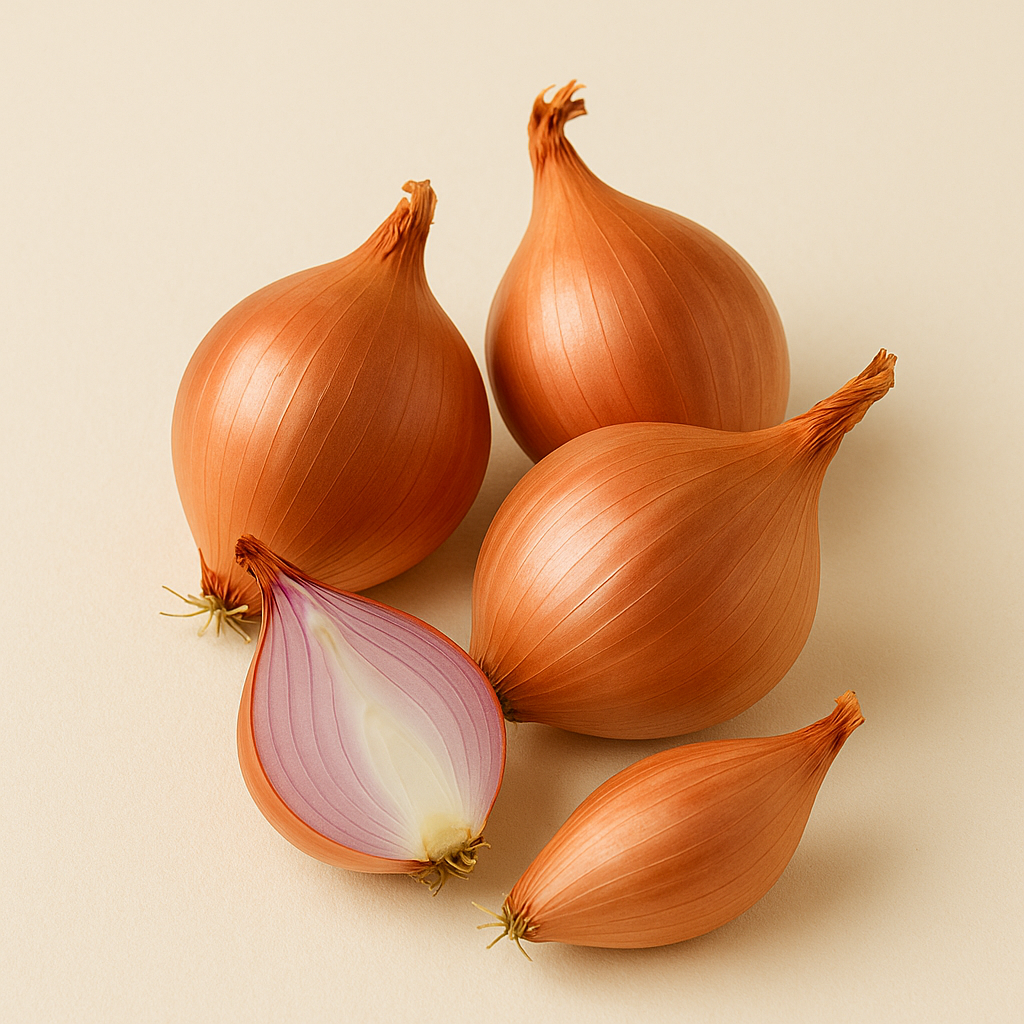
Shallots
Allium cepa var. aggregatum
Family: Amaryllidaceae
Shallots are the gourmet cook's secret weapon, offering a milder, more complex flavor than onions with hints of garlic. Each planted bulb multiplies into a cluster. Essential in French cuisine and surprisingly easy to grow.
Days to Harvest
90-200 days
Sun Needs
Full Sun (6+ hours)
moderate
Germination Temp
55°F optimal
Start Indoors
0 weeks before last frost
Germination
14-21 days
Seed Depth
Plant bulbs 1 inch deep
Light to Germinate
No
💡 Tip: Plant sets (small bulbs) in fall (cold climates) or late winter (mild climates). Can also grow from seed started indoors very early. Each bulb multiplies into 6-12 shallots.
Soil Type
Well-draining, fertile soil
pH Range
6 - 7
Spacing
6-8 inches between bulbs, 12 inches between rows
⚠️ Avoid planting near:
History
The shallot's name derives from Ashkelon, an ancient Philistine port city in Israel where Crusaders first encountered this refined allium and brought it back to Europe. However, shallots likely originated much farther east, in Central or Southeast Asia, traveling westward along ancient trade routes. What distinguishes shallots botanically is their growth habit: unlike onions that form single bulbs, shallots multiply into clusters of smaller, elongated bulbs—a characteristic that made them self-perpetuating and valuable in traditional agriculture. French cuisine elevated the shallot to an essential ingredient, and classical French cooking technique relies heavily on its unique flavor profile—more delicate than onion, with subtle garlic notes and a sweetness that develops beautifully when cooked. The famous "reduction au vin rouge" (red wine reduction) depends on shallots, as do countless mother sauces and preparations that form the foundation of French gastronomy. The "French Gray" (Griselle) shallot, considered the true gourmet variety, can only be grown from bulbs rather than seed, maintaining its heirloom character through generations. Southeast Asian cuisines also prize shallots, particularly Thai and Vietnamese cooking where fried shallots provide crucial texture and flavor. In American cooking, shallots long remained a specialty ingredient found only in gourmet shops, but increased culinary sophistication has made them a mainstream supermarket item and a favorite of home cooks seeking refined flavors.
Nutritional Benefits
- ✓High in antioxidants
- ✓Contains Vitamin A
- ✓Good source of Vitamin C
Optimal Growing Temp
55°F - 75°F
Shallots prefer cool to moderate temperatures (55-75°F) for best bulb development. They tolerate light freezes and can be fall-planted in many areas for larger bulbs.
Survival Range
15°F - 90°F
Can survive these temperatures
Frost Note: Hardy to 15°F or lower once established. Fall-planted shallots overwinter successfully in zones 5-9. Spring-planted shallots are ready before summer heat.
Best USDA Zones
Humidity
40-60%
Moderate humidity preferred. High humidity can cause fungal issues. Good air circulation is important.
Height
12-18 inches
Spread
8-12 inches (clump of multiplied bulbs)
Growth Habit
upright
Germination
N/A for sets; 10-14 days for seeds
Sets sprout within 2-3 weeks of planting. Seeds germinate in 10-14 days in cool soil.
Seedling Stage
Duration: 3-4 weeks
True leaves: Single grass-like leaf emerges first, followed by additional leaves from the center.
Transplant ready: Sets are ready to plant as-is. Seedlings transplant when 6 inches tall.
Vegetative Growth
Duration: 8-12 weeks
Each planted set multiplies into a cluster of 6-12 bulbs. Leaves grow from each developing bulb in the cluster.
Harvest Maturity
Timing: 90-120 days from planting sets, longer from seed
- Leaves yellow and fall over
- Necks soften and dry
- Bulbs have papery outer skins
- Clusters separate easily
Per Plant
6-12 shallots per planted set (multiplier effect)
Per Square Foot
12-24 shallots per square foot
Harvest Frequency
Single harvest when mature; cure for storage
Factors Affecting Yield
- •Fall-planted shallots produce larger bulbs than spring-planted
- •Each set multiplies into a cluster of 6-12 bulbs
- •Proper curing essential for long storage
- •French gray types are prized for flavor but store shorter
Seedling Stage
Keep moderately moist, not wet
Established Plants
Deep watering every 5-7 days, 1 inch per week
During Fruiting
Reduce watering as leaves begin to yellow and fall
Preferred Method
Water at soil level to keep leaves dry. Drip irrigation or soaker hoses ideal. Good drainage essential.
⚠️ Critical Watering Periods
- • Bulb development phase
- • Must dry down before harvest
Pro Tips
- Consistent moisture during bulb formation
- Stop watering when leaves begin to yellow
- Too much water causes storage problems
- Drought stress reduces bulb size but intensifies flavor
Feeding Schedule
At planting
Compost or balanced fertilizer
Once at planting
Midseason
Light application of balanced fertilizer
Once, 4-6 weeks before harvest
Organic Options
Apply compost at planting. Avoid heavy nitrogen which promotes leaf growth over bulbs.
Minimum Size
8 inches wide, 8 inches deep for 3-4 sets
Recommended Size
12 inches wide, 10 inches deep
Depth Required
8-10 inches for adequate root and bulb development
Best Varieties for Containers
Container Tips
- Plant sets pointed end up, just covered with soil
- Provide good drainage—shallots rot in soggy soil
- Space sets 4-6 inches apart
- Excellent crop for containers due to shallow roots
- Container shallots may produce slightly smaller bulbs
Why Prune
When
Remove flower stalks immediately. Otherwise, minimal pruning needed.
How Often
As needed—check for flower stalks periodically
Technique
Cut off any flower stalks at their base to redirect energy to bulb development.
Remove
- ✗ Flower stalks
- ✗ Damaged leaves
Keep
- ✓ All healthy green leaves until natural yellowing