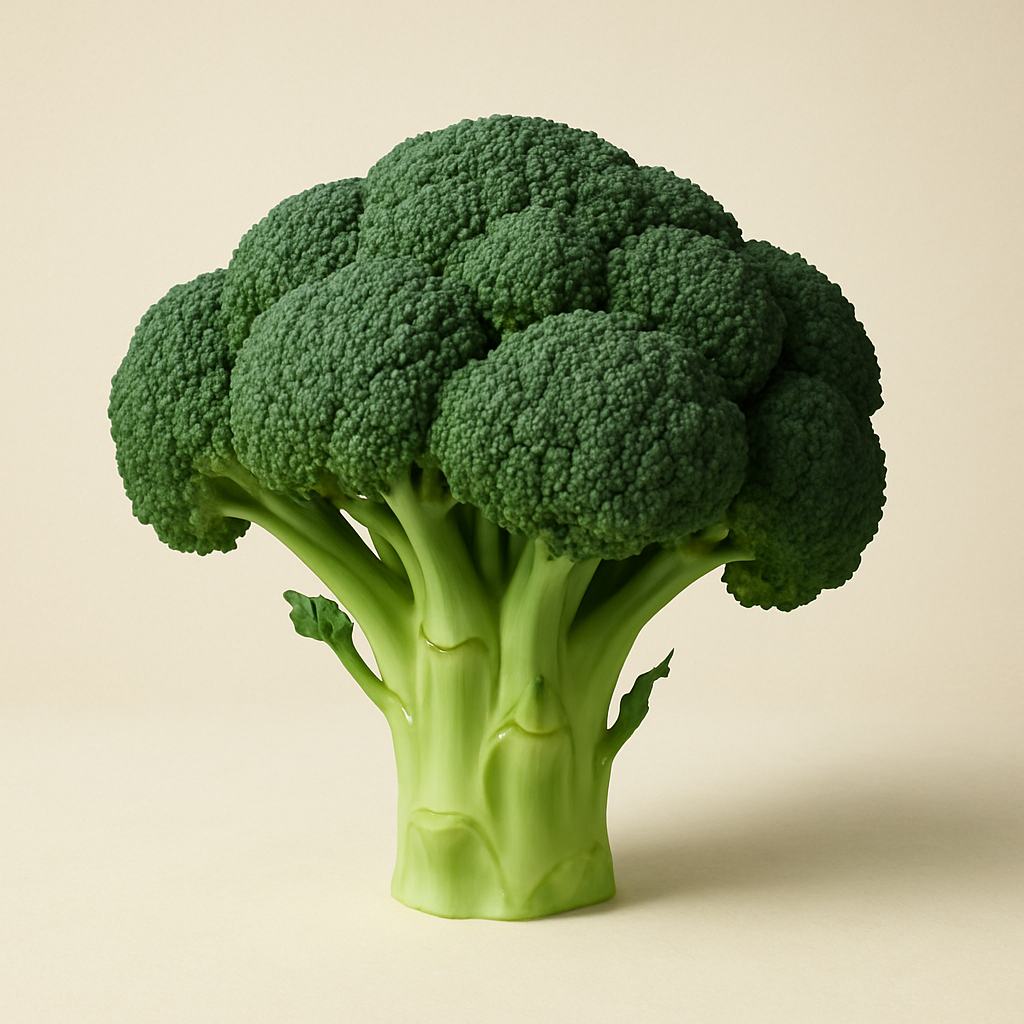
Broccoli
Brassica oleracea var. italica
Family: Brassicaceae
Broccoli is a cool-season vegetable prized for its nutritious, tender florets. After harvesting the main head, many varieties continue producing smaller side shoots for weeks. A superfood packed with nutrients, broccoli is worth the effort to grow well.
Days to Harvest
50-100 days
Sun Needs
Full Sun (6+ hours)
high
Germination Temp
70°F optimal
Start Indoors
6 weeks before last frost
Germination
4-10 days
Seed Depth
1/4 to 1/2 inch
Light to Germinate
No
💡 Tip: For fall crop, start seeds indoors in summer and transplant out when weather cools. Harden off transplants thoroughly.
Soil Type
Rich, well-draining soil with plenty of organic matter
pH Range
6 - 7
Spacing
18-24 inches between plants, 24-36 inches between rows
⚠️ Avoid planting near:
History
Broccoli is an Italian masterpiece of agricultural selection, developed from wild cabbage (Brassica oleracea) along the Mediterranean coast over 2,000 years ago. The name derives from the Italian "broccolo," meaning "the flowering crest of a cabbage," and the Romans prized it as a delicacy—Pliny the Elder wrote about broccoli in the first century CE, and it was reportedly a favorite of the Roman emperor Tiberius's son Drusus. Italian gardeners, particularly in Calabria and Sicily, refined broccoli over centuries, selecting for larger, tighter flower heads that could be eaten before flowering. Catherine de Medici introduced broccoli to France when she married King Henry II in the 16th century, but it remained primarily an Italian vegetable for centuries. Italian immigrants brought broccoli to America in the 1880s, where it grew in Italian-American communities in California and New York. Commercial production began in the 1920s, but broccoli remained obscure to most Americans until the D'Arrigo Brothers marketing campaign of the 1920s-30s promoted "Italian sprouting broccoli" to mainstream consumers. President George H.W. Bush famously declared his dislike of broccoli in 1990, causing California growers to dump truckloads on the White House lawn in protest. Today, broccoli is one of America's most consumed vegetables, with California producing over 90% of the U.S. supply. The discovery of sulforaphane—a powerful cancer-fighting compound—in broccoli during the 1990s transformed its image from ordinary vegetable to certified "superfood."
Nutritional Benefits
- ✓Extremely high in Vitamin C
- ✓Excellent source of Vitamin K
- ✓High in fiber
Optimal Growing Temp
60°F - 70°F
Broccoli thrives in cool weather between 60-70°F. Growth slows below 50°F and above 75°F. Can tolerate light frosts. Heads form best when temperatures are consistently between 60-65°F.
Survival Range
40°F - 85°F
Can survive these temperatures
Frost Note: Broccoli is frost-hardy and can survive temperatures down to 20°F once established. Light frosts actually improve flavor by converting starches to sugars. Mature plants handle frost better than young transplants.
Best USDA Zones
Humidity
50-70%
Moderate humidity is ideal. High humidity increases disease risk, especially black rot and downy mildew. In humid climates, ensure excellent air circulation and avoid overhead watering.
Height
24-36 inches
Spread
18-24 inches
Growth Habit
upright
Germination
4-10 days
Seeds germinate at 45-85°F, with optimal temperature of 70°F. First cotyledon leaves emerge and unfold within a week under ideal conditions.
Seedling Stage
Duration: 4-6 weeks
True leaves: First true leaves appear 7-10 days after sprouting, showing the characteristic lobed broccoli leaf shape
Transplant ready: Ready to transplant when 4-6 inches tall with 4-5 true leaves. Harden off for 7-10 days before transplanting outdoors.
Vegetative Growth
Duration: 4-6 weeks after transplant
Rapid leaf and stem development. Plants establish strong root systems and build the large leaf canopy needed to support head formation. This is the most critical growth phase.
Flowering
Timing: 6-10 weeks after transplant depending on variety
Duration: Head forms over 7-14 days
The edible head is actually an immature flower cluster. If left unharvested, the tight florets open into yellow flowers that attract pollinators.
Harvest Maturity
Timing: 50-100 days from transplant depending on variety
- Central head is firm and tight with tightly closed buds
- Head reaches 4-7 inches in diameter
- Individual florets are still tightly closed
- Head is deep green (or appropriate variety color)
- No yellowing or loosening of florets
Per Plant
1-2 lbs from main head, plus 0.5-1 lb from side shoots
Per Square Foot
1-1.5 lbs per square foot
Harvest Frequency
One main head per plant, then side shoots every few days for 2-4 weeks
Factors Affecting Yield
- •Cool temperatures during head formation produce tighter, larger heads
- •Consistent moisture prevents premature flowering and loose heads
- •Adequate nitrogen during vegetative growth supports large head development
- •Variety selection - some produce more prolific side shoots
- •Pest pressure - cabbage worms can destroy heads if not controlled
- •Timing - fall crops often outperform spring crops due to better temperatures
Seedling Stage
Keep consistently moist but not waterlogged - water daily in warm weather
Established Plants
1-2 inches per week, deep watering every 3-4 days
During Fruiting
Critical to maintain even moisture during head formation - never let plants wilt
Preferred Method
Drip irrigation or soaker hoses work best. Water at soil level to keep foliage dry. Deep, infrequent watering is better than frequent shallow watering.
⚠️ Critical Watering Periods
- • Head formation
- • Hot weather
Pro Tips
- Mulch heavily (3-4 inches) to retain consistent soil moisture
- Water early morning to reduce disease risk
- Never let plants completely dry out - stress triggers bolting
- Drought stress during head formation causes small, bitter, loose heads
Feeding Schedule
At Transplanting
Balanced fertilizer with added compost
Once at planting
Vegetative Growth
High nitrogen (10-5-5 or blood meal)
Every 2-3 weeks
Head Formation
Balanced fertilizer (10-10-10)
Every 3 weeks
Side Shoot Production
Liquid fish emulsion
Every 2 weeks
Organic Options
Side-dress with compost or aged manure every 3-4 weeks. Apply fish emulsion or blood meal for quick nitrogen boost. Add bone meal at planting for phosphorus.
Minimum Size
5 gallon minimum
Recommended Size
10-15 gallon for full-sized varieties
Depth Required
At least 12 inches deep, 18 inches preferred
Best Varieties for Containers
Container Tips
- Choose compact varieties like Di Cicco for container growing
- Use premium potting mix with added compost for fertility
- Containers dry out quickly - check moisture daily in hot weather
- Feed every 2 weeks with balanced liquid fertilizer
- Position where plants receive morning sun but afternoon shade in warm climates
- Heavy heads may require staking for support
Plant Every
2-3 weeks
Sowings/Season
2-3 plantings for extended harvest
Duration
For spring: start 6-8 weeks before last frost. For fall: start in mid to late summer
Tips
- Succession plant for continuous harvest of main heads
- Stagger plantings by 2-3 weeks for extended season
- Fall crops are easier and produce better quality than spring crops in most regions
- In mild climates, plant late summer through fall for winter harvest