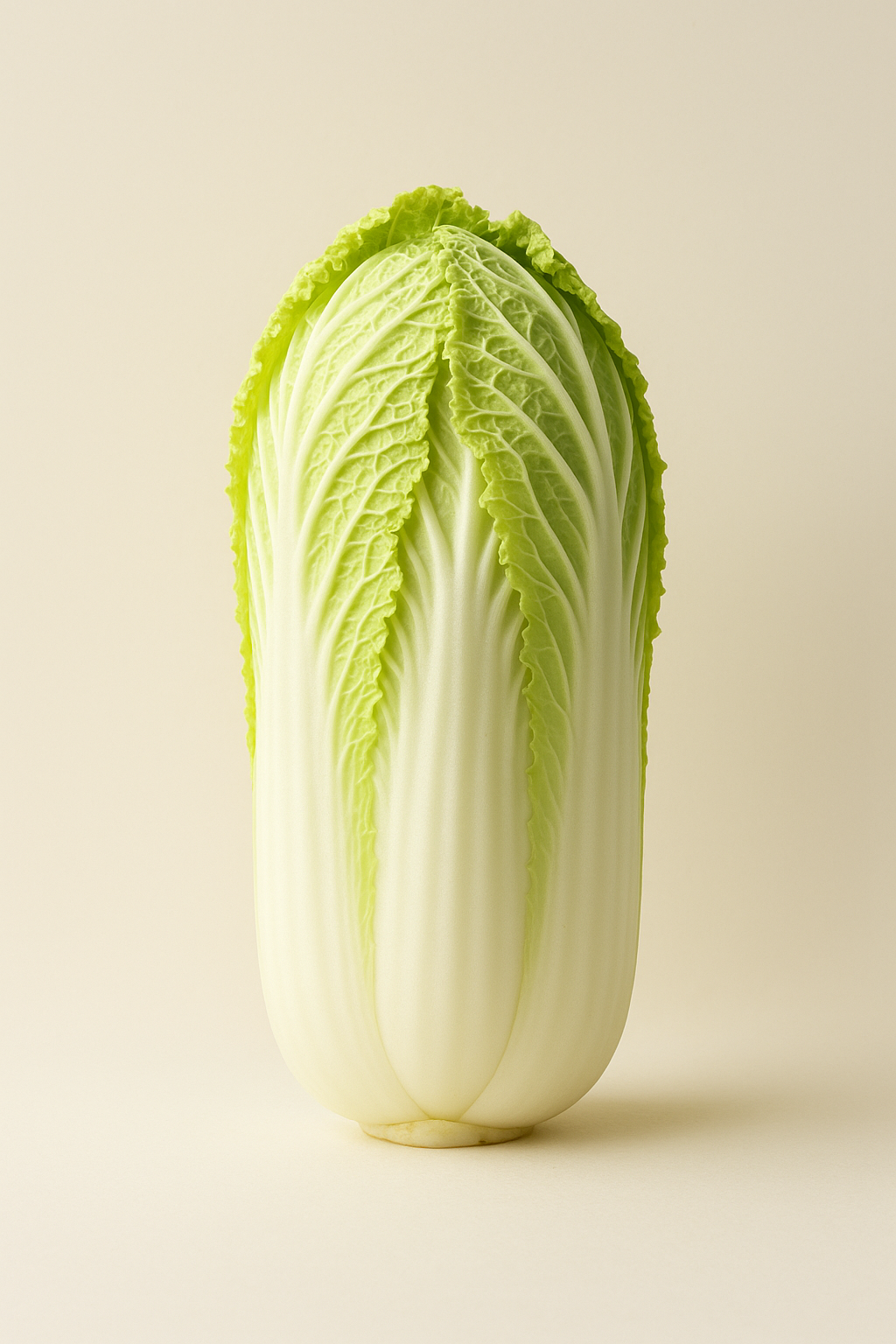
Napa Cabbage
Brassica rapa subsp. pekinensis
Family: Brassicaceae
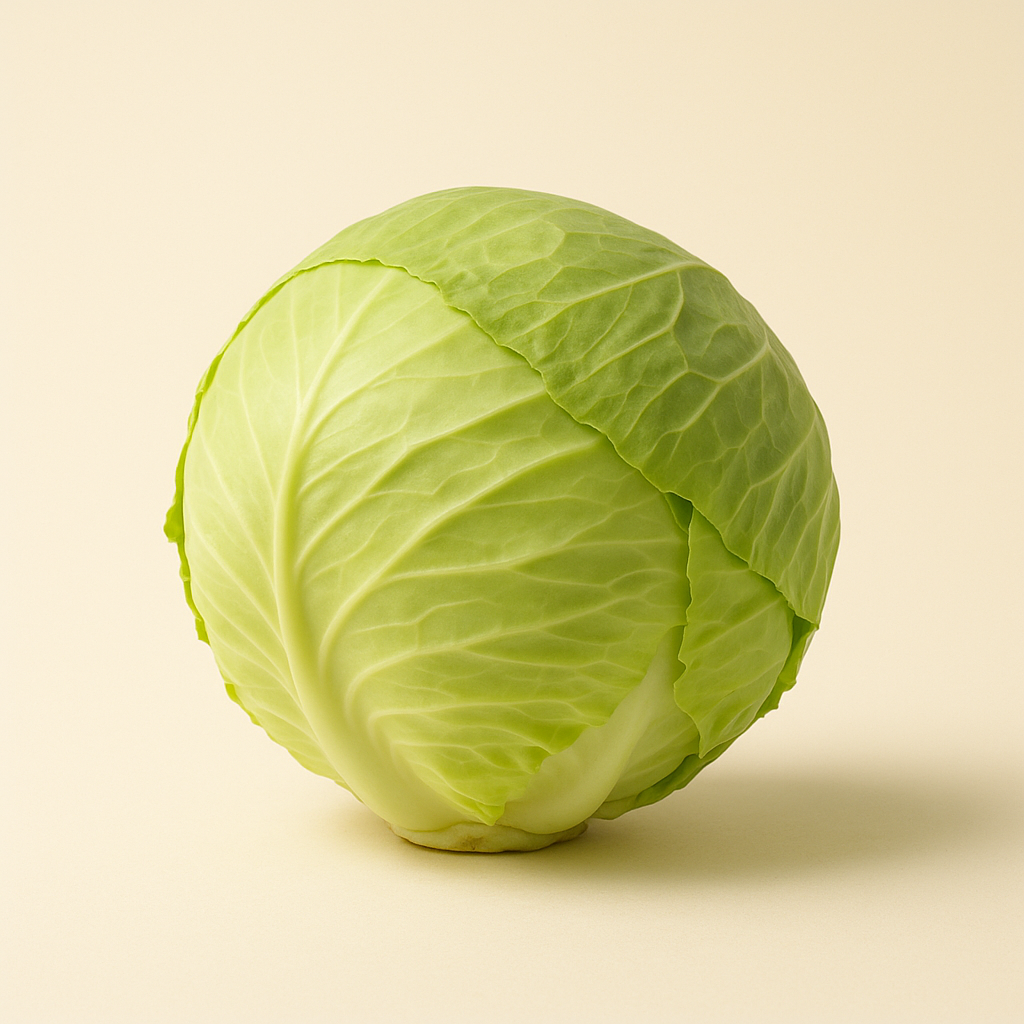
Napa cabbage (Chinese cabbage) forms tall, cylindrical heads with crinkled leaves. Its mild, slightly sweet flavor and tender texture make it essential for kimchi, stir-fries, and Asian soups.
Days to Harvest
55-80 days
Sun Needs
Full Sun to Part Shade (4-6 hours)
high
Germination Temp
65°F optimal
Start Indoors
4 weeks before last frost
Germination
4-10 days
Seed Depth
1/4 inch
Light to Germinate
No
💡 Tip: Best as a fall crop. Spring plantings often bolt in long days.
Soil Type
Rich, well-draining, moisture-retentive soil
pH Range
6 - 7.5
Spacing
12-18 inches between plants
⚠️ Avoid planting near:
History
Napa cabbage emerged in northern China somewhere between the 5th and 15th centuries, likely as a natural hybrid between bok choy and turnip. The name "napa" derives from the Japanese word "nappa," meaning leafy vegetable, though in Chinese it is called "da baicai" (big white vegetable) or "Tianjin cabbage." For centuries it remained a northern Chinese specialty, well-suited to the cooler climate. The vegetable's transformation into a global staple began with Korean kimchi—Napa cabbage arrived in Korea around the 15th century, eventually replacing earlier varieties to become the essential ingredient in the nation's defining fermented dish. By the 18th century, Korean farmers had developed specific cultivars ideal for kimchi production. Japanese cuisine embraced napa cabbage for nabemono (hot pot dishes), while it became integral to northern Chinese dumplings and stir-fries. Immigration waves brought the vegetable to Western countries in the late 19th century, though mainstream popularity only developed in the latter half of the 20th century. Today napa cabbage is cultivated worldwide, prized for its quick growth, mild sweetness, and remarkable versatility in both raw and cooked preparations.
Nutritional Benefits
- ✓High in Vitamin C
- ✓Good source of folate
- ✓Contains Vitamin K
Optimal Growing Temp
60°F - 70°F
Napa cabbage thrives in cool conditions between 60-70°F. It bolts very quickly in warm weather—even a few days above 75°F can trigger flowering. Fall plantings are far more successful than spring in most climates.
Survival Range
35°F - 75°F
Can survive these temperatures
Frost Note: Napa cabbage tolerates light frosts down to 25°F, which can improve sweetness. Heads are more cold-hardy than young plants. In mild climates, it can be grown through winter.
Best USDA Zones
Humidity
50-70%
Moderate humidity is ideal. High humidity can promote fungal diseases in the tight head. Good air circulation helps prevent soft rot.
Height
12-18 inches
Spread
12-15 inches
Growth Habit
upright
Germination
4-8 days
Seeds germinate quickly at 50-75°F, with optimal germination around 65°F.
Seedling Stage
Duration: 3-4 weeks
True leaves: First true leaves appear 5-7 days after sprouting with crinkled, pale green appearance
Transplant ready: Ready to transplant when 3-4 inches tall with 4-5 true leaves. Direct sowing often works better to avoid transplant shock.
Vegetative Growth
Duration: 4-6 weeks
Rapid leaf development forms the characteristic upright, cylindrical head with crinkled, pale green to white leaves.
Flowering
Timing: Bolts quickly with heat, long days, or stress
Duration: Once bolting starts, quality declines rapidly
Yellow flowers appear on a central stalk. Napa cabbage is extremely bolt-prone in warm conditions.
Harvest Maturity
Timing: 50-80 days from seed depending on variety
- Head is firm when squeezed from the top
- Typical cylindrical or barrel shape is well-formed
- Inner leaves are pale yellow-white and tightly wrapped
- Outer leaves are pale green and may loosen slightly
- No elongation of center (sign of bolting)
Per Plant
2-5 lbs per head depending on variety
Per Square Foot
1-2 lbs per square foot
Harvest Frequency
One head per plant
Factors Affecting Yield
- •Temperature during head formation is the key factor
- •Fall crops consistently outperform spring crops
- •Consistent moisture produces tender, mild heads
- •Bolt-resistant varieties extend the growing window
- •Direct sowing reduces transplant-related bolting
Seedling Stage
Keep consistently moist—Napa cabbage needs steady moisture from germination
Established Plants
1-1.5 inches per week, maintaining even soil moisture
During Fruiting
Consistent moisture during head formation—stress triggers bolting
Preferred Method
Water at soil level with drip irrigation. Avoid wetting leaves to reduce disease. Morning watering is best.
⚠️ Critical Watering Periods
- • Entire growing period—Napa cabbage is unforgiving of stress
Pro Tips
- Consistent moisture is critical—water stress triggers bolting
- Mulch to maintain even soil moisture and cool soil
- Never let plants wilt—damage is immediate
- Tip burn (brown edges on inner leaves) often indicates calcium uptake issues from inconsistent watering
Feeding Schedule
At Planting
Balanced fertilizer worked into soil
Once at planting
Mid-Growth
Side-dress with nitrogen
Once, 3-4 weeks after planting
Organic Options
Work compost into soil before planting. Side-dress with fish emulsion at mid-growth. Napa cabbage is not as heavy a feeder as heading cabbage.
Minimum Size
5 gallon minimum
Recommended Size
7-10 gallon for full-sized heads
Depth Required
At least 10 inches deep
Best Varieties for Containers
Container Tips
- Container growing works well for Napa cabbage's compact root system
- Choose mini varieties like Minuet for smaller containers
- Keep containers in coolest location available
- Fall planting is essential for container success
- Water consistently—containers dry faster
- Move to shade if unexpected warm spell occurs
Why Prune
When
As needed throughout the season
How Often
Rarely needed—Napa cabbage grows too fast for much pruning
Technique
Remove only damaged or yellowed outer leaves at the base.
Remove
- ✗ Damaged or diseased leaves
- ✗ Yellowed outer leaves
Keep
- ✓ All healthy leaves—they form the head
Plant Every
2 weeks
Sowings/Season
2-3 fall plantings
Duration
Fall only: 10-12 weeks before first frost through first frost
Tips
- Succession plant only in fall when temperatures are cooling
- Spring succession usually fails due to bolting
- Stagger plantings 2 weeks apart for continuous fall harvest
- In mild climates, continue planting into early winter