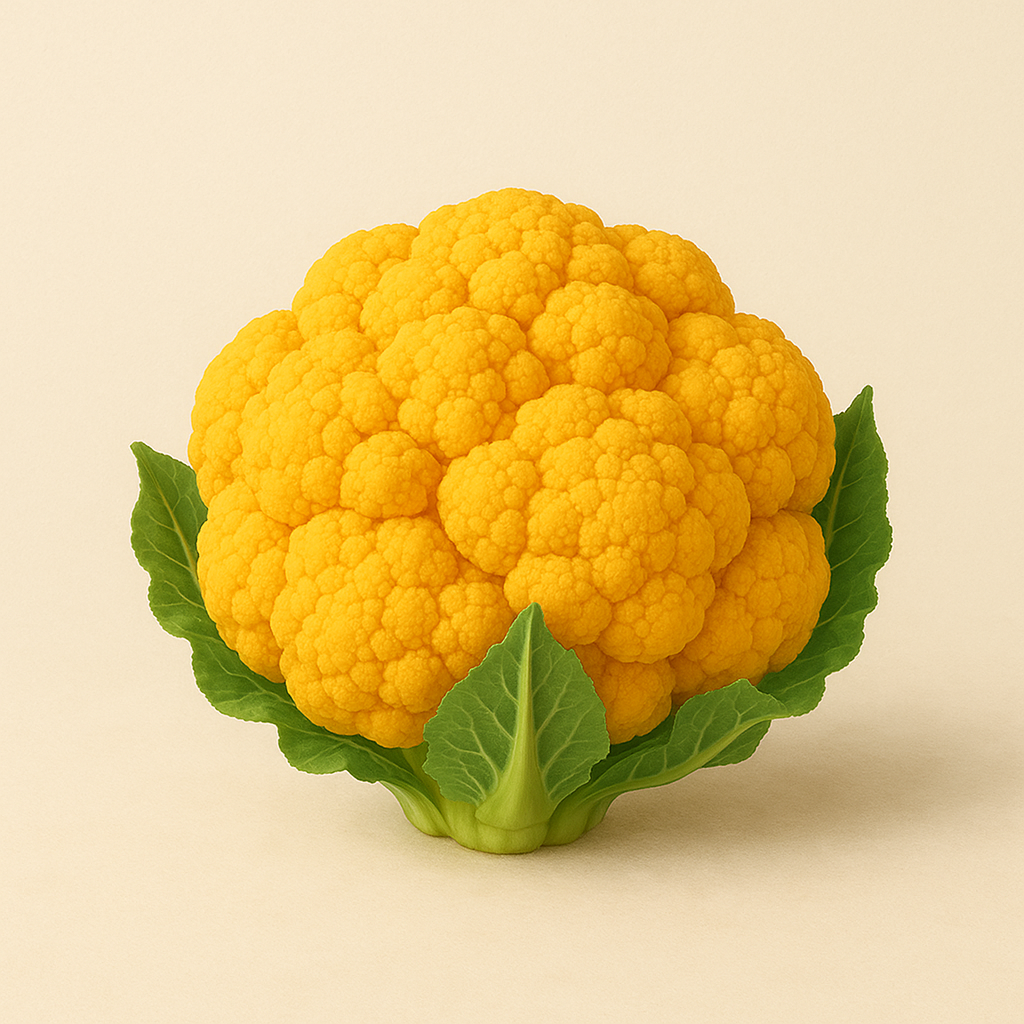
Orange Cauliflower
Brassica oleracea var. botrytis
Family: Brassicaceae
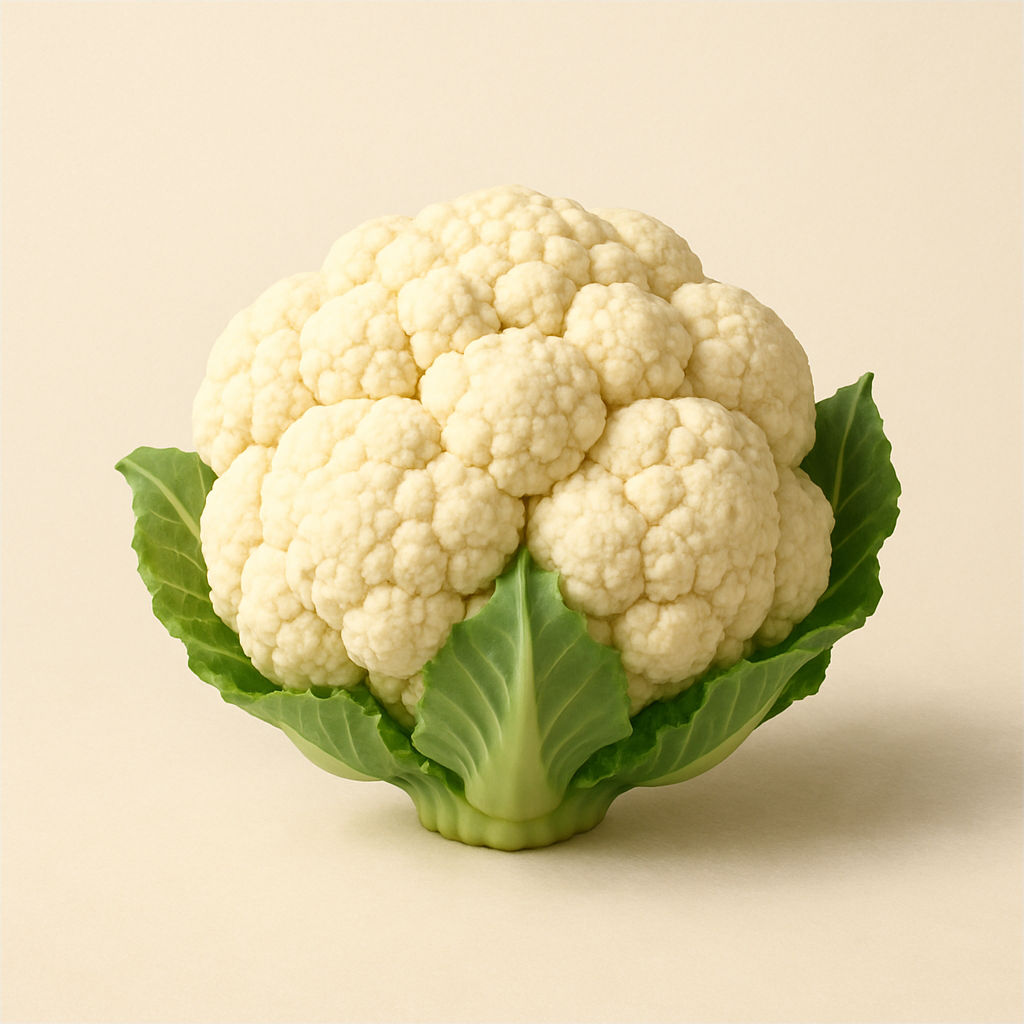
Orange cauliflower has vivid orange heads due to naturally occurring beta-carotene—the same compound in carrots. It contains significantly more Vitamin A than white cauliflower and has a slightly sweeter flavor.
Days to Harvest
60-80 days
Sun Needs
Full Sun (6+ hours)
high
Germination Temp
70°F optimal
Start Indoors
6 weeks before last frost
Germination
4-10 days
Seed Depth
1/4 to 1/2 inch
Light to Germinate
No
💡 Tip: Same care as white cauliflower. Orange color intensifies with cool temperatures.
Soil Type
Rich, well-draining soil
pH Range
6.5 - 7.5
Spacing
18-24 inches between plants
⚠️ Avoid planting near:
History
Orange cauliflower's origin story reads like botanical serendipity—a chance natural mutation discovered in a Canadian cauliflower field near Guelph, Ontario, in 1970. A single plant among thousands displayed vivid orange curds instead of the typical white, the result of a genetic mutation that allowed beta-carotene to accumulate in the florets rather than being blocked as in normal cauliflower. Plant breeders at Cornell University spent nearly two decades developing the mutation into a stable, commercially viable variety, finally releasing it in 1991 under the name "Cheddar" for its cheese-like golden hue. Unlike artificially colored vegetables, orange cauliflower's color is entirely natural and comes with significant nutritional benefits—containing up to 25 times more beta-carotene than white varieties. The color intensifies when the plants experience cool temperatures during head formation, creating deeper orange tones in fall-grown specimens. Initially marketed as a novelty, orange cauliflower gained serious traction as consumer interest in nutrient-dense foods grew. Today it represents one of the most successful natural vegetable color variants, joining purple and green cauliflower in offering gardeners and cooks visually stunning alternatives to traditional white. Its mild, slightly sweeter flavor has won over skeptics who assumed the color change might affect taste.
Nutritional Benefits
- ✓25 times more beta-carotene than white cauliflower
- ✓High in Vitamin A
- ✓Excellent source of Vitamin C
Optimal Growing Temp
60°F - 70°F
Orange cauliflower has similar requirements to white cauliflower, thriving between 60-70°F. Cool temperatures produce the best color and tightest curds.
Survival Range
40°F - 80°F
Can survive these temperatures
Frost Note: Tolerates light frosts down to 25°F. Like other cauliflowers, protect curds from hard freezes. The orange color intensifies with cool temperatures.
Best USDA Zones
Humidity
50-70%
Moderate humidity is best. Ensure good air circulation around curds to prevent disease.
Height
18-24 inches
Spread
18-24 inches
Growth Habit
upright
Germination
4-10 days
Germination similar to white cauliflower.
Seedling Stage
Duration: 4-6 weeks
True leaves: First true leaves similar to other cauliflower types
Transplant ready: Ready when 4-5 inches tall with 4-6 true leaves.
Vegetative Growth
Duration: 4-6 weeks after transplant
Standard cauliflower vegetative growth, building leaf canopy to support curd formation.
Flowering
Timing: 8-12 weeks after transplant
Duration: Curd forms over 10-14 days, revealing orange color as it develops
Curds are immature flower buds. The orange color becomes more intense as curds mature.
Harvest Maturity
Timing: 60-80 days from transplant
- Bright orange color is fully developed
- Curd is firm and tight
- Head reaches 6-8 inches diameter
- No yellowing or separation of florets
Per Plant
1.5-2.5 lbs per head
Per Square Foot
1-1.5 lbs per square foot
Harvest Frequency
One head per plant
Factors Affecting Yield
- •Cool temperatures develop best orange color
- •Similar growing requirements to white cauliflower
- •No blanching needed—color intensifies with light exposure
- •Consistent moisture prevents buttoning
Seedling Stage
Keep consistently moist
Established Plants
1-1.5 inches per week
During Fruiting
Critical moisture during curd formation
Preferred Method
Drip irrigation at soil level, same as white cauliflower.
⚠️ Critical Watering Periods
- • Curd formation
Pro Tips
- Water needs identical to white cauliflower
- Consistent moisture critical
Feeding Schedule
At Transplanting
Balanced with compost
Once
Vegetative Growth
High nitrogen
Every 2-3 weeks
Curd Formation
Balanced
Every 3 weeks
Organic Options
Same as white cauliflower. Ensure adequate boron.
Minimum Size
5 gallon minimum
Recommended Size
10-15 gallon
Depth Required
At least 12 inches deep
Best Varieties for Containers
Container Tips
- Same container requirements as white cauliflower
- The orange color makes a stunning container display
- Fall planting is most reliable
- Cheddar variety is the most common orange type
Why Prune
When
N/A
How Often
N/A
Technique
Orange cauliflower does not need blanching—the color is natural and stable.
Remove
- ✗ Only damaged leaves
Keep
- ✓ All healthy foliage
Plant Every
2-3 weeks
Sowings/Season
2-3 plantings
Duration
Spring and fall
Tips
- Same succession strategy as white cauliflower
- Fall crops typically produce best color