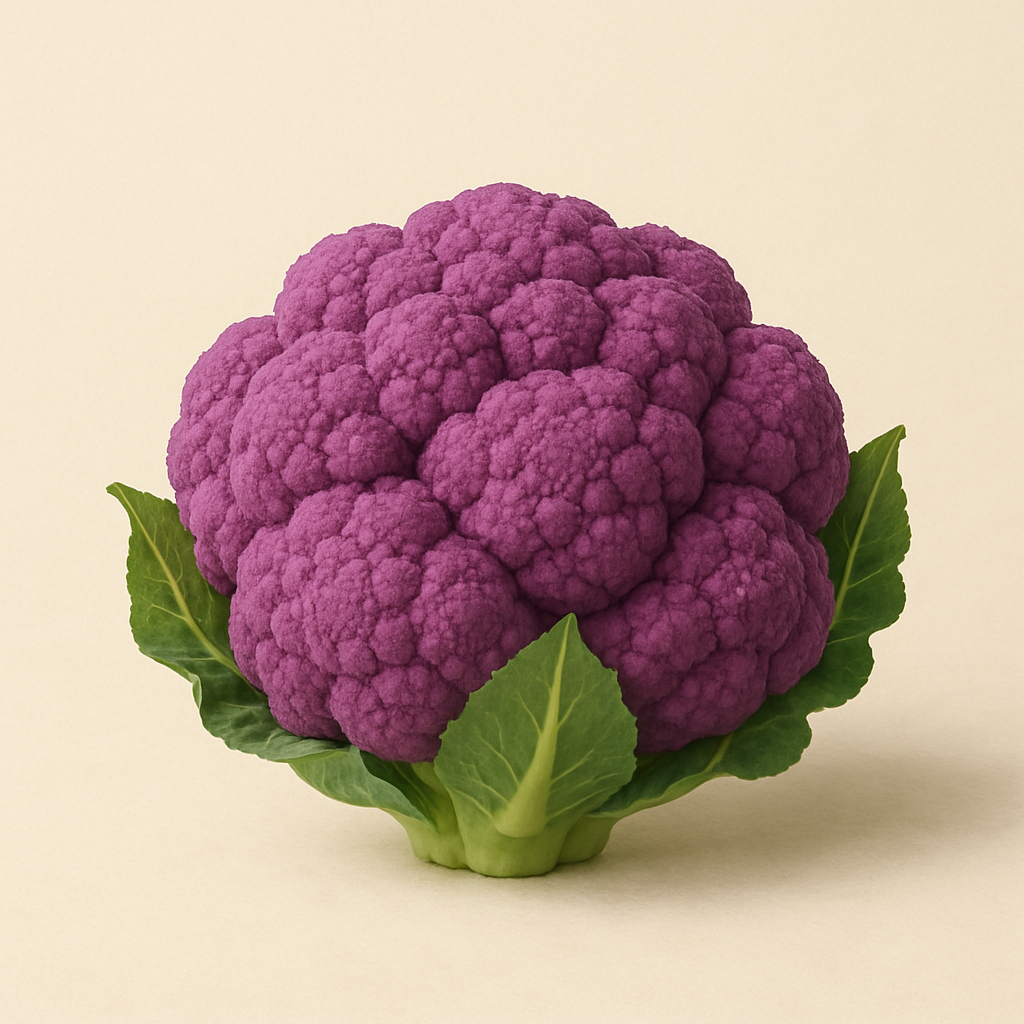
Purple Cauliflower
Brassica oleracea var. botrytis
Family: Brassicaceae
Purple cauliflower features stunning violet-purple heads colored by anthocyanin antioxidants—the same compounds in blueberries. The color fades somewhat when cooked but adds drama to any dish.
Days to Harvest
75-95 days
Sun Needs
Full Sun (6+ hours)
high
Germination Temp
70°F optimal
Start Indoors
6 weeks before last frost
Germination
4-10 days
Seed Depth
1/4 to 1/2 inch
Light to Germinate
No
💡 Tip: Color develops best in cool temperatures. Fall crops often have deeper purple.
Soil Type
Rich, well-draining soil
pH Range
6.5 - 7.5
Spacing
18-24 inches between plants
⚠️ Avoid planting near:
History
Purple cauliflower represents a triumph of patient plant breeding, developed by selecting and stabilizing natural mutations that produce anthocyanins—the same powerful antioxidant pigments found in blueberries, red wine, and eggplant. While purple-tinged cauliflower variants have appeared sporadically throughout agricultural history, systematic breeding efforts began in the late 20th century. The breakthrough variety "Graffiti" was developed in the Netherlands and introduced commercially in the 1990s, offering gardeners and chefs the first reliably deep purple cauliflower. The science behind its color is fascinating: in most white cauliflower, genes that produce anthocyanins are present but suppressed; purple varieties have mutations that unlock these dormant pathways, flooding the curds with pigment. The depth of purple color increases with cool temperatures and high light levels, making fall-grown specimens particularly vibrant. Like red cabbage, purple cauliflower's anthocyanins respond to pH—turning more blue in alkaline conditions and brighter purple in acidic ones, which is why adding lemon juice or vinegar helps preserve color during cooking. Purple cauliflower has become increasingly popular as research highlights anthocyanins' potential health benefits, from reducing inflammation to supporting cardiovascular health. Today it stands alongside orange, green, and Romanesco varieties in demonstrating cauliflower's remarkable genetic diversity.
Nutritional Benefits
- ✓Rich in anthocyanins (powerful antioxidants)
- ✓High in Vitamin C
- ✓Good source of Vitamin K
Optimal Growing Temp
60°F - 70°F
Purple cauliflower has similar requirements to white cauliflower, thriving between 60-70°F. Cool temperatures produce the most intense purple color.
Survival Range
40°F - 80°F
Can survive these temperatures
Frost Note: Tolerates light frosts down to 25°F. Cold exposure actually intensifies the purple anthocyanin pigments. Protect curds from hard freezes.
Best USDA Zones
Humidity
50-70%
Moderate humidity is best. Ensure good air circulation around curds.
Height
18-24 inches
Spread
18-24 inches
Growth Habit
upright
Germination
4-10 days
Germination similar to white cauliflower.
Seedling Stage
Duration: 4-6 weeks
True leaves: First true leaves similar to other cauliflower types
Transplant ready: Ready when 4-5 inches tall with 4-6 true leaves.
Vegetative Growth
Duration: 4-6 weeks after transplant
Standard cauliflower vegetative growth, building leaf canopy to support curd formation.
Flowering
Timing: 8-12 weeks after transplant
Duration: Curd forms over 10-14 days, with purple color developing as it matures
Curds are immature flower buds. Purple coloration intensifies with cool nights.
Harvest Maturity
Timing: 70-85 days from transplant
- Deep purple color is fully developed
- Curd is firm and tight
- Head reaches 6-8 inches diameter
- No browning or separation of florets
Per Plant
1.5-2.5 lbs per head
Per Square Foot
1-1.5 lbs per square foot
Harvest Frequency
One head per plant
Factors Affecting Yield
- •Cool temperatures develop best purple color
- •Similar growing requirements to white cauliflower
- •No blanching needed—color intensifies with light exposure
- •Color will fade when cooked—plan culinary use accordingly
Seedling Stage
Keep consistently moist
Established Plants
1-1.5 inches per week
During Fruiting
Critical moisture during curd formation
Preferred Method
Drip irrigation at soil level, same as white cauliflower.
⚠️ Critical Watering Periods
- • Curd formation
Pro Tips
- Water needs identical to white cauliflower
- Consistent moisture supports color development
Feeding Schedule
At Transplanting
Balanced with compost
Once
Vegetative Growth
High nitrogen
Every 2-3 weeks
Curd Formation
Balanced
Every 3 weeks
Organic Options
Same as white cauliflower. Ensure adequate boron.
Minimum Size
5 gallon minimum
Recommended Size
10-15 gallon
Depth Required
At least 12 inches deep
Best Varieties for Containers
Container Tips
- Same container requirements as white cauliflower
- The purple color makes a stunning container display
- Fall planting produces most intense color
- Graffiti and Depurple are common purple varieties
Why Prune
When
N/A
How Often
N/A
Technique
Purple cauliflower does not need blanching—the color is natural.
Remove
- ✗ Only damaged leaves
Keep
- ✓ All healthy foliage
Plant Every
2-3 weeks
Sowings/Season
2-3 plantings
Duration
Spring and fall
Tips
- Same succession strategy as white cauliflower
- Fall crops produce the most intense purple color