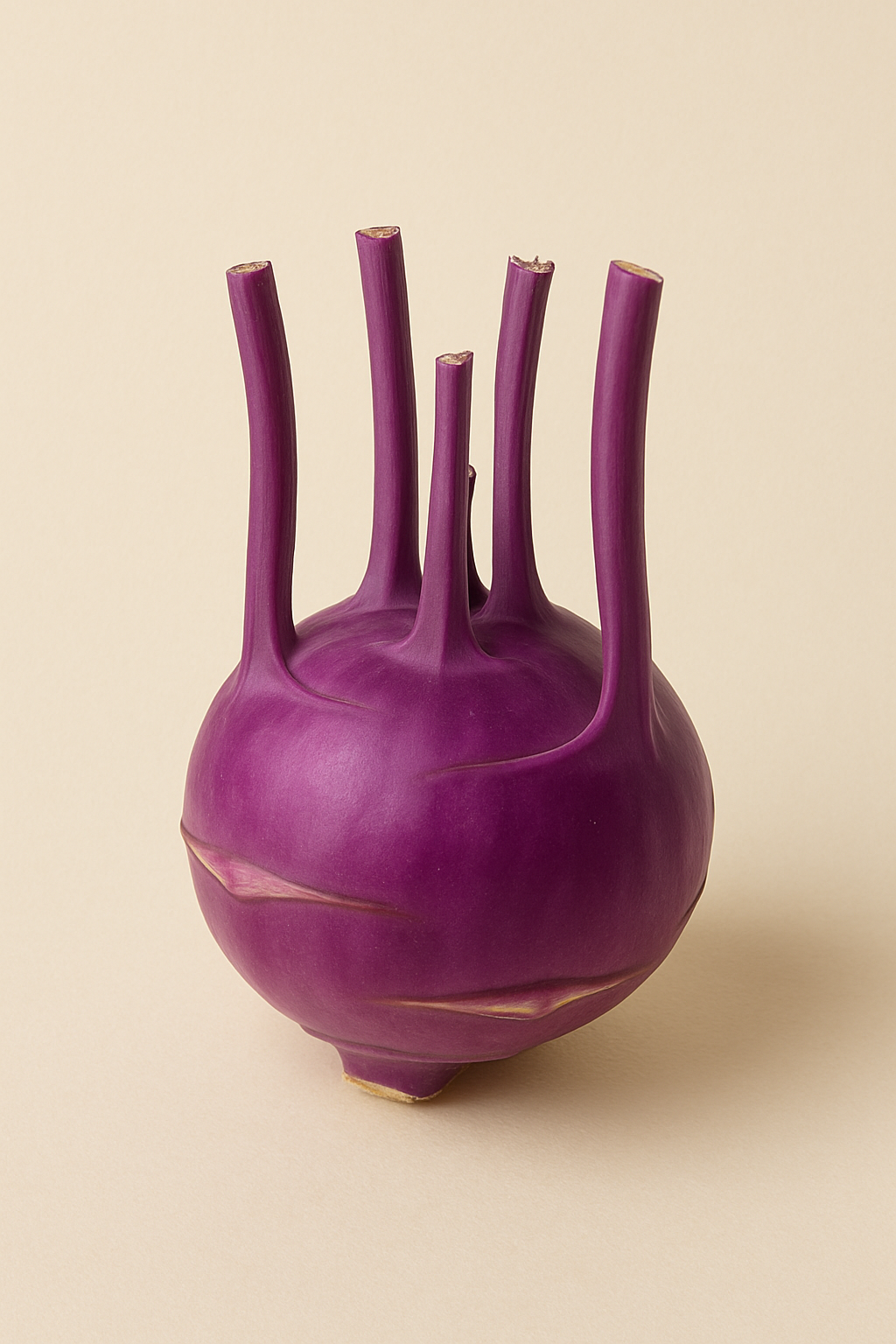
Purple Kohlrabi
Brassica oleracea var. gongylodes
Family: Brassicaceae
Purple kohlrabi is a colorful variety with vibrant purple-magenta skin and crisp white interior. It tastes identical to green kohlrabi but adds visual interest to the garden and plate.
Days to Harvest
50-65 days
Sun Needs
Full Sun to Part Shade (6+ hours)
moderate
Germination Temp
70°F optimal
Start Indoors
4 weeks before last frost
Germination
3-10 days
Seed Depth
1/4 to 1/2 inch
Light to Germinate
No
💡 Tip: Direct sow works well. Fast growing.
Soil Type
Well-draining, fertile soil
pH Range
6 - 7.5
Spacing
4-6 inches between plants
⚠️ Avoid planting near:
History
Purple kohlrabi, with its striking magenta-violet skin, has been cultivated alongside its pale green cousin in Central Europe since at least the 16th century. The variety "Purple Vienna" (Blauer Wiener in German) became established in the Austrian capital's market gardens, where its hardiness and visual appeal made it a favorite among gardeners and cooks alike. The purple coloration comes from anthocyanins concentrated in the skin—the same antioxidant compounds found in red cabbage, blueberries, and eggplant—while the interior flesh remains crisp and white. In German and Austrian culinary tradition, purple kohlrabi held no taste distinction from green varieties, but its appearance made it preferred for fresh preparations where the color could be showcased. Interestingly, the purple pigmentation may provide an agricultural advantage: some studies suggest anthocyanin-containing plants have slightly better cold tolerance and pest resistance. Purple Vienna kohlrabi traveled to North America with German immigrants in the 19th century, though green varieties long dominated commercial production. The modern interest in colorful, nutrient-dense vegetables has renewed appreciation for purple kohlrabi, particularly among farmers' market growers and health-conscious consumers who value both its visual impact and the additional antioxidant benefits in the skin.
Nutritional Benefits
- ✓Contains anthocyanins in skin
- ✓High in Vitamin C
- ✓Good source of fiber
Optimal Growing Temp
60°F - 70°F
Purple kohlrabi has identical growing requirements to green kohlrabi, thriving between 60-70°F. The purple skin color intensifies with cool temperatures.
Survival Range
40°F - 80°F
Can survive these temperatures
Frost Note: Tolerates light frosts down to 25°F. Purple varieties are slightly more cold-tolerant than green types. Light frost improves sweetness slightly.
Best USDA Zones
Humidity
50-70%
Tolerates various humidity levels. Same requirements as green kohlrabi.
Height
12-18 inches
Spread
8-12 inches
Growth Habit
upright
Germination
3-10 days
Quick germination identical to green kohlrabi.
Seedling Stage
Duration: 3-4 weeks
True leaves: First true leaves appear with typical kohlrabi shape, may show slight purple tints
Transplant ready: Ready when 3-4 inches tall with 3-4 true leaves.
Vegetative Growth
Duration: 3-5 weeks
Rapid growth forming the characteristic bulb above ground with purple skin.
Flowering
Timing: Bolts in second year or under stress
Duration: N/A for vegetable harvest
Same as green kohlrabi. Harvest before bolting.
Harvest Maturity
Timing: 55-70 days from seed
- Bulb reaches 2-3 inches diameter
- Purple skin color is fully developed
- Bulb is firm when pressed
- Harvest before woody
Per Plant
0.25-0.5 lb per bulb
Per Square Foot
0.5-1 lb per square foot
Harvest Frequency
One bulb per plant, but fast maturity allows multiple successions
Factors Affecting Yield
- •Same yield factors as green kohlrabi
- •Consistent moisture prevents woody texture
- •Don't let bulbs get oversized
- •Cool weather produces sweetest bulbs
Seedling Stage
Keep consistently moist
Established Plants
1 inch per week
During Fruiting
Consistent moisture during bulb formation
Preferred Method
Water at soil level. Same as green kohlrabi.
⚠️ Critical Watering Periods
- • Bulb formation
Pro Tips
- Water needs identical to green kohlrabi
- Consistent moisture key to tender bulbs
Feeding Schedule
At Planting
Balanced fertilizer
Once
Mid-Growth
Side-dress if needed
Once
Organic Options
Same as green kohlrabi. Not a heavy feeder.
Minimum Size
3 gallon minimum
Recommended Size
5 gallon, or multiple plants in wide container
Depth Required
At least 8 inches deep
Best Varieties for Containers
Container Tips
- Same container requirements as green kohlrabi
- The purple color adds visual interest to containers
- Fast-growing and easy for container culture
Why Prune
When
As needed
How Often
Rarely needed
Technique
Remove only damaged foliage.
Remove
- ✗ Damaged leaves
Keep
- ✓ All healthy leaves
Plant Every
2-3 weeks
Sowings/Season
3-5 plantings
Duration
Spring and fall
Tips
- Same succession strategy as green kohlrabi
- Fast maturity ideal for succession planting