Red Cabbage
Brassica oleracea var. capitata f. rubra
Family: Brassicaceae
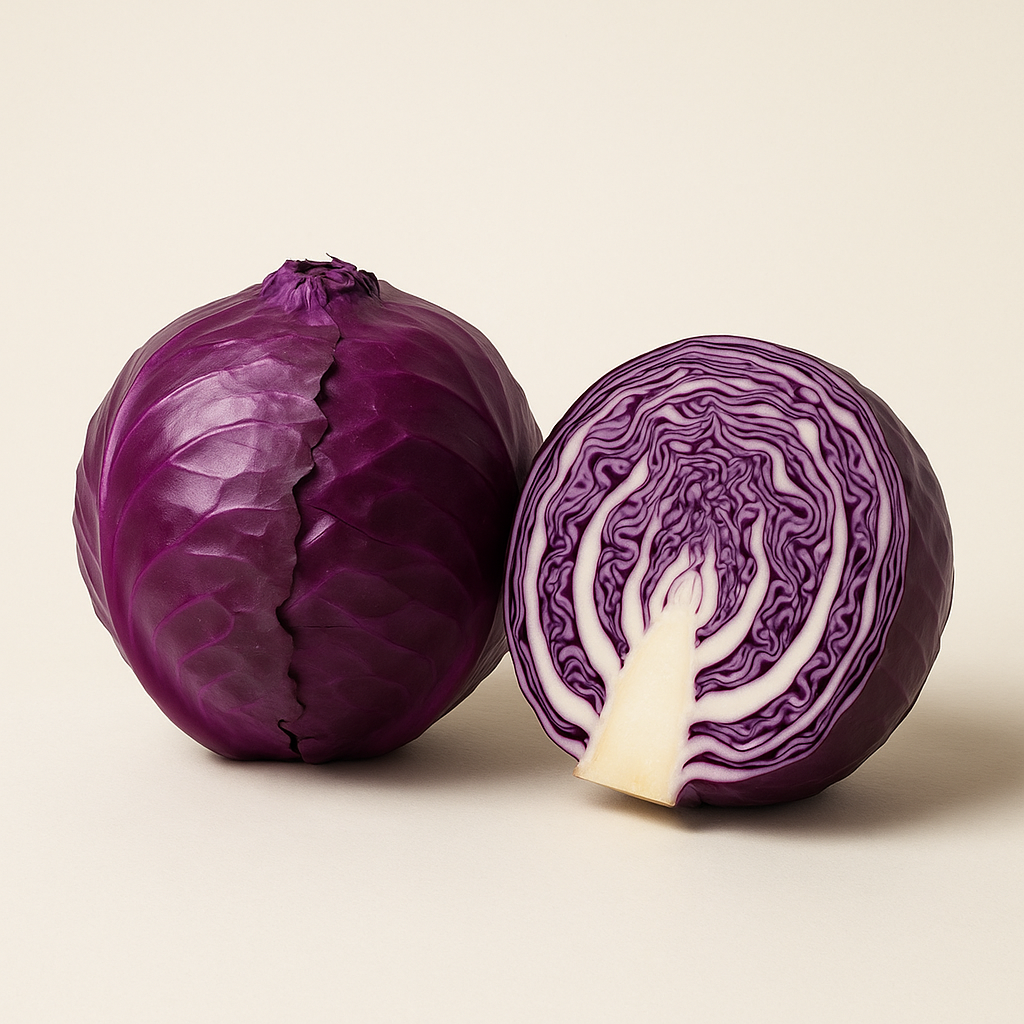
Red cabbage is a colorful variety with deep purple-red leaves that contain powerful anthocyanin antioxidants. Its slightly peppery flavor and stunning color make it perfect for slaws, braising, and pickling.
Days to Harvest
70-100 days
Sun Needs
Full Sun (6+ hours)
high
Germination Temp
70°F optimal
Start Indoors
6 weeks before last frost
Germination
4-10 days
Seed Depth
1/4 to 1/2 inch
Light to Germinate
No
💡 Tip: Start indoors for spring crop or in mid-summer for fall harvest.
Soil Type
Rich, well-draining soil
pH Range
6 - 7.5
Spacing
18 inches between plants
⚠️ Avoid planting near:
History
Red cabbage emerged as a cultivated variety in Western Europe during the medieval period, with the first definitive records appearing in England in the 14th century. Its striking purple-red coloration comes from anthocyanins, the same pigments found in blueberries and red wine, which react dramatically to pH levels—turning blue in alkaline conditions, bright red in acidic environments, and purple at neutral pH. This property made red cabbage invaluable to early scientists as a natural pH indicator, and it remains a popular chemistry demonstration today. German cuisine adopted red cabbage (Rotkohl) as a cornerstone, traditionally braised with apples, vinegar, and warm spices for holiday meals—a preparation dating back centuries. In Scandinavian countries, pickled red cabbage became essential to Christmas tables and smørrebrød (open-faced sandwiches). The vegetable stores exceptionally well through winter, making it historically crucial for nutrition during cold months before modern preservation methods. Beyond cuisine, red cabbage was used medicinally for treating inflammation and wounds, applications now supported by modern research into anthocyanin benefits. Today red cabbage is celebrated not just for its bold flavor and nutritional density but as a natural food colorant, lending its vivid hue to everything from Easter eggs to artisanal cocktails.
Nutritional Benefits
- ✓Very high in anthocyanins (antioxidants)
- ✓Excellent source of Vitamin C
- ✓High in Vitamin K
Optimal Growing Temp
60°F - 70°F
Red cabbage thrives in cool conditions between 60-70°F. It is very cold-hardy and the color actually intensifies with cold exposure. Heads form best during consistently cool weather.
Survival Range
25°F - 80°F
Can survive these temperatures
Frost Note: Red cabbage is extremely cold-hardy, tolerating temperatures down to 20°F once established. Frost exposure intensifies the purple-red color and improves sweetness. One of the most cold-tolerant brassicas.
Best USDA Zones
Humidity
50-70%
Moderate humidity is ideal. Good air circulation around the head helps prevent fungal issues and rot.
Height
12-18 inches
Spread
18-24 inches
Growth Habit
upright
Germination
4-10 days
Seeds germinate at 45-85°F, with optimal germination around 70°F. Similar to green cabbage.
Seedling Stage
Duration: 4-6 weeks
True leaves: First true leaves appear 7-10 days after sprouting with purple-red coloring evident early
Transplant ready: Ready to transplant when 4-5 inches tall with 4-6 true leaves. Harden off for 7-10 days.
Vegetative Growth
Duration: 6-10 weeks after transplant
Development of large outer leaves that wrap to form the dense head. Red cabbage typically takes longer to mature than green cabbage.
Flowering
Timing: Second year, or under stress
Duration: N/A for vegetable harvest
Red cabbage is biennial, flowering in the second year. Bolting in the first year indicates stress.
Harvest Maturity
Timing: 70-100 days from transplant depending on variety
- Head is firm and dense when squeezed
- Deep purple-red color is developed
- Head reaches 6-8 inches diameter
- Outer leaves begin to loosen slightly
- Weight feels substantial for the size
Per Plant
2-4 lbs per head
Per Square Foot
1-2 lbs per square foot
Harvest Frequency
One head per plant
Factors Affecting Yield
- •Cool temperatures intensify color and sweeten flavor
- •Consistent moisture produces solid, dense heads
- •Red cabbage takes longer to mature than green—be patient
- •Frost exposure improves both color and flavor
- •Adequate nutrition prevents small or loose heads
Seedling Stage
Keep consistently moist—water daily if needed
Established Plants
1-1.5 inches per week, deep watering
During Fruiting
Maintain consistent moisture during head formation
Preferred Method
Drip irrigation or soaker hoses at soil level. Avoid overhead watering that can promote disease.
⚠️ Critical Watering Periods
- • Head formation
Pro Tips
- Consistent moisture prevents cracking—sudden heavy watering after dry spell splits heads
- Mulch to maintain even soil moisture
- Red cabbage is similar to green cabbage in water needs
Feeding Schedule
At Transplanting
Balanced fertilizer with compost
Once at planting
Vegetative Growth
High nitrogen
Every 2-3 weeks
Head Formation
Balanced fertilizer
Every 3 weeks
Organic Options
Side-dress with compost every 3-4 weeks. Fish emulsion provides quick nitrogen. Ensure adequate calcium for solid heads.
Minimum Size
7 gallon minimum
Recommended Size
10-15 gallon for full-sized heads
Depth Required
At least 12 inches deep
Best Varieties for Containers
Container Tips
- Growing conditions similar to green cabbage
- Choose compact varieties for containers
- Water consistently—containers dry faster
- Feed every 2-3 weeks with balanced fertilizer
- The heavy head may need support as it matures
Why Prune
When
As needed
How Often
Rarely needed
Technique
Remove only damaged or diseased outer leaves.
Remove
- ✗ Damaged or yellowed outer leaves
Keep
- ✓ All healthy wrapper leaves that protect the developing head
Plant Every
3-4 weeks
Sowings/Season
2-3 plantings
Duration
Spring and fall growing seasons
Tips
- Fall crops develop more intense color
- Red cabbage stores well, reducing need for extended succession
- Choose varieties with different maturity dates