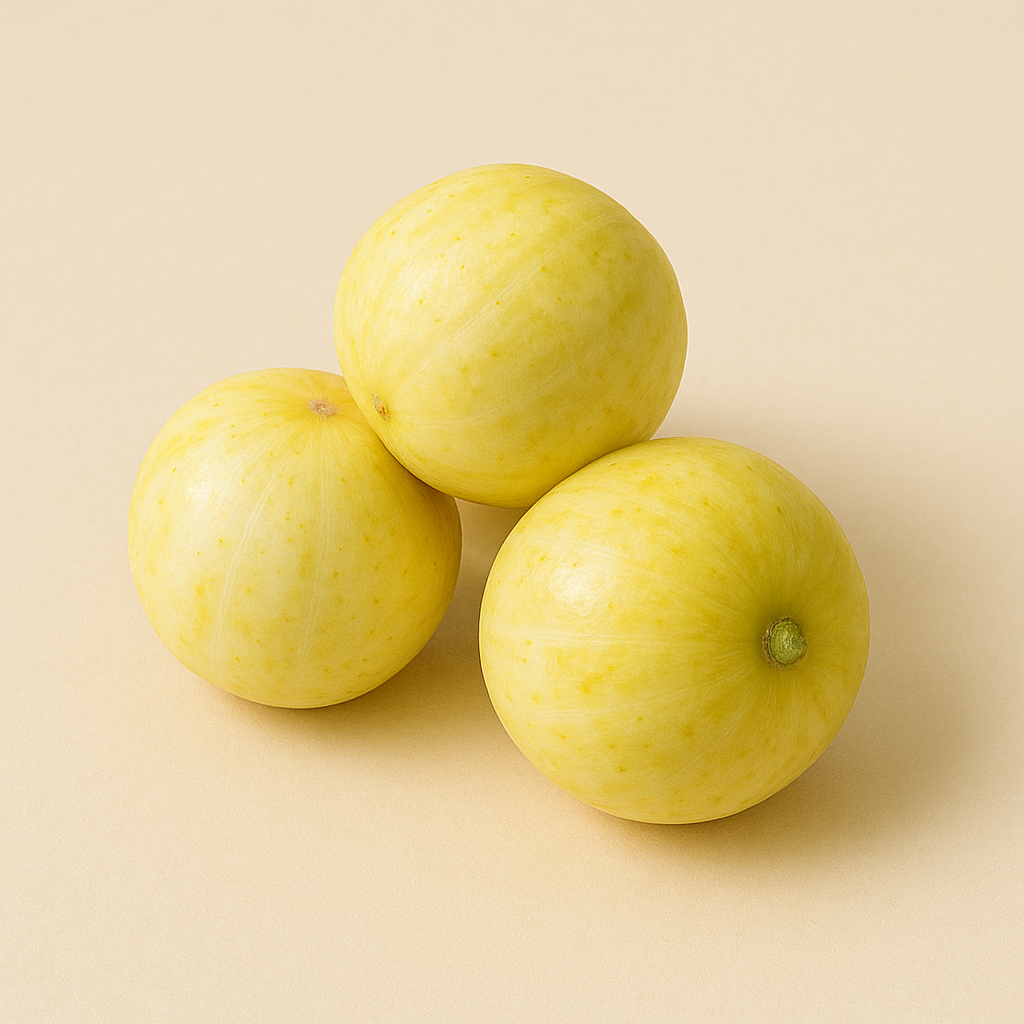
Lemon Cucumbers
Cucumis sativus
Family: Cucurbitaceae
Lemon cucumbers are round, yellow cucumbers that look like lemons but taste like mild, sweet cucumbers. Their unique appearance and excellent flavor make them garden favorites. Never bitter, thin-skinned, and very productive.
Days to Harvest
60-70 days
Sun Needs
Full Sun (6-8 hours)
high
Germination Temp
85°F optimal
Start Indoors
3 weeks before last frost
Germination
4-10 days
Seed Depth
1 inch
Light to Germinate
No
💡 Tip: Direct sow after frost. Very productive—2-3 plants may be enough.
Soil Type
Well-draining, fertile soil
pH Range
6 - 7
Spacing
36 inches between plants
⚠️ Avoid planting near:
History
Lemon cucumbers arrived in the United States sometime in the late 1800s, though their exact origins remain mysteriously unclear—they may trace to the Middle East, South Asia, or possibly even represent an American development from earlier yellow cucumber varieties. First documented in American seed catalogs around 1894, they quickly gained devoted followers among home gardeners charmed by their novelty appearance and superior eating quality. Unlike most cucumbers, lemon cucumbers virtually never turn bitter, even when overgrown or stressed by heat—a trait that makes them forgiving for less attentive gardeners. The name refers purely to their appearance; they contain no citrus flavor, tasting like mild, sweet cucumbers with exceptionally crisp, tender flesh. Victorian-era gardeners particularly prized them for their ornamental value in kitchen gardens, and they remained popular through the early 20th century before falling somewhat out of mainstream cultivation as commercial varieties dominated. The heirloom revival of the 1990s and 2000s brought lemon cucumbers back to prominence, and they're now among the most sought-after specialty cucumbers at farmers' markets. Children especially love them—the tennis-ball size makes them perfect for small hands, and their sweetness wins over picky eaters who reject conventional cucumbers. Harvest when they're tennis-ball sized and pale yellow; left to turn deep yellow, they become seedy.
Nutritional Benefits
- ✓High water content
- ✓Low in calories
- ✓Contains Vitamin K
Optimal Growing Temp
70°F - 85°F
Lemon cucumbers grow best in warm weather like other cucumbers. Growth stops below 55°F. Best production between 70-85°F.
Survival Range
50°F - 95°F
Can survive these temperatures
Best USDA Zones
Humidity
50-70%
Moderate humidity ideal. Good air circulation prevents disease. More disease-resistant than many cucumber varieties.
Height
4-6 feet (vining)
Spread
3-5 feet
Growth Habit
vine
Germination
4-10 days
Seeds germinate best at 80-85°F soil temperature. Quick and vigorous germination. Cotyledons emerge first.
Seedling Stage
Duration: 2-3 weeks
True leaves: First true leaves appear 7-10 days after sprouting, typical cucumber appearance
Transplant ready: Ready when 3-4 inches tall with 2-3 true leaves. Direct sow preferred.
Vegetative Growth
Duration: 3-4 weeks after emergence
Vigorous vine growth with development of tendrils. Grows quickly in warm weather.
Flowering
Timing: 4-5 weeks after emergence
Duration: Continuous throughout season
Produces separate male and female flowers. Bees essential for pollination. Female flowers have small round lemon-shaped ovary.
Fruit Development
Begins: 7-10 days after pollination
Duration: Continuous until frost
Round, lemon-shaped fruits develop quickly. Harvest at 2 inches (golf ball) for crunchiest texture.
Harvest Maturity
Timing: 55-70 days from seed
- Fruits are 2-3 inches diameter
- Pale yellow/cream color
- Firm texture
- Tennis ball size maximum for best quality
Per Plant
20-30+ cucumbers per plant over the season
Per Square Foot
10-15 cucumbers per plant
Harvest Frequency
Every 1-2 days during peak production
Factors Affecting Yield
- •Prolific producer when harvested frequently
- •Regular harvest essential—overripe fruits slow production
- •RARELY develops bitterness unlike regular cucumbers
- •Consistent watering maximizes yield
Seedling Stage
Keep soil consistently moist until established
Established Plants
1-2 inches per week delivered deeply
During Fruiting
Consistent moisture for best production and quality
Preferred Method
Drip irrigation or soaker hose ideal. Water at soil level to keep foliage dry.
⚠️ Critical Watering Periods
- • Flowering
- • Fruit development
Pro Tips
- PRO TIP: Lemon cucumbers are less prone to bitterness than regular varieties
- Consistent water still produces best quality
- Mulch heavily to maintain moisture
- Morning watering reduces disease
Feeding Schedule
At Planting
Compost and balanced fertilizer
Once
Vine Growth
Balanced 10-10-10
Every 3 weeks
Flowering
Lower nitrogen 5-10-10
Every 2-3 weeks
Fruiting
Side-dress with compost
Every 2-3 weeks
Organic Options
Side-dress with compost when vines begin to run
Minimum Size
5 gallons
Recommended Size
10 gallon for best production
Depth Required
At least 12 inches deep
Best Varieties for Containers
Container Tips
- Good container choice due to compact fruit size
- Provide small trellis or cage for climbing
- Kids love growing these in containers
- Perfect for patio gardens and small spaces
Support Type
A-frame trellis, cage, or fence
Height Needed
4-5 feet tall
When to Install
Install at planting time to avoid damaging roots
Method
Vines climb using tendrils. Round fruits don't need to hang for straight growth like long varieties.
Tips
- Trellising saves space and improves air circulation
- Round shape means fruits look good growing anywhere
- Easier to spot and harvest when trellised
- Ground-growing works fine for lemon cucumbers
Why Prune
When
Throughout growing season as needed
Technique
Prune lower leaves touching ground. Remove yellowing leaves.
Remove
- ✗ Lower leaves touching soil
- ✗ Yellowing or diseased leaves
Keep
- ✓ Main vines
- ✓ Productive laterals
- ✓ All developing fruits
Plant Every
3-4 weeks
Sowings/Season
2-3 plantings for extended harvest
Duration
From last frost until 8 weeks before first frost
Tips
- Succession planting extends fresh cucumber season
- Plants are prolific so one planting may suffice
- Later plantings produce into fall