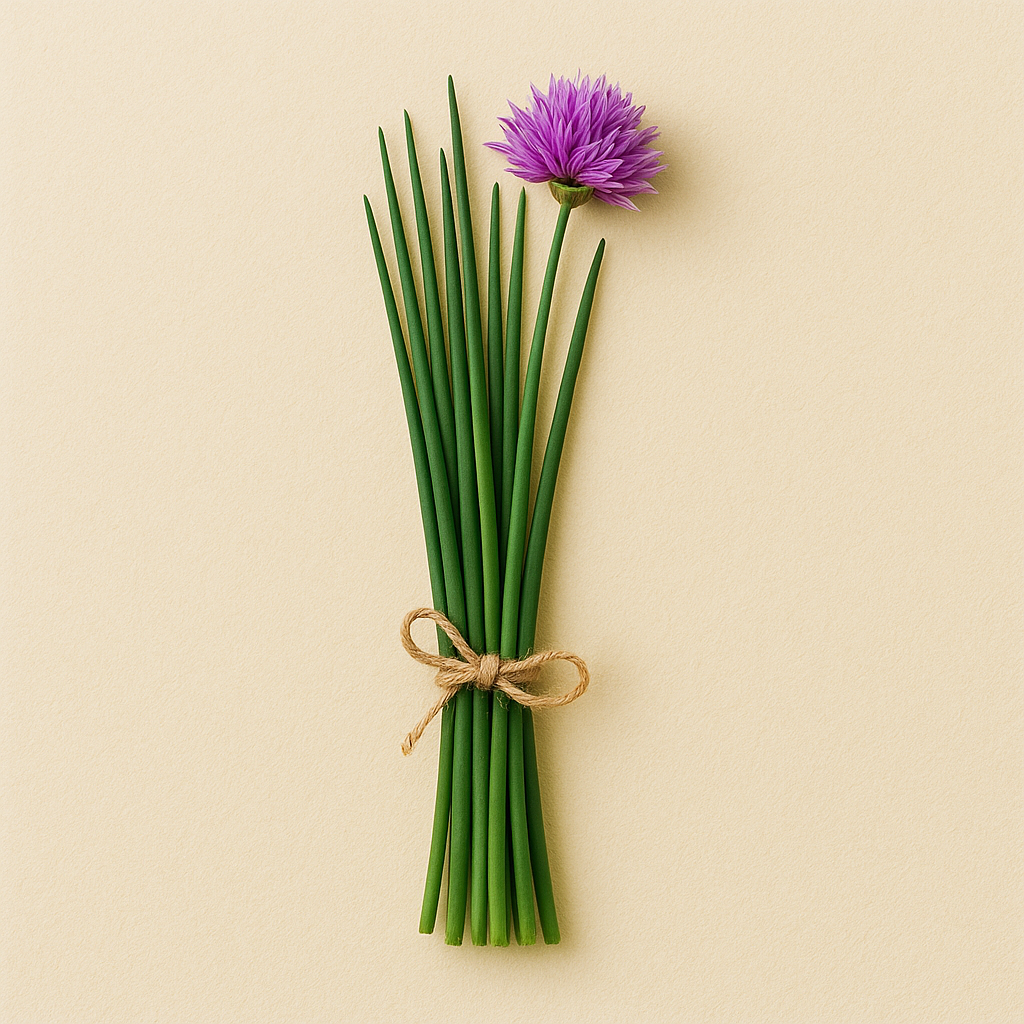
Chives
Allium schoenoprasum
Family: Amaryllidaceae
Chives are a mild-flavored member of the onion family with slender, hollow leaves and pretty purple pompom flowers. This perennial herb is one of the easiest to grow and returns year after year.
Days to Harvest
75-90 days
Sun Needs
Full Sun to Part Shade (4-6+ hours)
moderate
Germination Temp
70°F optimal
Start Indoors
8 weeks before last frost
Germination
14-21 days
Seed Depth
1/4 inch
Light to Germinate
No
💡 Tip: Be patient - germination is slow. Keep moist.
Soil Type
Rich, well-draining soil
pH Range
6 - 7
Spacing
6-8 inches between clumps
⚠️ Avoid planting near:
History
Chives (Allium schoenoprasum) are the only Allium species native to both the Old and New Worlds, found wild across Europe, Asia, and North America—evidence suggests they were one of the earliest seasonings used by ancient peoples on multiple continents. Chinese records document chive cultivation dating back over 5,000 years, where the herb was valued both for culinary use and believed medicinal properties including blood purification. The Romans believed chives would relieve sunburn pain and soothe sore throats, while medieval Europeans grew them in monastery gardens and attributed magical powers to the plant, hanging bunches in homes to ward off evil spirits and disease. The herb's name derives from the Latin "cepa" meaning onion, which evolved through Old French "cive" to the modern "chive." Unlike most alliums that originated in Central Asia, chives' circumpolar distribution meant they were likely consumed by prehistoric peoples from Siberia to Scotland to Scandinavia long before recorded history. The cheerful purple pompom flowers that appear in late spring are fully edible and have become increasingly popular among chefs for their mild onion flavor and striking visual appeal. Garlic chives (Allium tuberosum), a distinct but related species with flat leaves and white flowers, has been a staple of Asian cuisine for millennia and has gained popularity in Western gardens.
Nutritional Benefits
- ✓Rich in Vitamins A and C
- ✓Contains beneficial sulfur compounds
- ✓Good source of folate
Optimal Growing Temp
60°F - 75°F
Chives grow best at 60-75°F but are extremely adaptable. Growth slows in hot weather and during winter dormancy.
Survival Range
20°F - 90°F
Can survive these temperatures
Frost Note: Extremely cold-hardy perennial. Survives winter in zones 3-9. Foliage dies back but roots survive temperatures to -35°F.
Best USDA Zones
Humidity
40-60%
Tolerates various humidity levels. Good air circulation helps prevent rust and fungal issues.
Height
10-15 inches
Spread
10-12 inches
Growth Habit
clumping
Germination
10-14 days
Seeds germinate at 60-70°F. Grass-like seedlings emerge as thin, single tubes.
Seedling Stage
Duration: 4-6 weeks
True leaves: First leaves look like thin grass blades. Onion scent detectable when crushed.
Transplant ready: Ready to transplant when 3-4 inches tall with several leaves.
Vegetative Growth
Duration: Ongoing
Clumps expand each year. Hollow, tubular leaves emerge from bulb clusters.
Flowering
Timing: Late spring (Year 2+)
Duration: 2-3 weeks
Attractive purple pompom flowers beloved by bees. Flowers are edible with mild onion flavor.
Harvest Maturity
Timing: 60-90 days from seed (Year 1) or immediately from divisions
- Dense clump of hollow, tubular leaves
- Strong onion scent when cut
- Purple flower buds developing (spring)
- Ready to harvest when 6+ inches tall
Per Plant
Continuous harvest throughout growing season
Per Square Foot
2-4 cups cut leaves monthly
Harvest Frequency
Cut as needed, leaving 2 inches for regrowth
Factors Affecting Yield
- •Regular cutting promotes tender new growth
- •Clumps expand yearly, increasing yield
- •Removing flower stalks extends leaf harvest
- •Division every 3-4 years maintains vigor
Seedling Stage
Keep consistently moist during establishment
Established Plants
Water when soil dries slightly—tolerates some drought
During Fruiting
Regular water during active growth
Preferred Method
Water at base. Tolerant of various watering schedules once established.
Pro Tips
- Drought-tolerant once established
- More water needed during hot spells
- Reduce water as plant goes dormant in fall
Feeding Schedule
Early Spring
Light compost or balanced fertilizer
Once
Organic Options
Top-dress with compost in early spring.
Minimum Size
6 inch pot
Recommended Size
8-10 inch pot
Depth Required
At least 6 inches
Best Varieties for Containers
Container Tips
- One of the best herbs for containers
- Clumps can stay in containers for years
- Divide when pot-bound
- Winter outdoors in zones 3-9
- Attractive purple flowers add ornamental value