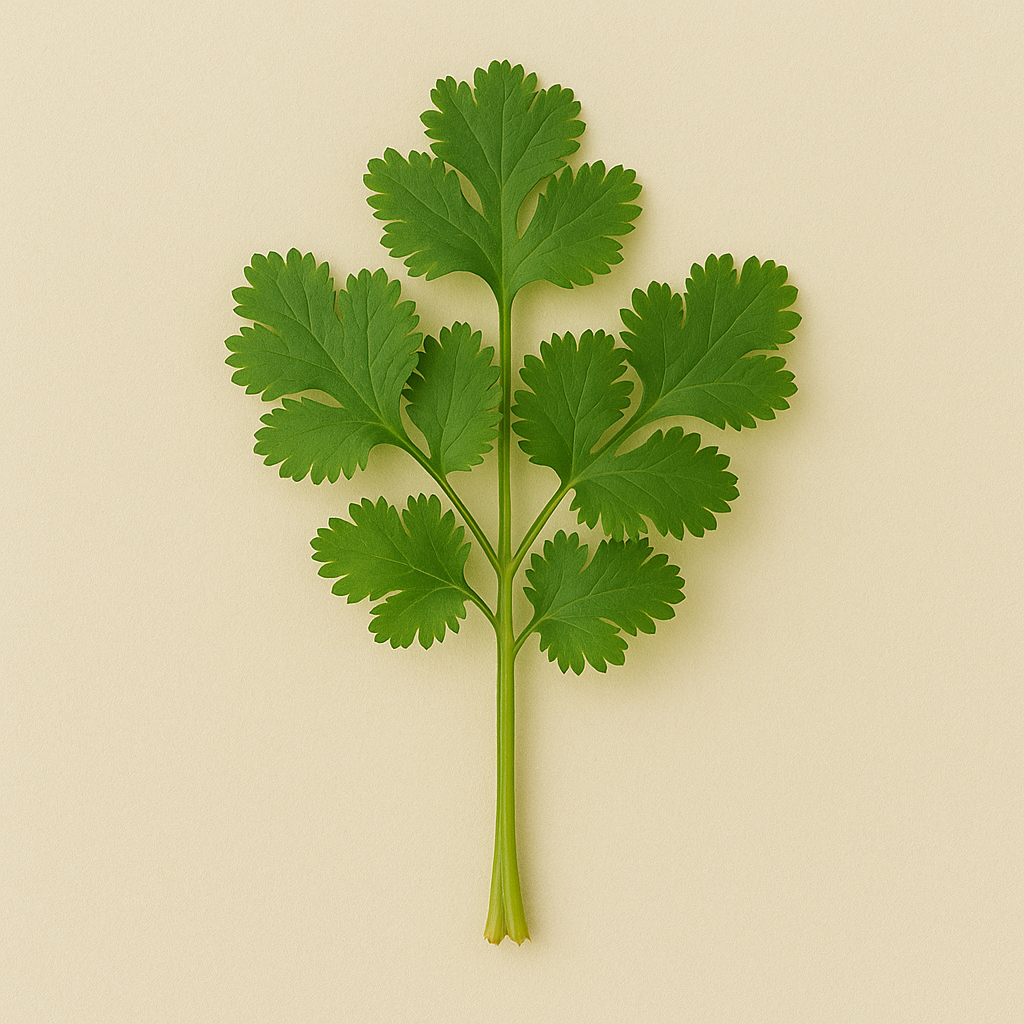
Cilantro/Coriander
Coriandrum sativum
Family: Apiaceae
Cilantro is a cool-season herb whose leaves are used fresh in many cuisines. When it flowers and sets seed, those seeds are the spice coriander. Both parts of this plant are valuable in the kitchen.
Days to Harvest
45-70 days
Sun Needs
Full Sun to Part Shade (4-6 hours)
moderate
Germination Temp
65°F optimal
Start Indoors
0 weeks before last frost
Germination
7-14 days
Seed Depth
1/4 inch
Light to Germinate
No
💡 Tip: Crush seeds slightly before planting to improve germination. Best direct sown as it doesn't transplant well.
Soil Type
Well-draining, moderately fertile soil
pH Range
6.2 - 6.8
Spacing
6-8 inches between plants, can be grown closer for microgreens
⚠️ Avoid planting near:
History
Coriander (Coriandrum sativum) is one of humanity's oldest cultivated spices, with archaeological evidence of its use dating back over 8,000 years to cave sites in Israel. The herb was found in the tomb of Tutankhamun, placed there around 1323 BCE, demonstrating its value in ancient Egyptian culture where it was used both medicinally and in the mummification process. The name "coriander" derives from the Greek "koris" meaning "bedbug," a reference to the strong, somewhat soapy smell of the fresh leaves that resembled the odor of crushed insects. This polarizing aroma is no accident—scientists have identified specific aldehyde compounds in cilantro that some people (those with certain olfactory receptor genes) perceive as pleasant and citrusy while others experience as overwhelmingly soapy. Ancient civilizations from the Hebrews (who likened manna to coriander seed in the Bible) to the Romans (who used it to preserve meat) relied heavily on this versatile plant. Spanish conquistadors introduced coriander to Mexico and South America in the 16th century, where it became inseparable from local cuisines and acquired the name "cilantro" from the Spanish word for the leaf. Today, cilantro leaves and coriander seeds are essential to cuisines spanning from Latin America to South Asia, making it one of the most globally important culinary herbs.
Nutritional Benefits
- ✓High in Vitamin K
- ✓Contains antioxidants
- ✓Good source of Vitamin A and C
Optimal Growing Temp
50°F - 75°F
Best growth 50-75°F. Below 50°F slows growth. Above 75°F triggers rapid bolting. Cold-hardy and tolerates light frost.
Survival Range
20°F - 85°F
Can survive these temperatures
Frost Note: Can tolerate light frost down to 20°F. Seedlings can survive brief dips to 15°F. Mature plants may survive winter in zones 8+.
Best USDA Zones
Humidity
40-50%
Tolerates low humidity well. High humidity can promote fungal issues on dense foliage.
Height
12-24 inches
Spread
6-12 inches
Growth Habit
upright
Germination
7-14 days
Cotyledons emerge. Seeds have hard coating—crushing slightly speeds germination.
Seedling Stage
Duration: 2-3 weeks
True leaves: First true feathery leaves appear 10-14 days after germination
Transplant ready: Best direct sown. If transplanting, move at 2-3 weeks when 2 inches tall. Has taproot that resents disturbance.
Vegetative Growth
Duration: 3-4 weeks (shorter in heat)
Produces lacy, aromatic leaves rapidly. This is the harvest window. Transition to bolting is quick once triggered by heat or stress.
Flowering
Timing: 4-6 weeks from germination (much faster in heat)
Duration: 2-3 weeks
Insect-pollinated. White or pale pink flowers appear in umbels.
Harvest Maturity
Timing: 45-70 days from seed for leaves; 90-110 days for mature coriander seeds
- Flower stalks appear
- Seeds form and turn brown
- Ready for coriander seed harvest
Per Plant
1/2 to 1 cup fresh leaves per plant (one-time harvest before bolting)
Harvest Frequency
Single harvest per planting, or cut-and-come-again for 2-3 cuttings before bolting
Factors Affecting Yield
- •Cool temperatures extend harvest window significantly
- •Succession planting every 2-3 weeks is essential for continuous supply
- •Heat dramatically shortens productive period
- •Slow-bolt varieties extend harvest by 1-2 weeks
Seedling Stage
Keep consistently moist. Water gently daily or twice daily in warm weather.
Established Plants
1 inch per week. Water when top inch of soil is dry.
Preferred Method
Water at soil level. Overhead watering okay for cilantro unlike basil. Prefers consistent moisture.
⚠️ Critical Watering Periods
- • Germination and seedling stage
- • Hot weather transitions
Pro Tips
- Drought stress is the #1 cause of premature bolting
- Consistent moisture extends harvest window
- Mulch helps maintain even moisture
- Water more frequently during hot spells to delay bolting
Feeding Schedule
Seedling
Light compost tea
Once at 2 weeks
Leaf production
Balanced liquid fertilizer
Every 3-4 weeks
Organic Options
Side-dress with compost at planting. Liquid feed every 3-4 weeks if needed.
Minimum Size
6 inches diameter, 1 gallon
Recommended Size
8-10 inches diameter, 2 gallons for best root development
Depth Required
8-12 inches minimum for taproot
Best Varieties for Containers
Container Tips
- Excellent in containers—easy to move to shade in hot weather
- Deep containers accommodate taproot better
- Sow directly in container—avoid transplanting
- Succession plant new containers every 2 weeks
- Containers heat faster—monitor soil temperature in summer
Why Prune
When
Begin harvest when plants are 4-6 inches tall
How Often
Every 1-2 weeks while in vegetative stage
Technique
Cut outer leaves or cut entire plant 1 inch above soil for cut-and-come-again harvest.
Remove
- ✗ Outer leaves
- ✗ Or entire plant at once for large harvest
Plant Every
Every 2-3 weeks
Sowings/Season
6-8 plantings per year
Duration
Spring: 6 weeks before last frost until heat arrives. Fall: 8 weeks before first frost through fall.
Tips
- Succession planting is ESSENTIAL for cilantro—each planting lasts only 3-4 weeks
- In hot climates, skip summer and focus on spring and fall
- In cool climates, grow continuously spring through fall
- Plant more heavily in spring and fall when conditions are ideal
- Keep spare seeds on hand—cilantro is fast-growing insurance crop