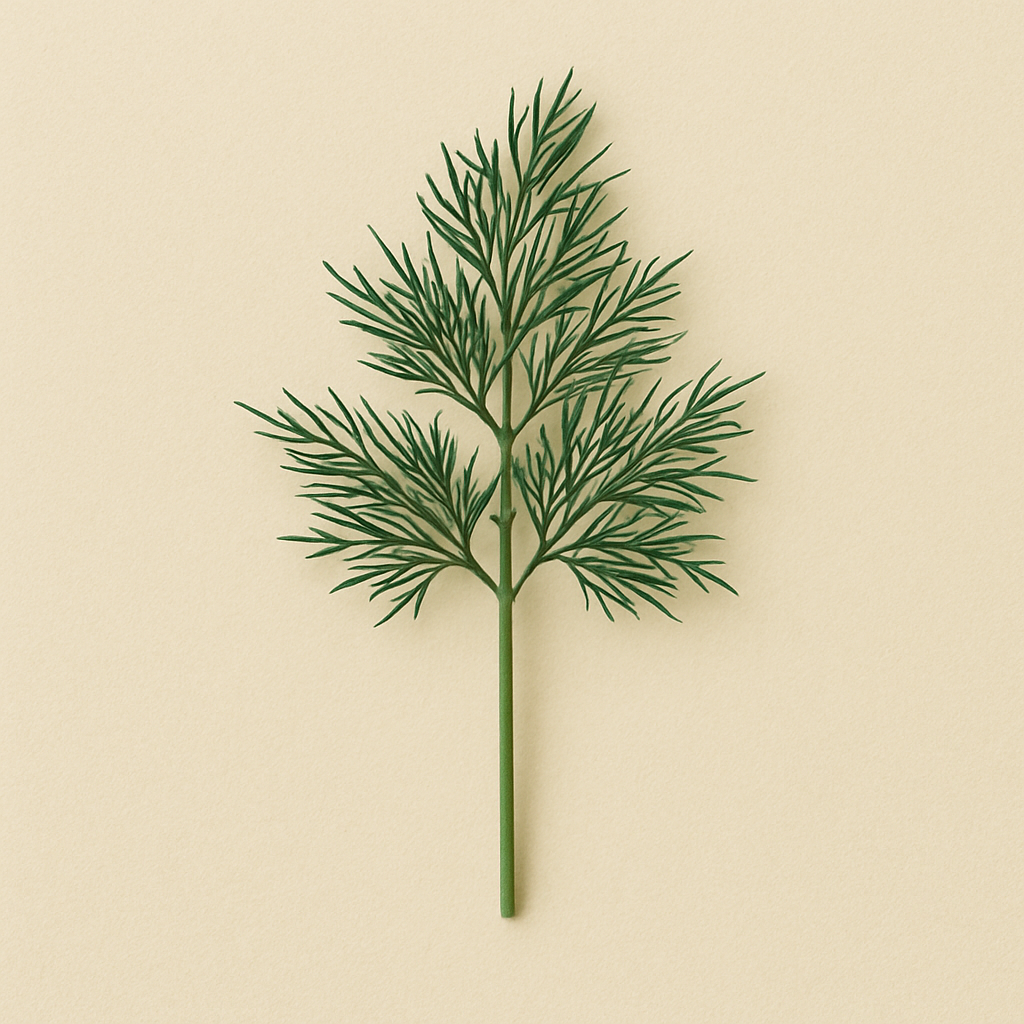
Dill
Anethum graveolens
Family: Apiaceae
Dill is a feathery annual herb with both edible leaves (dill weed) and seeds. Its distinctive flavor is essential for pickles, fish dishes, and many Eastern European recipes.
Days to Harvest
40-65 days
Sun Needs
Full Sun (6-8+ hours)
moderate
Germination Temp
65°F optimal
Start Indoors
0 weeks before last frost
Germination
7-14 days
Seed Depth
1/4 inch
Light to Germinate
No
💡 Tip: Direct sow - dill does not transplant well due to taproot.
Soil Type
Well-draining, moderately fertile
pH Range
5.5 - 7.5
Spacing
12-18 inches between plants
⚠️ Avoid planting near:
History
Dill (Anethum graveolens) has been cultivated for over 5,000 years, with origins likely in the Mediterranean region and western Asia. Ancient Egyptians used dill medicinally, and the herb appears in the Ebers Papyrus (circa 1500 BCE), one of the oldest surviving medical texts. The Romans considered dill a symbol of good luck, while gladiators rubbed dill oil on their skin before combat believing it would bring victory. The name "dill" derives from the Old Norse "dilla" meaning "to soothe" or "to lull," reflecting the herb's long history as a remedy for digestive complaints and colicky babies—"gripe water," a traditional infant colic remedy, traditionally contained dill. In medieval Europe, dill was believed to have magical properties: it was thought to protect against witchcraft and evil spells when worn or hung in doorways. The herb became particularly important in Scandinavian, German, Polish, and Russian cuisines, where it remains essential to iconic dishes from gravlax to borscht. Jewish dill pickles, developed by Eastern European immigrants in New York City in the late 19th century, became quintessentially American delicatessen fare. Both the feathery leaves (dill weed) and the seeds (dill seed) are used in cooking, with the leaves offering a fresher, grassier flavor while the seeds provide a more concentrated, slightly bitter taste.
Nutritional Benefits
- ✓Rich in Vitamin C
- ✓Contains calcium and manganese
- ✓Antioxidant properties
Optimal Growing Temp
60°F - 70°F
Dill prefers cool weather and grows best in spring and fall. Hot weather (above 80°F) causes rapid bolting to seed, ending leaf production. In warm climates, grow dill in partial shade or as a fall/winter crop.
Survival Range
50°F - 85°F
Can survive these temperatures
Frost Note: Tolerates light frosts (down to 25°F) but is killed by hard freezes. Can overwinter in mild climates (zones 8-10) if planted in late summer/fall.
Best USDA Zones
Humidity
40-60%
Tolerates a wide range of humidity. In very humid climates, ensure good air circulation to prevent fungal issues. Avoid overhead watering.
Height
24-36 inches
Spread
12-18 inches
Growth Habit
upright
Germination
7-14 days
Tiny thread-like seedlings emerge. Look delicate but grow quickly once established.
Seedling Stage
Duration: 2-3 weeks
True leaves: First true leaves are feathery and fern-like, distinctly dill-scented when touched.
Transplant ready: Not recommended—taproot makes transplanting difficult. Direct sow instead.
Vegetative Growth
Duration: 4-6 weeks
Rapid growth of feathery foliage. Harvest leaves anytime during this stage for best flavor. Plant stays compact and bushy if kept well-watered and cool.
Flowering
Timing: 6-10 weeks from sowing
Duration: 2-3 weeks
Umbrella-shaped yellow flower clusters attract beneficial insects, swallowtail butterflies, and pollinators. Self-fertile.
Harvest Maturity
Timing: 65-90 days for seed harvest
- Flower heads turn brown
- Seeds develop flat, oval shape
- Plants begin to decline after seed formation
Per Plant
4-8 ounces of fresh leaves per plant over harvest season; 2-3 tablespoons of seeds per flower head.
Per Square Foot
1-2 plants per square foot for leaf harvest; space wider (1 plant per 1.5 sq ft) for seed production.
Harvest Frequency
Harvest leaves continuously every few days. For seeds, harvest once when seed heads turn brown.
Factors Affecting Yield
- •Cool weather extends leaf production
- •Heat triggers rapid bolting
- •Consistent moisture delays flowering
- •Succession planting ensures continuous supply
Seedling Stage
Keep soil consistently moist but not waterlogged. Water gently to avoid displacing delicate seedlings. Mist if surface dries.
Established Plants
Water deeply when top inch of soil is dry—typically every 3-4 days. Consistent moisture prevents premature bolting.
During Fruiting
If growing for seeds, reduce watering slightly once flowering begins to concentrate flavor in seeds.
Preferred Method
Water at soil level to keep feathery foliage dry. Drip irrigation or soaker hoses ideal. Avoid overhead watering which can promote fungal disease.
Pro Tips
- Morning watering allows foliage to dry before evening
- Mulch lightly to maintain even soil moisture and cool roots
- Drought stress triggers immediate bolting
- In hot climates, water daily to keep plants producing leaves
Feeding Schedule
Planting
Compost or balanced organic fertilizer mixed into soil
Once at planting
Vegetative growth
Light liquid fertilizer or compost tea
Every 3-4 weeks if needed
Flowering/seed production
None—excess nitrogen reduces seed flavor
Stop fertilizing
Organic Options
Side-dress with compost or apply diluted liquid fertilizer. Dill needs minimal feeding—overfertilizing produces lush foliage but weak flavor.
Minimum Size
10 inch pot
Recommended Size
12-14 inch pot
Depth Required
At least 12 inches deep for taproot
Best Varieties for Containers
Container Tips
- Use deep pots to accommodate the taproot
- Dwarf varieties like "Fernleaf" are more suited to containers
- Place in cool location; containers heat up quickly in sun
- Water daily in hot weather to prevent bolting
- Harvest frequently to delay flowering
Plant Every
Every 2-3 weeks
Sowings/Season
4-6 plantings for continuous leaf harvest
Duration
Plant from early spring through early summer in cool climates; spring and fall in hot climates
Tips
- Succession plant for continuous fresh leaves all season
- First planting bolts quickly; later plantings provide backup
- In hot climates, stop planting in early summer and resume in late summer
- Final planting can be allowed to flower and set seed
- Mark succession plantings to track which is ready to harvest