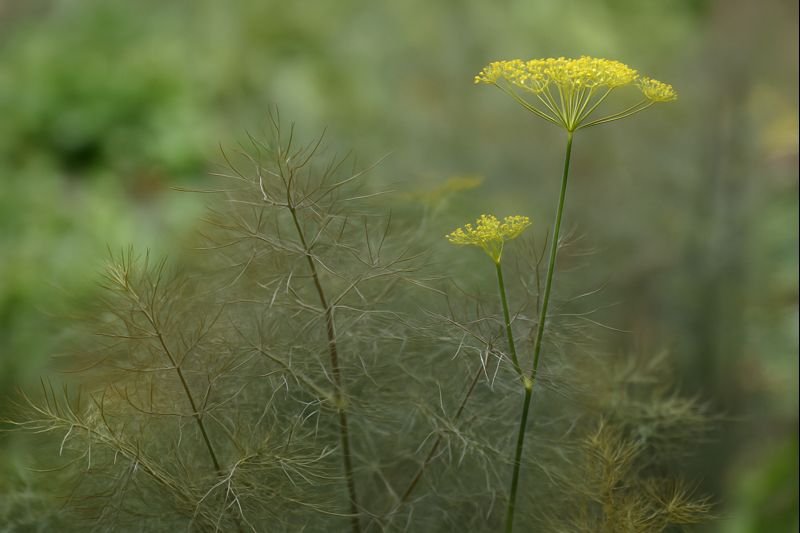
Fennel
Foeniculum vulgare
Family: Apiaceae
Fennel is a tall, feathery perennial herb with an unmistakable licorice-anise flavor used throughout Mediterranean and Asian cuisines. All parts of the plant are edible—the aromatic fronds season dishes like dill, the seeds are a prized spice, and the pollen is a gourmet delicacy. This is herb fennel (leaf type), distinct from bulbing Florence fennel.
Days to Harvest
90-115 days
Sun Needs
Full Sun (6-8+ hours)
moderate
Germination Temp
70°F optimal
Start Indoors
4 weeks before last frost
Germination
7-14 days
Seed Depth
1/4 inch
Light to Germinate
No
💡 Tip: Fennel has a taproot and dislikes transplanting. Direct sowing is preferred. If starting indoors, use deep pots and transplant carefully while young. Seeds germinate readily without special treatment.
Soil Type
Well-draining, average to rich soil. Tolerates poor soil.
pH Range
6 - 8
Spacing
12-18 inches between plants for good air circulation
⚠️ Avoid planting near:
History
Foeniculum vulgare (fennel) has been cultivated for over 4,000 years, with evidence of its use found in ancient Egypt, China, and around the Mediterranean. The ancient Egyptians used fennel as a food, medicine, and ceremonial herb, while the Greek name "marathon" derives from the Battle of Marathon (490 BCE), fought on a field of fennel—the Greek word "marathos" means fennel, and the town took its name from the abundant wild fennel growing there. The Romans were passionate about fennel, using it to treat over 22 different ailments and believing it improved eyesight and gave courage—gladiators mixed fennel into their food before entering the arena. Pliny the Elder wrote that serpents ate fennel when shedding their skin to restore their sight, reinforcing the association with eye health. During the Middle Ages, fennel became one of the nine sacred herbs of the Anglo-Saxons, hung over doors on Midsummer's Eve to ward off evil spirits and protect against witchcraft. Medieval monks cultivated fennel in monastery gardens for medicinal use, and chewing fennel seeds became customary during long church services to suppress hunger and mask bad breath. Charlemagne's famous "Capitulare de villis" of 812 CE mandated fennel cultivation on all imperial farms. Italian immigrants brought fennel to North America, where it naturalized widely in California, becoming so abundant along roadsides that it's now considered invasive in some regions. The phrase "to sell fennel" in ancient Greece meant to deceive or flatter, possibly because fennel was used to bulk up inferior products. Today, fennel is essential to Mediterranean, Middle Eastern, Indian, and Chinese cuisines, prized for its sweet anise flavor in everything from Italian sausage to French bouillabaisse to Indian panch phoron spice blend. Wild fennel grows prolifically in California, where chefs forage the pollen as a premium ingredient.
Nutritional Benefits
- ✓Rich in fiber for digestive health
- ✓High in Vitamin C and antioxidants
- ✓Good source of potassium and manganese
Optimal Growing Temp
60°F - 75°F
Fennel prefers moderate temperatures. Grows best in cool weather but tolerates heat. Bolts in hot weather.
Survival Range
40°F - 90°F
Can survive these temperatures
Frost Note: Tolerates light frosts but killed by hard freezes. Perennial in zones 6-10, annual elsewhere.
Best USDA Zones
Humidity
40-60%
Tolerates a range. Good air circulation helps prevent disease.
Height
3-5 feet
Spread
18-24 inches
Growth Habit
upright
Germination
10-14 days
Direct sow preferred due to taproot. Seeds germinate easily.
Seedling Stage
Duration: 4-6 weeks
True leaves: Feathery, dill-like leaves emerge with anise scent.
Transplant ready: If starting indoors, transplant when 3-4 inches tall. Handle taproot carefully.
Vegetative Growth
Duration: 60-90 days
Tall, feathery foliage develops. Harvest fronds continuously. Forms bulb in bulbing varieties.
Flowering
Timing: 90-120 days (triggered by heat/day length)
Duration: 3-4 weeks
Umbrella flower heads attract beneficial insects. Produces edible seeds.
Harvest Maturity
Timing: 60-90 days for fronds; 90-120 for seeds
- Full height reached
- Ready to flower
- Seeds turning brown
Per Plant
Abundant fronds all season; 2-4 tablespoons seeds per plant.
Per Square Foot
1 plant per 1-2 square feet (needs space)
Harvest Frequency
Harvest fronds continuously. Seeds once per season after flowering.
Factors Affecting Yield
- •Cool weather delays bolting
- •Regular frond harvest
- •Full sun
Seedling Stage
Keep consistently moist.
Established Plants
Water when top inch dry. Every 3-4 days.
During Fruiting
Moderate water during flowering and seed development.
Preferred Method
Water at soil level. Consistent moisture prevents bolting.
Pro Tips
- Consistent moisture delays bolting
- Mulch to retain moisture
Feeding Schedule
Planting
Compost
Once
Growing
Liquid fertilizer
Every 3-4 weeks
Organic Options
Regular feeding supports continuous frond production.
Minimum Size
12 inch pot
Recommended Size
14-18 inch pot
Depth Required
At least 14-18 inches for taproot
Best Varieties for Containers
Container Tips
- Deep container essential for taproot
- Herb fennel works better in containers than bulbing types
- May need staking when tall
- Keep moist but well-drained
Plant Every
Every 3-4 weeks
Sowings/Season
2-3 plantings
Duration
Spring through early summer; again late summer
Tips
- Succession plant for continuous frond harvest
- Later plantings provide seed harvest