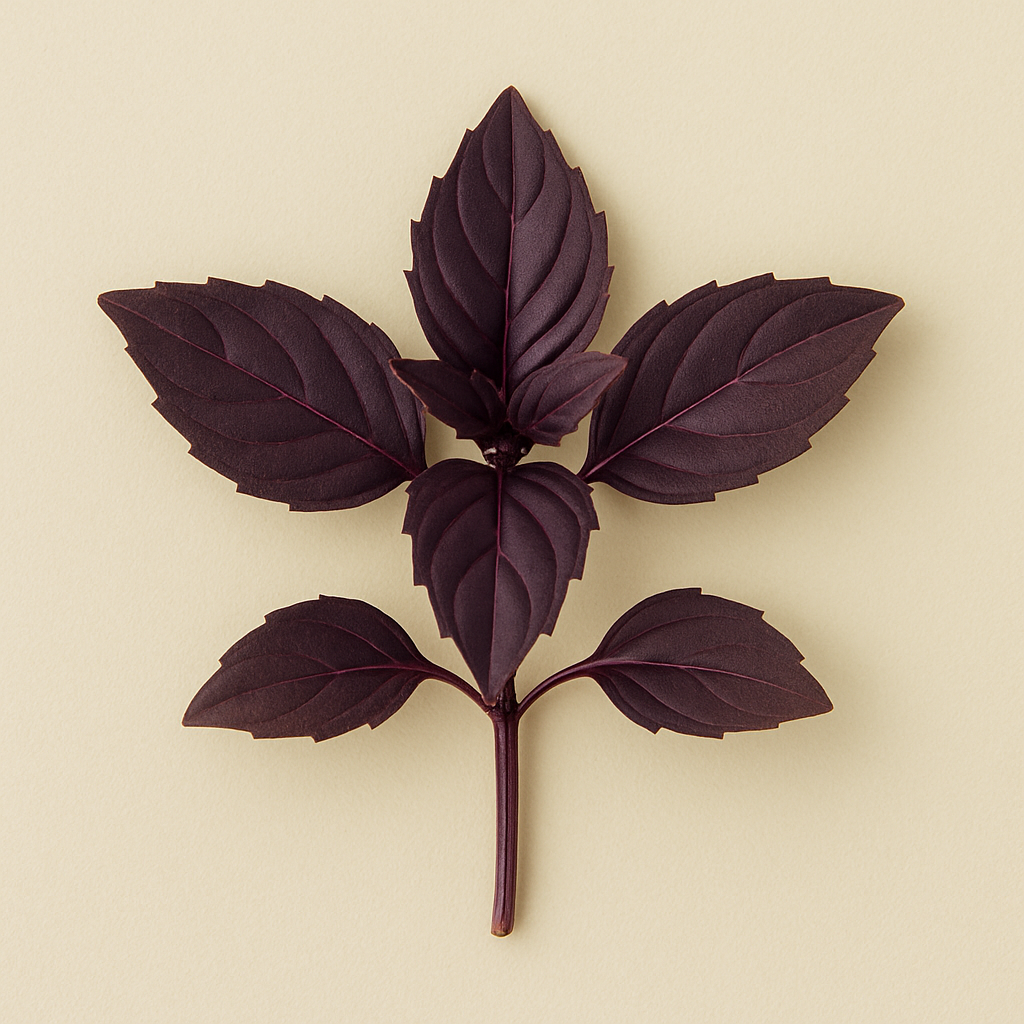
Purple Basil
Ocimum basilicum var. purpurascens
Family: Lamiaceae
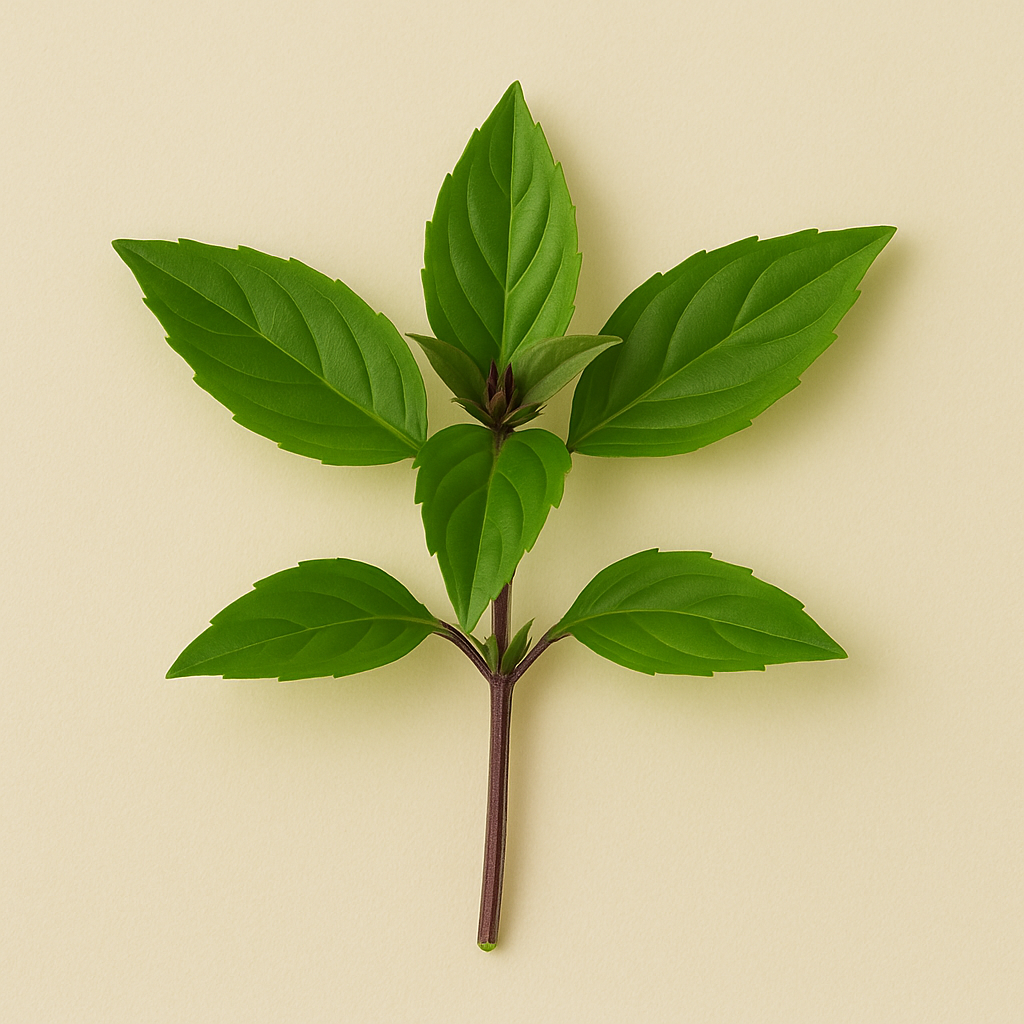
Purple basil is a stunning ornamental and culinary herb with deep purple to burgundy leaves. It has a slightly stronger, more clove-like flavor than green basil and adds beautiful color to gardens and dishes.
Days to Harvest
60-80 days
Sun Needs
Full Sun (6-8+ hours)
moderate
Germination Temp
70°F optimal
Start Indoors
6 weeks before last frost
Germination
5-10 days
Seed Depth
1/4 inch
Light to Germinate
Yes
💡 Tip: Seeds need light to germinate. Press into surface, do not cover.
Soil Type
Rich, well-draining soil
pH Range
6 - 7
Spacing
12-18 inches between plants
⚠️ Avoid planting near:
History
Purple basil varieties arose from natural genetic mutations that cause elevated anthocyanin production—the same pigments responsible for the color in blueberries and red cabbage. While purple-leaved basils likely existed in Asia and Africa for centuries, the Western world's introduction to named purple varieties began with "Dark Opal," developed at the University of Connecticut by John Scarchuk and Joseph Lent in 1962. Dark Opal was bred from green Genovese basil crossed with a purple-leaved Turkish variety, and it won the prestigious All-America Selections award in 1962, launching purple basil into mainstream American gardens. The variety's tendency to produce some green or mottled leaves frustrated both gardeners and commercial growers, leading to further breeding efforts that produced more color-stable varieties like "Red Rubin" in Europe during the 1990s. Purple basil's culinary value extends beyond aesthetics: the anthocyanins responsible for its color are powerful antioxidants with documented health benefits, and the leaves often carry a more pronounced clove-like flavor compared to green varieties due to higher concentrations of certain essential oils. In modern cuisine, purple basil has found a particular niche in craft cocktails and artisanal vinegars, where its dramatic color creates stunning visual presentations.
Nutritional Benefits
- ✓High in anthocyanins (purple pigments with antioxidant properties)
- ✓Rich in Vitamin K
- ✓Contains anti-inflammatory compounds
Optimal Growing Temp
60°F - 75°F
Grows best 60-75°F. Similar to green basil but purple color intensifies in full sun and warm temperatures.
Survival Range
32°F - 90°F
Can survive these temperatures
Frost Note: Killed by frost below 28°F. Even more sensitive to cold than green basil—purple varieties show cold damage earlier.
Best USDA Zones
Humidity
40-60%
Good air circulation prevents disease. Purple varieties can be more susceptible to fungal issues due to denser leaf structure.
Height
16-24 inches
Spread
12-18 inches
Growth Habit
upright
Germination
5-10 days
Cotyledons emerge green, purple coloration develops as true leaves form.
Seedling Stage
Duration: 2-3 weeks
True leaves: First true leaves appear at 7-10 days with purple tinting on edges
Transplant ready: Ready when 3-4 inches tall with purple coloring established
Vegetative Growth
Duration: 4-6 weeks
Rapid growth with progressively deeper purple color. Full sun intensifies pigmentation.
Flowering
Timing: 6-8 weeks (earlier in heat)
Duration: Continuous
Insect-pollinated. Purple flowers are highly ornamental.
Harvest Maturity
Timing: 60-90 days from seed
- Deep purple leaves
- 12+ inches tall
- Multiple branching stems
Per Plant
1-2 cups fresh leaves per harvest
Harvest Frequency
Every 2-3 weeks
Factors Affecting Yield
- •Full sun produces deepest purple color and best flavor
- •Regular harvesting prevents flowering
- •Purple varieties can be slightly less productive than green basil
Seedling Stage
Keep consistently moist
Established Plants
1 inch per week
Preferred Method
Water at base. Avoid wetting foliage.
⚠️ Critical Watering Periods
- • Seedling stage
- • Hot weather
Pro Tips
- Same watering needs as green basil
- Purple leaves show stress slightly later than green—monitor carefully
- Consistent moisture maintains color intensity
Feeding Schedule
Seedling
Weak liquid fertilizer
Every 2 weeks at half strength
Vegetative
Balanced fertilizer
Every 3-4 weeks
Organic Options
Dilute and apply to moist soil
Minimum Size
8 inches diameter, 1-2 gallons
Recommended Size
10-12 inches diameter, 2-3 gallons
Depth Required
8-10 inches
Best Varieties for Containers
Container Tips
- Stunning in containers—ornamental value equals culinary value
- Place in full sun for deepest color
- Excellent mixed with green basil for color contrast
- Use decorative pots to showcase the purple foliage
Why Prune
When
Weekly once 6 inches tall
How Often
Weekly
Technique
Pinch above leaf nodes, removing flowers immediately
Remove
- ✗ Flower buds immediately
- ✗ Top 1-2 inches of growth
Keep
- ✓ Lower leaves for continued growth
Plant Every
Every 2-3 weeks
Sowings/Season
4-6 plantings
Duration
2 weeks after last frost until 8 weeks before first frost
Tips
- Succession planting ensures continuous purple color in garden
- Purple basil makes excellent ornamental succession crop