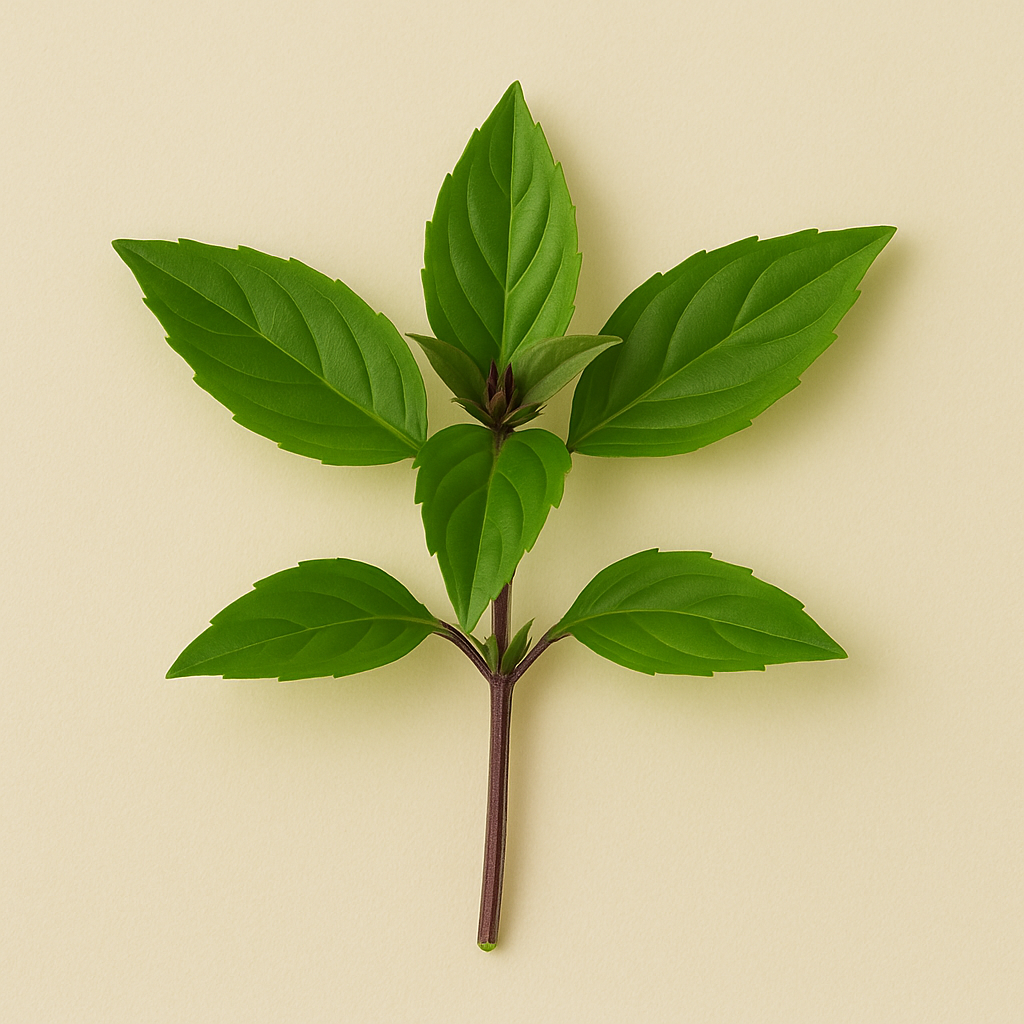
Thai Basil
Ocimum basilicum var. thyrsiflora
Family: Lamiaceae
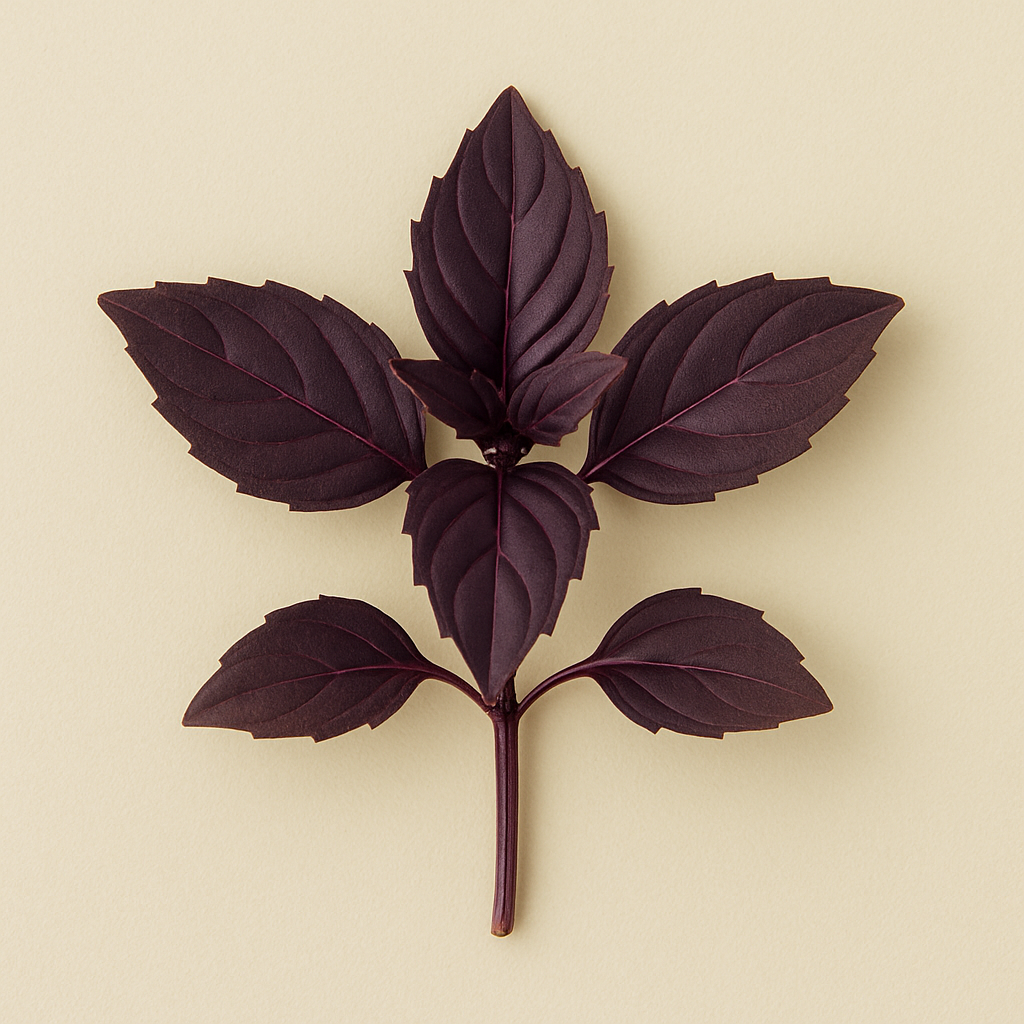
Thai basil is an essential herb in Southeast Asian cooking with a distinctive anise-licorice flavor. It has sturdy purple stems, dark green leaves, and beautiful purple flowers. Unlike sweet basil, it maintains its flavor when cooked.
Days to Harvest
55-70 days
Sun Needs
Full Sun (6-8+ hours)
moderate
Germination Temp
75°F optimal
Start Indoors
6 weeks before last frost
Germination
5-10 days
Seed Depth
1/4 inch
Light to Germinate
Yes
💡 Tip: Needs warmth and light to germinate.
Soil Type
Rich, well-draining soil
pH Range
6 - 7
Spacing
12-18 inches between plants
⚠️ Avoid planting near:
History
Thai basil (Ocimum basilicum var. thyrsiflora) developed in Southeast Asia over centuries, likely evolving from basil varieties that traveled from India along ancient trade routes. What distinguishes Thai basil from its Mediterranean cousins is its remarkable stability when cooked—while Italian basil's volatile oils dissipate rapidly with heat, Thai basil's characteristic licorice-anise flavor persists through stir-frying and braising, making it essential to dishes that require cooking the herb rather than adding it fresh at the end. In Thai cuisine, the herb is called "horapha" and appears in countless dishes from green curry to pad krapow (holy basil stir-fry, though this actually uses a different variety called holy basil). The herb's sturdy purple stems and compact purple flower clusters make it more ornamental than Italian varieties, and the flowers themselves are edible and flavorful. Thai basil gained significant popularity in the United States during the 1990s and 2000s as Southeast Asian cuisines became mainstream, and the variety "Siam Queen" won the All-America Selections award in 1997, introducing many American gardeners to the herb. Today, Thai basil is widely available in Asian grocery stores and increasingly in mainstream supermarkets, though the quality of home-grown fresh-picked leaves far surpasses commercial products.
Nutritional Benefits
- ✓Rich in antioxidants
- ✓Contains eugenol and estragole
- ✓Good source of Vitamin K
Optimal Growing Temp
70°F - 85°F
Thai basil thrives in warmth, growing best at 70-85°F. More heat-tolerant than Italian basil. Growth slows below 60°F.
Survival Range
40°F - 95°F
Can survive these temperatures
Frost Note: Killed by frost below 32°F. More cold-sensitive than some other basils. Bring indoors before temperatures drop below 50°F.
Best USDA Zones
Humidity
50-70%
Tolerates higher humidity than Italian basil. Good air circulation still important to prevent fungal issues.
Height
12-18 inches
Spread
12-18 inches
Growth Habit
bush
Germination
5-10 days
Seeds germinate at 70-85°F. Tiny seedlings emerge with two small seed leaves. Do not cover seeds—they need light to germinate.
Seedling Stage
Duration: 3-4 weeks
True leaves: First true leaves are small, pointed, and distinctively darker than Italian basil with purple-tinged stems.
Transplant ready: Ready to transplant when 3-4 inches tall with 2-3 sets of true leaves.
Vegetative Growth
Duration: 4-6 weeks
Rapid growth with characteristic purple stems and narrow, pointed leaves. Plants become bushy with regular pinching.
Flowering
Timing: 8-10 weeks after sowing
Duration: Continuous until frost
Attractive purple flowers are edible and attract bees. Unlike Italian basil, Thai basil remains flavorful even when flowering.
Harvest Maturity
Timing: 60-90 days from seed
- Plants 12-18 inches tall with multiple branches
- Strong anise-licorice aroma when leaves rubbed
- Purple stems and flower buds visible
- Leaves are glossy and pointed
Per Plant
1-2 cups fresh leaves per plant per month
Per Square Foot
2-4 cups per square foot monthly
Harvest Frequency
Weekly harvests once established
Factors Affecting Yield
- •Regular pinching promotes bushier growth
- •Warm temperatures increase yield
- •Can harvest even after flowering (unlike Italian basil)
- •Consistent moisture
Seedling Stage
Keep consistently moist, water gently daily
Established Plants
Deep watering when top inch of soil is dry
During Fruiting
Maintain consistent moisture during flowering
Preferred Method
Water at soil level in morning. Avoid wetting leaves.
Pro Tips
- More drought-tolerant than Italian basil once established
- Mulch to retain moisture
- Consistent moisture improves flavor
- Reduce watering slightly in fall
Feeding Schedule
At Planting
Compost worked into soil
Once
Growing Season
Diluted liquid fertilizer
Every 2-3 weeks
Organic Options
Apply diluted fish emulsion every 2-3 weeks during active growth.
Minimum Size
8 inch pot
Recommended Size
12 inch pot or larger
Depth Required
At least 8 inches
Best Varieties for Containers
Container Tips
- Excellent container plant
- One plant per 10-12 inch pot
- Well-draining potting mix essential
- Bring indoors before frost
- Can grow year-round indoors with adequate light
Plant Every
Every 3-4 weeks
Sowings/Season
2-3 plantings
Duration
Throughout growing season
Tips
- Start succession in late spring
- Each plant provides longer harvest than Italian basil
- One or two plants often sufficient for home use