
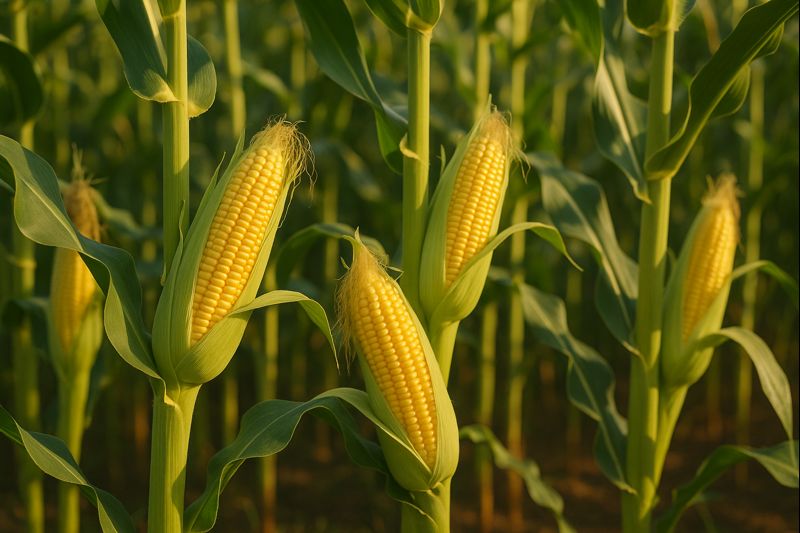
Sweet Corn
Zea mays var. saccharata
Family: Poaceae
Sweet corn is one of summer's greatest pleasures—freshly picked ears with kernels so sweet and tender they can be eaten raw. Unlike field corn grown for grain, sweet corn has a genetic mutation that prevents sugar from converting to starch, keeping kernels sweet and creamy. Corn is a warm-season crop that requires ample space and should be planted in blocks rather than single rows to ensure proper wind pollination.
Days to Harvest
60-100 days
Sun Needs
Full Sun (8+ hours)
high
Germination Temp
75°F optimal
Start Indoors
0 weeks before last frost
Germination
5-12 days
Seed Depth
1-2 inches
Light to Germinate
No
💡 Tip: Corn does not transplant well—always direct sow. Wait until soil temperature is consistently above 60°F (65°F for supersweet varieties). Plant in blocks of at least 4x4 for wind pollination.
Soil Type
Rich, well-drained soil with high organic matter
pH Range
6 - 6.8
Spacing
12 inches between plants in blocks, 30-36 inches between rows. Plant in blocks of at least 4 rows for proper pollination.
⚠️ Avoid planting near:
History
Corn is the most successful plant domestication in human history, transforming a wild grass called teosinte into the crop that now feeds billions. Archaeological evidence places corn domestication in the Balsas River Valley of southern Mexico around 9,000 years ago, where indigenous peoples selected for larger kernels and cobs over thousands of generations. The transformation was so complete that modern corn cannot survive without human cultivation—it cannot disperse its own seeds. Corn spread throughout the Americas, becoming the foundation crop of great civilizations: the Maya, Aztec, and Inca all built their empires on corn agriculture. To many Native American peoples, corn was sacred—the Hopi call themselves "People of the Corn," and the Maya creation story describes humans being formed from corn dough. The "Three Sisters" planting method—corn, beans, and squash grown together—represents thousands of years of agricultural wisdom, with corn providing structure for beans, beans fixing nitrogen for corn, and squash shading the soil. Columbus brought corn to Europe in 1493, and within a century it had spread to Africa, Asia, and across the globe, becoming a staple crop on every inhabited continent. Sweet corn is a relatively recent development. While Native Americans had sweet varieties, modern sweet corn breeding began in the 1700s when colonists discovered varieties with higher sugar content. The development of "supersweet" (sh2) varieties in the 1950s-60s revolutionized the market, creating corn that stays sweet for days rather than hours after picking. Today, sweet corn is the third most popular vegetable in America, with peak season arriving each summer when roadside stands and farmers' markets overflow with fresh-picked ears. The saying "put the pot on before picking the corn" reflects the traditional understanding that corn's sugars begin converting to starch the moment it's harvested—though modern supersweet varieties have extended this window considerably. From ancient mesoamerican farmers to modern plant breeders, corn represents humanity's most ambitious and successful partnership with the plant kingdom.
Nutritional Benefits
- ✓Good source of fiber
- ✓Contains B vitamins including thiamin and folate
- ✓Provides vitamin C
Optimal Growing Temp
75°F - 86°F
Sweet corn thrives in warm weather between 75-86°F. Growth stops below 50°F and slows above 95°F. Soil must reach 60°F minimum for planting, 65-70°F for best germination.
Survival Range
50°F - 95°F
Can survive these temperatures
Frost Note: Sweet corn is killed by frost. Do not plant until all danger of frost has passed and soil has warmed to at least 60°F. Cool soil causes poor germination and rot.
Best USDA Zones
Humidity
50-80%
Tolerates various humidity levels. High humidity during pollination can be problematic. Good air circulation important in humid climates.
Height
5-8 feet
Spread
24-36 inches
Growth Habit
upright
Germination
7-14 days
Seeds germinate best at 65-85°F soil temperature. First shoot emerges as a spike, unfurling into first leaf. Cold, wet soil causes rot—wait for warm conditions.
Seedling Stage
Duration: 3-4 weeks
True leaves: First leaves are strap-shaped and emerge alternately. Plants reach knee-high (12-18 inches) by 3-4 weeks.
Transplant ready: Direct sow only—corn does not transplant well due to taproot damage.
Vegetative Growth
Duration: 6-8 weeks
Rapid vertical growth phase. Stalks develop nodes, each producing a large leaf. Plants may grow 2-3 inches per day in optimal conditions.
Flowering
Timing: 8-10 weeks after sowing
Duration: 1-2 weeks
Wind-pollinated. Tassels at top release pollen that must fall onto silks below. Each silk leads to one kernel—missing silks = missing kernels. Plant in blocks, not rows, for complete pollination.
Fruit Development
Begins: 2-3 weeks after pollination
Duration: Single harvest window of 1-2 weeks
Kernels develop rapidly after pollination. Ears fill from base to tip. Incomplete pollination causes gaps in kernel rows.
Harvest Maturity
Timing: 60-100 days from sowing (variety dependent)
- Silks turn brown and dry
- Ears feel full and firm when squeezed
- Kernels at tip are fully developed
- Juice from punctured kernel is milky, not watery
- Husks are dark green and tight
Per Plant
1-2 ears per stalk
Per Square Foot
1-2 ears per square foot (with proper block planting)
Harvest Frequency
Single harvest—all ears mature within 1-2 weeks
Factors Affecting Yield
- •Proper pollination (block planting essential)
- •Adequate water during silking
- •Nitrogen availability
- •Pest control (corn earworm)
- •Variety selection for your climate
- •Avoiding overcrowding
Seedling Stage
Keep soil moist but not waterlogged during germination
Established Plants
1-1.5 inches per week through deep watering
During Fruiting
Critical: 1.5-2 inches per week during tasseling and ear development
Preferred Method
Drip irrigation or soaker hoses ideal. Deep watering encourages deep root development. Morning watering preferred.
⚠️ Critical Watering Periods
- • Tasseling
- • Silking
- • Kernel fill
Pro Tips
- Water stress during tasseling causes poor pollination
- Corn uses 1/4 inch water per day during hot weather
- Mulch to retain moisture
- Deep watering promotes deep roots and drought resistance
Feeding Schedule
At Planting
Balanced 10-10-10
Once
When knee-high (12-18")
Nitrogen side-dress (blood meal, ammonium sulfate)
Once
At tasseling
Optional second nitrogen side-dress
Once if needed
Organic Options
Work generous compost into soil before planting. Side-dress with blood meal or fish emulsion when plants are knee-high.
Minimum Size
Recommended Size
Depth Required
Best Varieties for Containers
Container Tips
- Corn is NOT recommended for containers—requires too much space
- Minimum of 4x4 block needed for pollination
- Heavy feeders with extensive root systems
- If attempting, use 5-gallon container minimum per plant, plant 9+ plants together
- Short-stature varieties like Tom Thumb may work in large raised beds
Plant Every
Every 2 weeks
Sowings/Season
3-4 plantings
Duration
From last frost until 85 days before first fall frost
Tips
- Succession planting extends harvest season
- Keep different varieties separated by 250+ feet or stagger planting by 2+ weeks to prevent cross-pollination
- Early, mid, and late varieties can be planted at once for spread harvest
- Allow adequate time for final planting to mature before frost