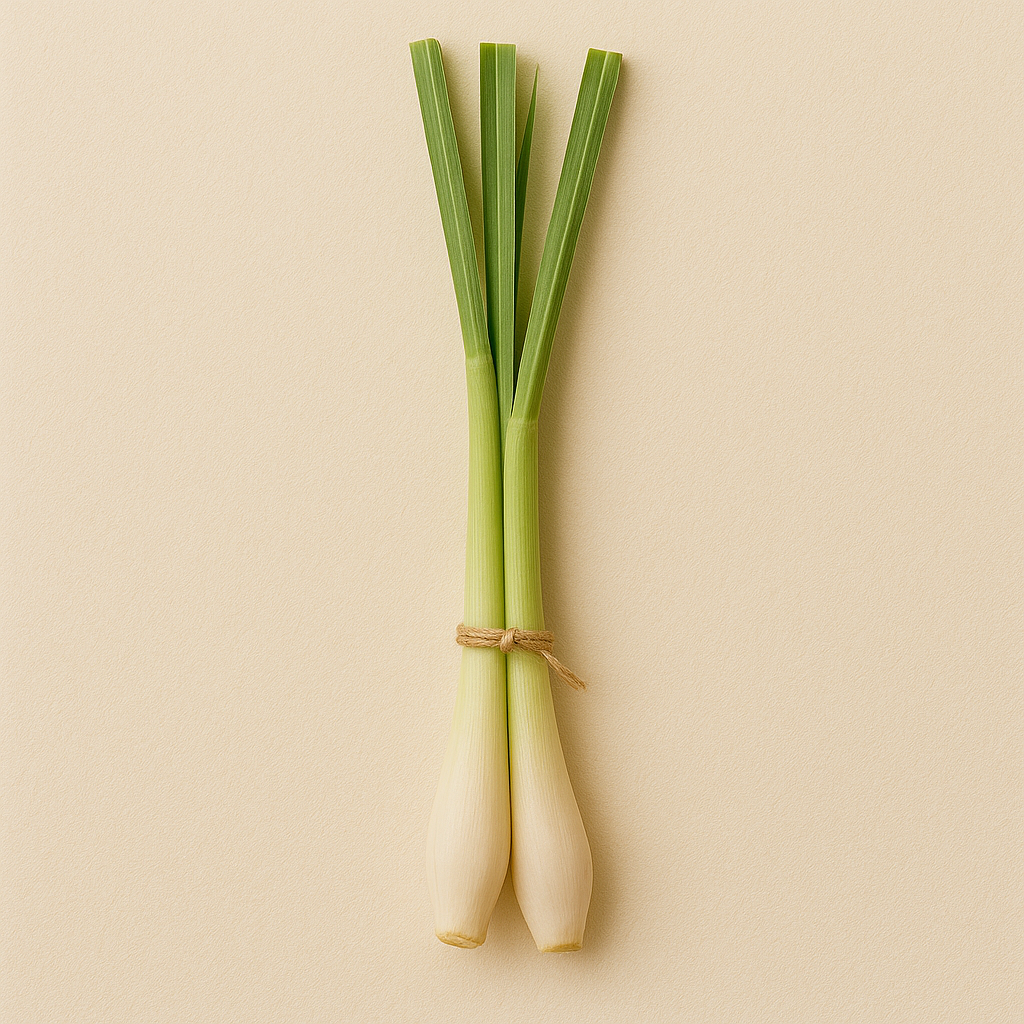
Lemongrass
Cymbopogon citratus
Family: Poaceae
Lemongrass is a tropical grass with a bright, citrusy flavor essential to Thai and Vietnamese cooking. It grows in attractive clumps with long, blade-like leaves that can reach 3-5 feet.
Days to Harvest
90-120 days
Sun Needs
Full Sun (6-8+ hours)
high
Germination Temp
75°F optimal
Start Indoors
8 weeks before last frost
Germination
14-21 days
Seed Depth
Surface sow
Light to Germinate
Yes
💡 Tip: Easier to start from stalks bought at grocery store - root in water.
Soil Type
Rich, moist, well-draining soil
pH Range
5 - 8
Spacing
3 feet between plants
⚠️ Avoid planting near:
History
Lemongrass (Cymbopogon citratus) is native to the tropical and subtropical regions of South and Southeast Asia, where it has been cultivated for culinary and medicinal purposes for thousands of years. The plant belongs to the grass family and is closely related to citronella (Cymbopogon nardus), which is grown primarily for its insect-repelling essential oil. In traditional Ayurvedic medicine, lemongrass has been used for centuries to treat fever, infections, and digestive issues, and similar traditional uses exist throughout Southeast Asia. The herb's distinctive citrus flavor—derived from citral, the same compound that gives lemon its scent—became fundamental to Thai, Vietnamese, Cambodian, Indonesian, and Malaysian cuisines, where it appears in countless curry pastes, soups, and stir-fries. Western chefs "discovered" lemongrass during the explosion of interest in Thai and Vietnamese cuisine in the 1980s and 1990s, and the herb has since become widely available in American supermarkets. The plant is remarkably easy to propagate: stalks purchased from Asian grocery stores can be placed in water until they root, then transplanted to the garden. In regions too cold for year-round outdoor cultivation, lemongrass grows well in containers that can be brought inside for winter.
Nutritional Benefits
- ✓Contains citral with antimicrobial properties
- ✓Antioxidant compounds
- ✓May aid digestion
Optimal Growing Temp
70°F - 95°F
Lemongrass is a tropical grass that thrives in hot weather. Growth slows below 65°F and stops below 50°F. Loves heat and humidity—the hotter, the better for vigorous growth.
Survival Range
50°F - 105°F
Can survive these temperatures
Frost Note: Killed by frost. Must be brought indoors or heavily mulched in zones 8-9 for winter survival. Grows as perennial only in zones 10-11. Treat as annual or container plant elsewhere.
Best USDA Zones
Humidity
60-80%
Loves high humidity as a tropical plant. Mist regularly indoors or in dry climates. Thrives in humid, rainy summers.
Height
3-4 feet
Spread
2-3 feet
Growth Habit
clumping
Germination
14-21 days
Seed germination is slow and often poor. Starting from grocery store stalks rooted in water is much faster and more reliable.
Seedling Stage
Duration: 4-6 weeks
True leaves: Grass-like blades emerge. Growth is slow until warm weather arrives. Seedlings are delicate and need consistent warmth.
Transplant ready: Transplant when 4-6 inches tall and weather is reliably warm (70°F+).
Vegetative Growth
Duration: Continuous once established in warm weather
Rapid growth in hot weather, forming dense clumps of aromatic grass blades. Each stalk thickens at the base—the edible part. Divide clumps as they expand.
Flowering
Timing: Rarely flowers in cultivation outside tropics
Duration: N/A in most climates
Wind-pollinated when it does flower (rare in temperate zones).
Harvest Maturity
Timing: 90-120 days to first harvest
- Stalks at least 1/2 inch thick at base
- Clumps 12+ inches tall
- Multiple stalks per clump
Per Plant
Mature clumps produce 10-20 harvestable stalks at a time. Can harvest continuously throughout growing season as stalks regrow.
Per Square Foot
1 plant per 2-3 square feet (lemongrass forms large clumps)
Harvest Frequency
Harvest individual stalks as needed once plant is established. Can take several stalks per month without harming plant.
Factors Affecting Yield
- •Heat and moisture drive growth
- •Container plants produce less than in-ground
- •Clump size determines productivity
- •First year plants produce less than established clumps
Seedling Stage
Keep soil consistently moist. Seedlings and rooted stalks need steady moisture to establish. Don't let dry out.
Established Plants
Water frequently—lemongrass is thirsty. Keep soil consistently moist, especially in hot weather. Water deeply 2-3 times per week; daily in extreme heat.
During Fruiting
N/A—lemongrass grown for foliage and stalks, not flowers or fruit.
Preferred Method
Water at soil level or use overhead watering (lemongrass doesn't mind wet foliage). Drip irrigation or soaker hoses work well. Mulch to retain moisture.
Pro Tips
- Lemongrass needs more water than most herbs—don't let it dry out
- Morning watering allows foliage to dry before evening
- In hot climates, water daily or even twice daily for container plants
- Mulch heavily to conserve moisture and keep roots cool
- Yellowing leaves often indicate insufficient water or nutrients
Feeding Schedule
Planting
Compost mixed into soil
Once at planting
Active growth
Balanced liquid fertilizer or fish emulsion
Every 2-3 weeks during growing season
Container plants
Liquid fertilizer
Every 2 weeks (containers leach nutrients faster)
Organic Options
Side-dress with compost monthly or apply diluted liquid fertilizer every 2-3 weeks. Lemongrass is a heavy feeder that benefits from regular feeding.
Minimum Size
12 inch pot
Recommended Size
14-18 inch pot or larger
Depth Required
At least 12-14 inches deep
Best Varieties for Containers
Container Tips
- Lemongrass grows excellently in containers—ideal for cold climates
- Bring pots indoors before frost and overwinter as houseplant
- Containers allow easy movement to sunniest, warmest locations
- Repot or divide every 1-2 years as clumps fill container
- Use well-draining potting mix enriched with compost
- Place in saucers to maintain moisture in hot weather
Can I grow lemongrass from grocery store stalks?
Yes! This is the easiest way to start lemongrass. Buy fresh stalks with intact base. Place stalks in a jar with 1-2 inches of water in a sunny spot. Change water every few days. Roots appear in 1-3 weeks. Once roots are 2-3 inches long, plant in pots or garden. Much faster and more reliable than growing from seed.
Which part of lemongrass do I harvest and eat?
The lower 4-6 inches of the stalk (the white/pale yellow bulbous base) is the edible part. Peel off tough outer layers to reveal the tender inner core. The upper green blades are too tough to eat but can be used to flavor soups and curries (remove before serving), or dried for tea. For curry paste, use only the tender white inner portion.
How do I overwinter lemongrass in cold climates?
Before first frost, dig up the entire clump or move container indoors. Cut foliage back to 6-8 inches. Place in a sunny window (south-facing ideal). Growth slows in winter but plant survives. Water sparingly—just enough to prevent soil from drying completely. Resume regular watering and fertilizing in spring when growth resumes. Move back outdoors after frost danger passes.
How often can I harvest lemongrass?
Once clumps are established (90+ days or 12+ stalks), harvest individual stalks as needed. Cut stalks at soil level, taking outer stalks first and leaving center growth. You can harvest 2-4 stalks per month from mature clumps without harming the plant. Don't harvest more than 1/3 of the plant at once. Stalks continuously regrow from the base.
My lemongrass leaf tips are turning brown. What's wrong?
Brown leaf tips are very common and usually indicate: 1) Insufficient water—lemongrass needs consistent moisture, 2) Low humidity—mist regularly or increase humidity, 3) Fluoride in tap water—use filtered or rainwater, or 4) Natural aging of older leaves. As long as new growth is green and healthy, brown tips are cosmetic. Trim them off if desired.
Is lemongrass the same as citronella?
No, but they're related. Culinary lemongrass is Cymbopogon citratus. Citronella grass (Cymbopogon nardus) is a different species grown primarily for mosquito-repelling oil. Both have citrus scent, but citronella is not used for cooking and has a different chemical composition. Only culinary lemongrass (C. citratus) should be used in food.