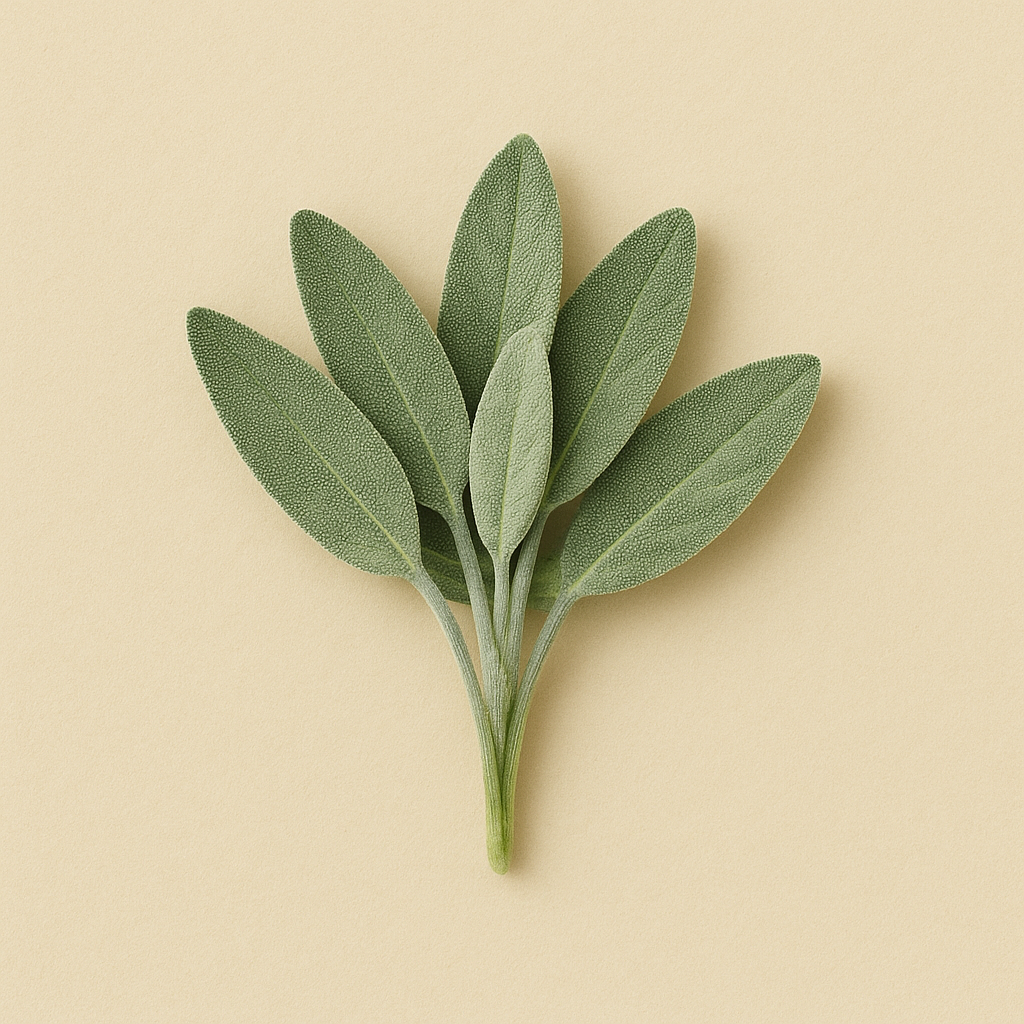
Garden Sage
Salvia officinalis
Family: Lamiaceae
Garden sage is a woody perennial with velvety gray-green leaves and a warm, earthy, slightly peppery flavor. It is essential for holiday stuffings and pairs beautifully with pork, chicken, and winter squash.
Days to Harvest
75-90 days
Sun Needs
Full Sun (6-8+ hours)
low
Germination Temp
70°F optimal
Start Indoors
8 weeks before last frost
Germination
10-21 days
Seed Depth
1/4 inch
Light to Germinate
Yes
💡 Tip: Lightly cover seeds. Keep moist.
Soil Type
Well-draining, sandy soil
pH Range
6 - 7
Spacing
24-30 inches between plants
⚠️ Avoid planting near:
History
The Romans considered sage sacred and used it in religious ceremonies. Its Latin name "salvia" means "to save" or "to heal."
Nutritional Benefits
- ✓Contains antioxidants
- ✓May support brain health
- ✓Traditional sore throat remedy
Optimal Growing Temp
60°F - 75°F
Sage prefers moderate temperatures. Tolerates heat and cold well once established. Mediterranean native.
Survival Range
25°F - 90°F
Can survive these temperatures
Frost Note: Hardy to zone 4-5. Semi-evergreen in mild winters. May die back in severe cold but regrows from roots.
Best USDA Zones
Humidity
30-50%
Prefers low humidity. Good drainage and air circulation essential.
Height
18-24 inches
Spread
18-24 inches
Growth Habit
clumping
Germination
10-21 days
Moderate germination rate. Seeds need light and warmth.
Seedling Stage
Duration: 4-6 weeks
True leaves: Fuzzy, gray-green leaves with distinctive sage scent.
Transplant ready: When 4-5 inches tall (8-10 weeks from seed).
Vegetative Growth
Duration: Continuous
Forms bushy mounds of soft, gray-green foliage. Harvest leaves anytime. Prune to maintain shape.
Flowering
Timing: Late spring to summer
Duration: 3-4 weeks
Purple-blue flower spikes attractive to bees.
Harvest Maturity
Timing: 75-90 days from seed
- Full, bushy growth
- Woody base developing
- Ready to flower
Per Plant
2-4 cups fresh leaves per season from mature plants.
Per Square Foot
1 plant per 2-3 square feet
Harvest Frequency
Harvest sprigs as needed. Heaviest harvest before flowering.
Factors Affecting Yield
- •Full sun
- •Well-draining soil
- •Regular harvest encourages growth
Seedling Stage
Keep lightly moist.
Established Plants
Water when dry 1-2 inches deep. Every 5-7 days.
During Fruiting
Reduce slightly during flowering.
Preferred Method
Water at soil level. Good drainage essential.
Pro Tips
- Drought tolerant once established
- Better to underwater than overwater
Feeding Schedule
Spring
Light compost
Once annually
Organic Options
Light feeding only. Lean soil produces best flavor.
Minimum Size
10 inch pot
Recommended Size
12-14 inch pot
Depth Required
At least 10-12 inches
Best Varieties for Containers
Container Tips
- Grows well in containers
- Use well-draining soil
- Allow to dry between waterings
- Overwinter indoors in cold climates
Why is my sage woody and scraggly?
Sage becomes woody with age. Prune heavily in spring (before new growth) to rejuvenate. Replace plants every 4-5 years when they become too woody.
Can I harvest sage year-round?
Yes in mild climates. In cold zones, harvest heavily before frost and bring some indoors. Fresh sage has the best flavor, but dried sage is traditional for stuffings.