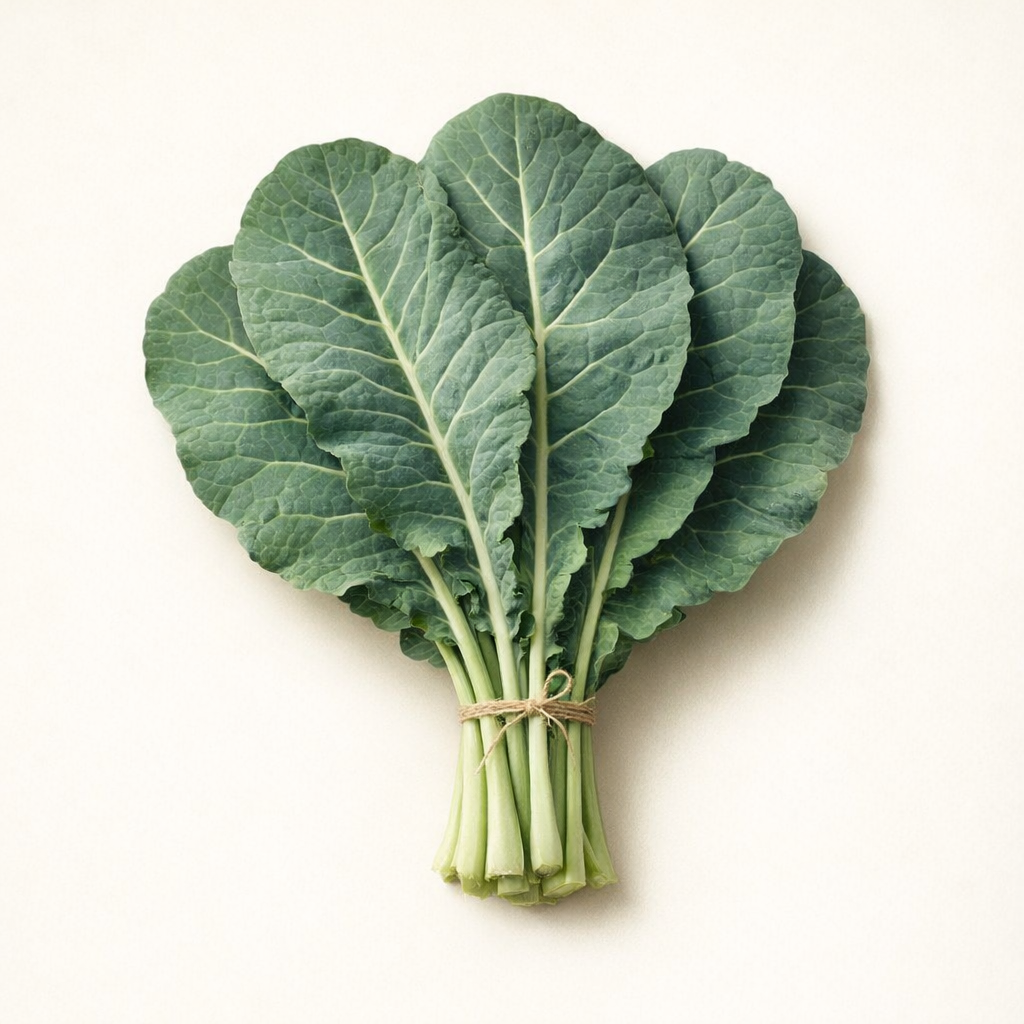
Collard Greens
Brassica oleracea var. viridis
Family: Brassicaceae
Collard greens are large, sturdy leafy greens with a mild, slightly bitter flavor that sweetens after frost. A staple of Southern American cuisine, collards are extremely nutritious and one of the most cold-hardy greens you can grow, surviving temperatures down to 5°F.
Days to Harvest
60-80 days
Sun Needs
Full Sun to Partial Shade (4-6 hours)
moderate
Germination Temp
75°F optimal
Start Indoors
6 weeks before last frost
Germination
4-10 days
Seed Depth
1/4 to 1/2 inch
Light to Germinate
No
💡 Tip: Can direct sow or transplant. Plant in late summer for fall/winter harvest when flavor is sweetest.
Soil Type
Rich, well-draining soil with high organic matter
pH Range
6 - 7.5
Spacing
18-24 inches between plants, 30-36 inches between rows
⚠️ Avoid planting near:
History
Collards have ancient origins in the Mediterranean and have been cultivated for over 2,000 years. They became a cornerstone of Southern American cooking through African American culinary traditions, where they're often slow-cooked with ham hocks or smoked turkey.
Nutritional Benefits
- ✓Extremely high in Vitamin K
- ✓Excellent source of Vitamins A and C
- ✓High in calcium (more than milk per calorie)
Optimal Growing Temp
60°F - 75°F
Collards thrive in cool to moderate temperatures (60-75°F) but are remarkably adaptable. They tolerate heat better than most brassicas and are among the most cold-hardy greens, surviving temps as low as 5°F.
Survival Range
5°F - 85°F
Can survive these temperatures
Frost Note: Extremely cold-hardy. Survives temperatures down to 5°F and even lower with snow cover. Frost actually improves flavor by converting starches to sugars. Can be harvested under snow.
Best USDA Zones
Humidity
50-70%
Tolerant of various humidity levels. Good air circulation helps prevent fungal issues on dense leaves.
Height
24-36 inches
Spread
18-24 inches
Growth Habit
upright
Germination
4-10 days
Seeds germinate in cool soil (65-75°F). Start indoors or direct sow.
Seedling Stage
Duration: 3-4 weeks
True leaves: Develop strong seedlings before transplanting.
Transplant ready: Harden off well for outdoor conditions when 3-4 true leaves.
Vegetative Growth
Duration: 8-12 weeks
Rapid leaf production. Begin harvesting outer leaves at 6-8 inches. Plants continue producing.
Harvest Maturity
Timing: 60-80 days from seed
- Full-sized plants with large, thick leaves
- Continue harvesting outer leaves for months
Per Plant
2-4 lbs of leaves over the season
Per Square Foot
1-2 lbs at 18-inch spacing
Harvest Frequency
Harvest outer leaves every 1-2 weeks
Factors Affecting Yield
- •Extended harvest window
- •Cold tolerance extends season
- •Regular harvesting promotes growth
- •Soil fertility
Seedling Stage
Keep consistently moist, daily light watering
Established Plants
Deep watering every 4-7 days, 1-1.5 inches per week
Preferred Method
Deep watering at soil level. Soaker hose or drip irrigation ideal. Avoid wetting leaves.
⚠️ Critical Watering Periods
- • Transplant establishment
- • Hot summer weather
- • Rapid growth phases
Pro Tips
- Deep roots make collards drought-tolerant once established
- Consistent water produces tender, sweet leaves
- Mulch to retain moisture and regulate soil temperature
- Water needs increase during hot weather
Feeding Schedule
Organic Options
Top-dress with compost monthly. Apply liquid feed every 2-3 weeks during active growth.
Minimum Size
12 inch pot minimum
Recommended Size
15-18 inch pot or half-barrel
Depth Required
12-14 inches minimum for taproot
Best Varieties for Containers
Container Tips
- Choose compact varieties like Vates for containers
- Deep containers accommodate taproot for best growth
- Water regularly—containers dry faster than ground
- Feed monthly with balanced fertilizer
- Can overwinter containers in sheltered locations
Why Prune
When
Begin harvesting when leaves reach 6-8 inches. Continue throughout growing season.
How Often
Every 1-2 weeks throughout growing season
Technique
Snap or cut outer leaves at the stem, working from bottom up. Leave inner leaves to continue growing.
Remove
- ✗ Mature outer leaves
- ✗ Yellowed or damaged leaves
- ✗ Any bolting flower stalks
Keep
- ✓ Growing center point
- ✓ Young inner leaves
- ✓ At least 6-8 inner leaves on plant
Plant Every
3-4 weeks for spring, single fall planting
Sowings/Season
2-3 spring sowings, 1 main fall planting
Duration
Spring through early summer, then fall
Tips
- Spring plantings provide early harvests
- Fall planting produces sweetest leaves after frost
- In zones 7-9, fall-planted collards can overwinter for spring harvest
- Skip planting during hottest summer months