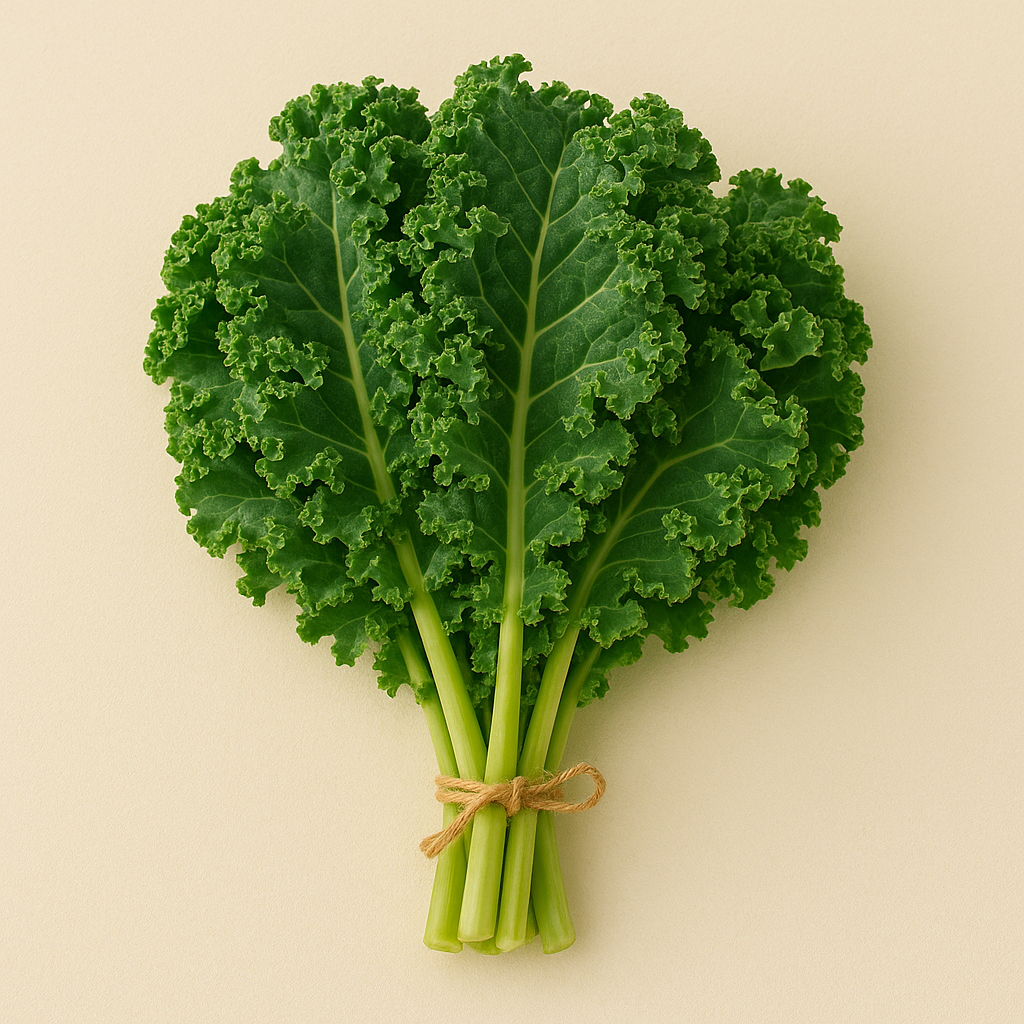
Kale
Brassica oleracea var. sabellica
Family: Brassicaceae
Kale is a hardy, nutritious leafy green that thrives in cool weather and actually tastes sweeter after frost. With its sturdy leaves and bold flavor, kale is incredibly versatile and one of the most nutrient-dense vegetables you can grow.
Days to Harvest
50-65 days
Sun Needs
Full Sun to Partial Shade (4-6 hours)
moderate
Germination Temp
70°F optimal
Start Indoors
6 weeks before last frost
Germination
4-10 days
Seed Depth
1/4 to 1/2 inch
Light to Germinate
No
💡 Tip: Direct sow in late summer for fall/winter harvest. Flavor improves dramatically after frost.
Soil Type
Rich, well-draining soil with plenty of organic matter
pH Range
6 - 7.5
Spacing
18-24 inches between plants, 24-30 inches between rows
⚠️ Avoid planting near:
History
Kale is among the oldest cultivated members of the Brassica family, with evidence of its cultivation in the eastern Mediterranean and Asia Minor dating back at least 4,000 years. The ancient Greeks grew several forms of kale, and it spread throughout Europe with Roman expansion. During the Middle Ages, kale was one of the most important vegetables in Europe, particularly in Scotland, Ireland, and Germany, where its extreme cold-hardiness made it one of the few green vegetables available through winter. The Scottish valued kale so highly that "kale" became a generic term for dinner, and "kailyard" (kale garden) was standard in every cottage. German and Russian immigrants brought kale traditions to America, where it remained a regional Southern and cold-climate crop until its remarkable 21st-century transformation into a wellness phenomenon. The "kale revolution" began around 2010-2012, driven by celebrity nutritionists, juice bars, and social media influencers who championed kale as the ultimate "superfood." Sales increased more than tenfold in just a few years, and kale chips, kale smoothies, and "I heart kale" t-shirts became cultural touchstones. The Lacinato (or Dinosaur) variety, with its bumpy, dark leaves, became particularly fashionable among chefs and home cooks.
Nutritional Benefits
- ✓One of the most nutrient-dense foods on earth
- ✓Extremely high in Vitamin K
- ✓Excellent source of Vitamins A and C
Optimal Growing Temp
60°F - 70°F
Kale is remarkably cold-tolerant, thriving in cool conditions between 60-70°F but able to survive temperatures down to 20°F or lower. Growth slows in heat above 80°F but it's more heat-tolerant than most brassicas.
Survival Range
20°F - 85°F
Can survive these temperatures
Frost Note: Kale is extremely cold-hardy, surviving temperatures down to 10-20°F. Frost dramatically improves flavor by converting starches to sugars—many gardeners wait until after frost to begin serious harvest. Can be grown year-round in many climates.
Best USDA Zones
Humidity
50-70%
Kale tolerates various humidity levels. Good air circulation helps prevent fungal diseases. In humid climates, space plants wider for better airflow.
Height
18-24 inches
Spread
18-24 inches
Growth Habit
upright
Germination
5-10 days
Seeds germinate best at 55-75°F. Kale can germinate in soil as cold as 40°F, though more slowly.
Seedling Stage
Duration: 3-4 weeks
True leaves: First true leaves appear 7-10 days after sprouting with characteristic lobed or curly edges
Transplant ready: Ready when 4-5 inches tall with 4-5 true leaves. Can be transplanted or direct sown.
Vegetative Growth
Duration: 6-8 weeks to first harvest
Continuous leaf production from central growing point. Plants can produce for months with regular harvesting.
Flowering
Timing: Second year, or bolts in prolonged heat
Duration: Yellow flowers appear in spring of second year
Kale is biennial, flowering in year two. First-year bolting indicates extreme stress.
Harvest Maturity
Timing: 55-75 days from seed for first harvest
- Leaves are 6-8 inches long
- Color is fully developed (deep green, blue-green, or purple)
- Texture is appropriate for variety (curly, smooth, etc.)
- Best flavor after exposure to frost
Per Plant
2-4 lbs over the season with continuous harvest
Per Square Foot
1-2 lbs per square foot per season
Harvest Frequency
Harvest every 1-2 weeks; plants regrow continuously
Factors Affecting Yield
- •Continuous harvest over months, not single harvest
- •Frost improves flavor dramatically
- •Regular harvesting promotes new growth
- •Can produce for 9+ months in favorable climates
- •Summer heat may slow production but rarely kills plants
Seedling Stage
Keep consistently moist but not waterlogged
Established Plants
1-1.5 inches per week, deep watering
During Fruiting
Consistent moisture throughout growing season
Preferred Method
Water at base of plants. Drip irrigation or soaker hoses work well. Kale tolerates various watering methods.
⚠️ Critical Watering Periods
- • Establishment
- • Hot weather
Pro Tips
- Kale is fairly drought-tolerant once established
- Mulch to maintain consistent moisture
- Water stress causes tougher, more bitter leaves
- More forgiving than lettuce but benefits from consistency
Feeding Schedule
At Planting
Compost worked into soil
Once
Every Month
Side-dress with compost or balanced fertilizer
Monthly during active growth
Organic Options
Side-dress with compost monthly. Apply fish emulsion every 2-3 weeks for faster growth.
Minimum Size
5 gallon minimum
Recommended Size
7-10 gallon for full-sized plants
Depth Required
At least 10 inches deep
Best Varieties for Containers
Container Tips
- Excellent container vegetable due to long production period
- Use quality potting mix with good drainage
- Water consistently—containers dry faster
- Feed every 2-3 weeks with balanced fertilizer
- Harvest outer leaves to keep plant producing
Why Prune
When
Harvest outer leaves when 6-8 inches long
How Often
Harvest weekly or as needed
Technique
Pick outer leaves from bottom up, leaving center crown intact. Remove yellowed or damaged leaves.
Remove
- ✗ Outer mature leaves
- ✗ Yellowed or damaged leaves
Keep
- ✓ Central growing point
- ✓ 6-8 inner leaves for continued growth