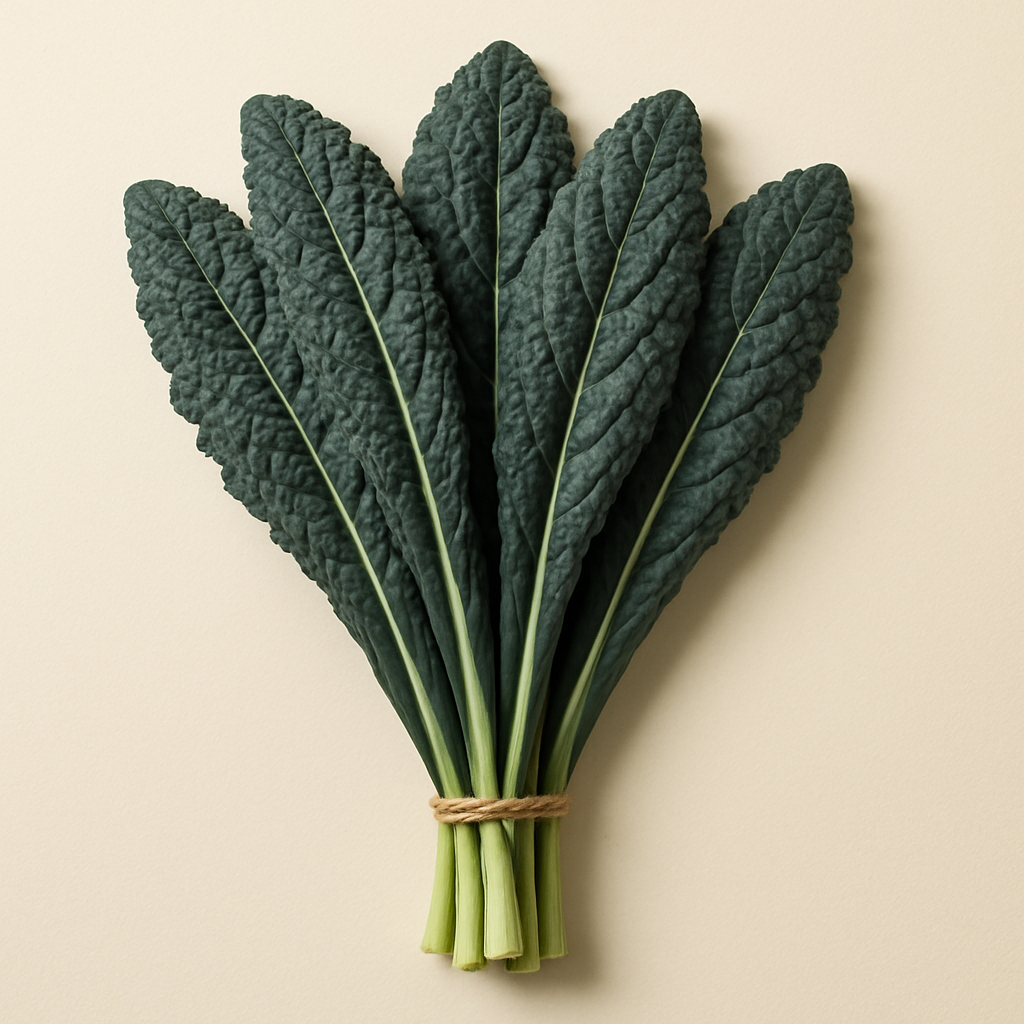
Lacinato Kale
Brassica oleracea var. palmifolia
Family: Brassicaceae
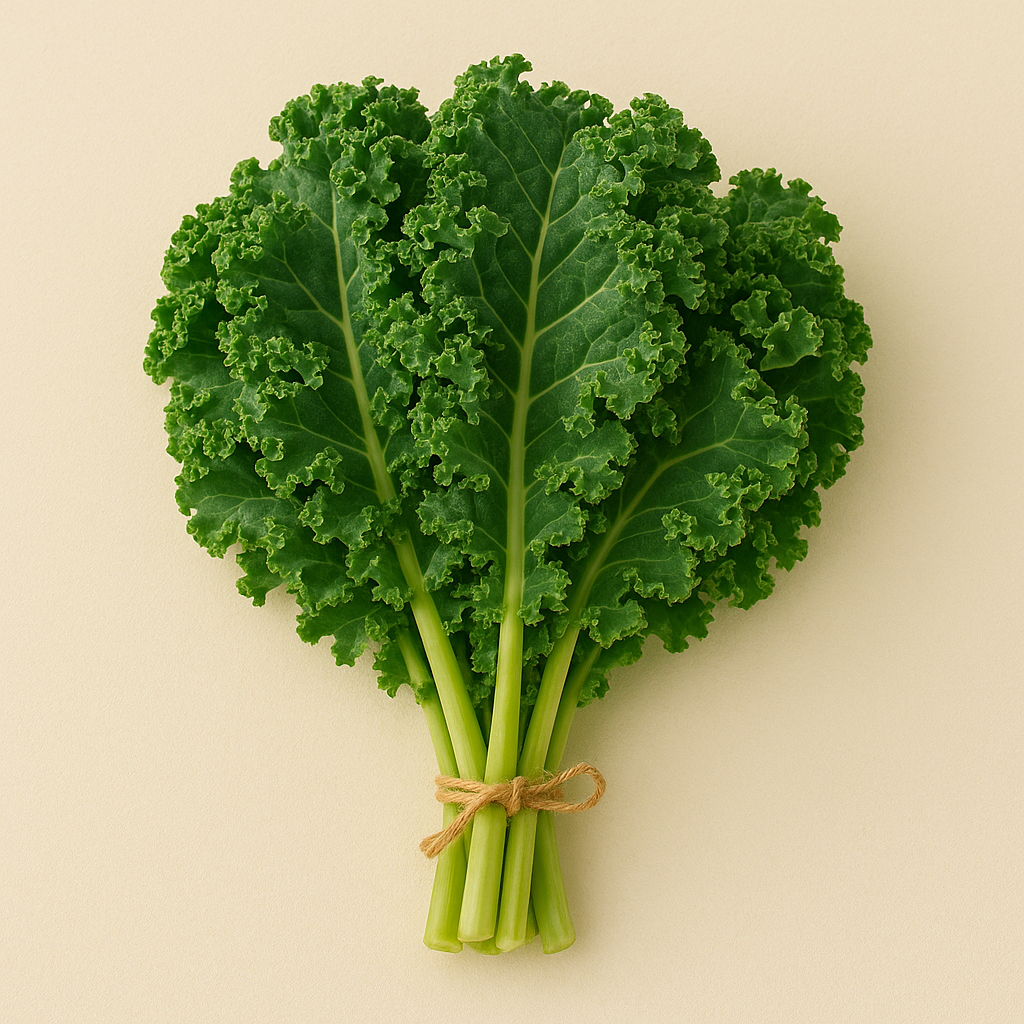
Lacinato kale, also called Tuscan kale, dinosaur kale, or cavolo nero, has long, dark blue-green leaves with a bumpy, prehistoric-looking texture. It's more tender than curly kale with a sweeter, more delicate flavor. A favorite of chefs and gardeners alike.
Days to Harvest
55-65 days
Sun Needs
Full Sun to Partial Shade (4-6 hours)
moderate
Germination Temp
70°F optimal
Start Indoors
6 weeks before last frost
Germination
4-10 days
Seed Depth
1/4 to 1/2 inch
Light to Germinate
No
💡 Tip: Plant in late summer for best fall/winter harvest. Frost sweetens the flavor considerably.
Soil Type
Rich, well-draining soil with organic matter
pH Range
6 - 7.5
Spacing
18-24 inches between plants, 24-30 inches between rows
⚠️ Avoid planting near:
History
Lacinato kale originated in Tuscany, Italy, where it has been grown since at least the 18th century. It's a traditional ingredient in Italian cuisine, particularly in ribollita, a Tuscan bread soup. "Cavolo nero" means "black cabbage" in Italian.
Nutritional Benefits
- ✓Extremely high in Vitamin K
- ✓Excellent source of Vitamins A and C
- ✓High in antioxidants
Optimal Growing Temp
55°F - 75°F
Lacinato kale prefers cool weather (55-75°F) but is very cold-hardy. More tender than curly kale, making it better for raw use. Flavor sweetens significantly after frost.
Survival Range
10°F - 85°F
Can survive these temperatures
Frost Note: Very cold-hardy, surviving temperatures to 10°F and lower. Frost dramatically improves sweetness. Can harvest through winter in many climates.
Best USDA Zones
Humidity
40-60%
Moderate humidity preferred. The bumpy leaf texture can trap moisture, so good air circulation helps.
Height
24-36 inches
Spread
18-24 inches
Growth Habit
upright
Germination
4-10 days
Seeds germinate in cool to moderate soil. Direct sow or start indoors.
Seedling Stage
Duration: 3-4 weeks
True leaves: True leaves show distinctive dark color and bumpy texture early.
Transplant ready: Ready when 4-5 inches tall with dark, textured leaves.
Vegetative Growth
Duration: 6-10 weeks
Strap-like leaves grow in palm-like formation. Begin harvesting at 8-10 inches.
Harvest Maturity
Timing: 60-65 days from seed
- Full-sized plant with dark, textured leaves
- Sweetest after frost
Per Plant
2-4 lbs over season
Per Square Foot
1-2 lbs at 18-inch spacing
Harvest Frequency
Harvest lower leaves every 1-2 weeks
Factors Affecting Yield
- •Cold tolerance extends harvest
- •Frost sweetens leaves
- •Regular picking
- •Soil fertility
Seedling Stage
Keep consistently moist
Established Plants
Deep watering every 4-7 days, 1-1.5 inches per week
Preferred Method
Water deeply at soil level. Bumpy leaves can trap water, so base watering prevents disease.
⚠️ Critical Watering Periods
- • Transplant establishment
- • Hot weather
- • Active growth
Pro Tips
- Consistent moisture keeps leaves tender for raw eating
- Mulch helps retain moisture and moderate temperature
- Water needs decrease in cool fall weather
- Drought stress toughens otherwise tender leaves
Feeding Schedule
Organic Options
Top-dress with compost monthly for continuous production.
Minimum Size
12 inch pot minimum
Recommended Size
14-16 inch pot
Depth Required
12 inches minimum
Best Varieties for Containers
Container Tips
- Dramatic architectural form makes beautiful container focal point
- Palm-like growth habit looks tropical despite cold tolerance
- Needs deep container for tall upright growth
- Water regularly and feed monthly
- Can overwinter in protected locations
Why Prune
When
Begin harvesting when lower leaves reach 8-10 inches
How Often
Every 1-2 weeks throughout growing season
Technique
Harvest from bottom up, taking outer lower leaves first. The plant resembles a palm tree as it grows.
Remove
- ✗ Lower mature leaves
- ✗ Yellowed leaves
- ✗ Damaged leaves
Keep
- ✓ Top growing rosette
- ✓ Upper developing leaves
Plant Every
Spring and late summer plantings
Sowings/Season
2 main plantings
Duration
Plant spring for early harvest, late summer for fall/winter
Tips
- Spring: 4-6 weeks before last frost for summer harvest
- Late summer: 10-12 weeks before first frost for winter harvest
- Fall plantings produce sweetest leaves
- Single plants produce for many months