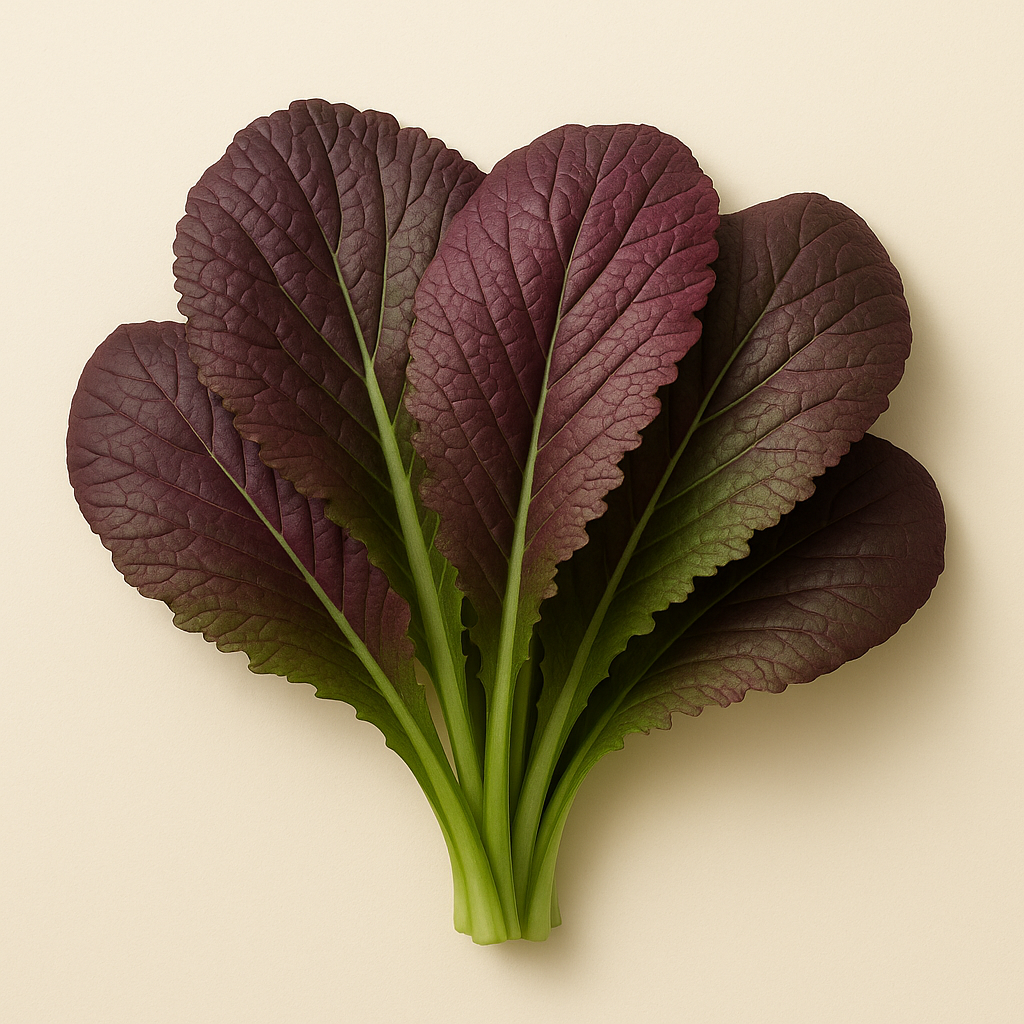
Red Mustard Greens
Brassica juncea
Family: Brassicaceae
Red mustard greens feature stunning purple-red leaves with a bold, peppery mustard flavor. The dramatic coloring adds visual interest to salads and dishes, while the spicy flavor mellows when cooked. A beautiful and flavorful addition to any garden.
Days to Harvest
40-50 days
Sun Needs
Full Sun to Partial Shade (4-6 hours)
moderate
Germination Temp
65°F optimal
Start Indoors
4 weeks before last frost
Germination
3-10 days
Seed Depth
1/4 inch
Light to Germinate
No
💡 Tip: Easy to direct sow. Germinates quickly in cool soil.
Soil Type
Average to rich, well-draining soil
pH Range
6 - 7.5
Spacing
6-8 inches between plants, 12-18 inches between rows
⚠️ Avoid planting near:
History
Colored mustard greens have been selected from the green varieties over centuries of cultivation. Red Giant and other red varieties became popular for adding color and spice to mesclun mixes and gourmet salads.
Nutritional Benefits
- ✓High in Vitamins K, A, and C
- ✓Contains anthocyanins (purple antioxidants)
- ✓Rich in glucosinolates
Optimal Growing Temp
50°F - 70°F
Red mustard greens thrive in cool weather (50-70°F). Best color develops in temperatures below 65°F. Can tolerate light frost which sweetens flavor and intensifies red-purple coloration. Heat above 75°F causes rapid bolting and increased bitterness.
Survival Range
20°F - 85°F
Can survive these temperatures
Frost Note: Tolerates temperatures down to 20°F once established. Light frost (28-32°F) actually improves flavor and enhances red-purple coloration. Protect young seedlings from hard frost with row covers.
Best USDA Zones
Humidity
50-70%
Moderate to higher humidity preferred. Low humidity can cause leaf edges to become crispy. Good air circulation prevents fungal issues in humid conditions.
Height
12-18 inches
Spread
12-15 inches
Growth Habit
upright
Germination
4-7 days
Seeds germinate quickly in cool soil (45-75°F). Cotyledons emerge green initially, developing red-purple coloring as first true leaves appear.
Seedling Stage
Duration: 2-3 weeks
True leaves: First true leaves show characteristic red-purple coloration with frilled edges. Color intensifies with cooler temperatures.
Transplant ready: Ready to transplant when 3-4 inches tall with 4-6 true leaves showing good color development.
Vegetative Growth
Duration: 4-5 weeks
Leaves grow rapidly in cool weather, forming a loose rosette. Deep burgundy-red to purple coloration develops throughout the plant. Leaves become increasingly frilled and textured.
Harvest Maturity
Timing: 40-50 days from seed for baby greens, 50-65 days for full-size harvest
- Leaves are 6-10 inches long with deep purple-red coloration
- Full-sized rosette with frilled, textured leaves
- Flavor is pleasantly pungent without excessive bitterness
Per Plant
0.5-1 lb of leaves per plant over the season with cut-and-come-again harvest
Per Square Foot
0.5-1 lb per square foot
Harvest Frequency
Harvest outer leaves every 7-10 days, or cut entire plant at 4-6 inches for regrowth
Factors Affecting Yield
- •Cool temperatures dramatically improve color and reduce bitterness
- •Consistent moisture produces tender, less pungent leaves
- •Younger leaves are milder—harvest frequently for best eating quality
- •Plants can regrow 2-3 times after cutting if crown is left intact
Seedling Stage
Keep soil consistently moist, water gently daily or as needed
Established Plants
Water when top inch of soil feels dry, typically every 2-3 days
During Fruiting
Water deeply every 3-4 days, more often in warm weather
Preferred Method
Water at soil level to keep leaves dry and prevent fungal diseases. Drip irrigation or soaker hoses work well. Mulch to maintain moisture.
⚠️ Critical Watering Periods
- • Germination through seedling stage requires consistent moisture
- • Hot weather—increase watering to prevent bolting and bitterness
Pro Tips
- Consistent moisture produces milder, more tender leaves
- Water stress increases pungent, wasabi-like flavors
- Mulch helps maintain even soil moisture
- Water in morning so leaves dry before evening
Feeding Schedule
At planting
Compost or balanced organic fertilizer
Once at planting
Every 3-4 weeks
Compost or dilute fish emulsion
Every 3-4 weeks during growth
Organic Options
Apply 1-2 inches of compost at planting, foliar feed with dilute fish emulsion every 2-3 weeks
Minimum Size
8 inches wide, 8 inches deep
Recommended Size
12 inches wide, 10 inches deep for larger harvests
Depth Required
8-10 inches minimum for healthy root development
Best Varieties for Containers
Container Tips
- Excellent container crop due to shallow roots and attractive foliage
- Use quality potting mix with good moisture retention
- Keep containers in cooler locations—red mustard bolts quickly in warm spots
- Group with other cool-season greens for an attractive edible container garden
- Water daily in warm weather—containers dry quickly
Why Prune
When
Begin harvesting outer leaves when 6-8 inches tall. Continue throughout the season.
How Often
Harvest every 7-10 days for best quality and continued production
Technique
Cut or snap outer leaves at the base, leaving the center growing point intact. Or cut entire plant 2 inches above soil for regrowth.
Remove
- ✗ Outer mature leaves
- ✗ Yellowing or damaged leaves
- ✗ Flower stalks if they begin to form
Keep
- ✓ Center growing point
- ✓ Young developing leaves
- ✓ At least 4-6 inner leaves for continued growth
Plant Every
2-3 weeks
Sowings/Season
4-6 sowings for continuous harvest through cool seasons
Duration
Sow from late summer through fall and early spring through late spring
Tips
- Start succession planting 6-8 weeks before last frost in spring
- Resume 6-8 weeks before first frost in fall for extended fall/winter harvest
- Skip midsummer sowings in hot climates—plants bolt immediately
- In mild climates, grow year-round with summer break