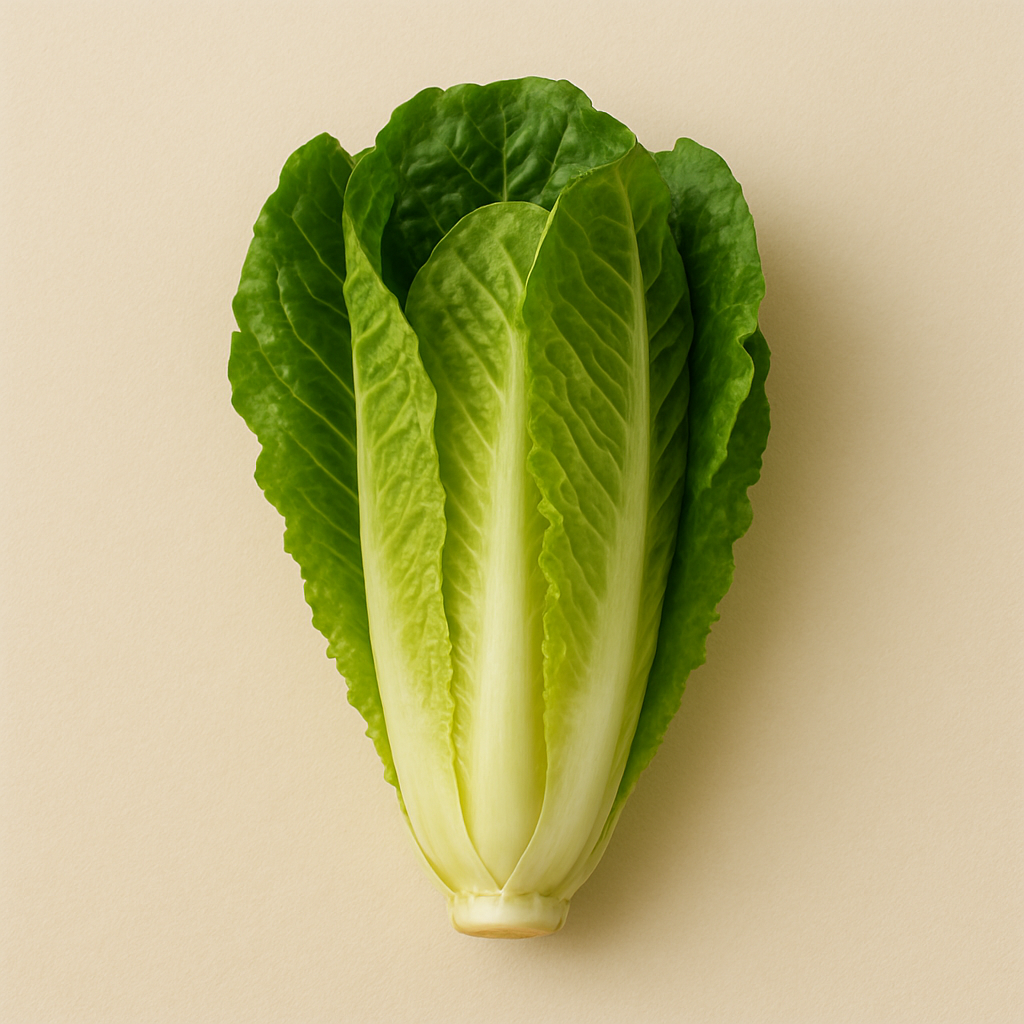
Romaine Lettuce
Lactuca sativa var. longifolia
Family: Asteraceae
Romaine lettuce forms tall, upright heads with crisp, elongated leaves and a prominent center rib. Known for its satisfying crunch and slightly bitter flavor, it's the classic choice for Caesar salads. More heat-tolerant than other lettuces, romaine is a reliable producer.
Days to Harvest
50-70 days
Sun Needs
Full Sun to Partial Shade (4-6 hours)
moderate
Germination Temp
65°F optimal
Start Indoors
4 weeks before last frost
Germination
2-10 days
Seed Depth
1/8 inch
Light to Germinate
Yes
💡 Tip: Seeds need light to germinate. Press into soil surface and barely cover. More heat-tolerant than other lettuces but still prefers cool weather.
Soil Type
Rich, well-draining soil with plenty of organic matter
pH Range
6 - 7
Spacing
10-12 inches between plants, 18 inches between rows
⚠️ Avoid planting near:
History
Romaine lettuce originated in the Mediterranean region and was popular with ancient Greeks and Romans. The name "Romaine" comes from Rome, where it was cultivated extensively. It was introduced to France in the 14th century through Avignon, earning the alternate name "Cos" lettuce from the Greek island of Kos.
Nutritional Benefits
- ✓Excellent source of Vitamin K
- ✓High in Vitamin A (beta-carotene)
- ✓Good source of folate
Optimal Growing Temp
60°F - 70°F
Romaine lettuce thrives in cool conditions between 60-70°F. More heat-tolerant than butterhead varieties but still bolts when temperatures consistently exceed 80°F.
Survival Range
35°F - 80°F
Can survive these temperatures
Frost Note: Romaine tolerates light frost (28-32°F) and can survive brief dips below that with protection. Fall-grown romaine is often sweeter due to cool nights.
Best USDA Zones
Humidity
40-60%
Moderate humidity preferred. Good air circulation helps prevent disease. Romaine's upright growth allows better air circulation than heading types.
Height
10-14 inches
Spread
10-12 inches
Growth Habit
upright
Germination
2-10 days
Seeds germinate best at 60-70°F. Light aids germination—barely cover seeds.
Seedling Stage
Duration: 2-3 weeks
True leaves: First true leaves appear 5-7 days after sprouting with elongated shape
Transplant ready: Ready when 3-4 inches tall with 3-4 true leaves.
Vegetative Growth
Duration: 4-8 weeks from transplant
Development of upright, elongated head with crisp, ribbed leaves. Inner heart develops as plant matures.
Flowering
Timing: Bolts in heat, long days, or stress
Duration: Once bolting starts, leaves become bitter
Yellow flowers appear on tall stalk; flavor declines rapidly.
Harvest Maturity
Timing: 55-75 days from seed
- Head is upright and elongated (10-14 inches)
- Inner heart is developed but not too tight
- Outer leaves are crisp with prominent ribs
- No sign of center elongation (bolting)
Per Plant
8-16 oz per head
Per Square Foot
1-2 heads per square foot with proper spacing
Harvest Frequency
Single harvest per head, or cut-and-come-again for baby leaves
Factors Affecting Yield
- •More heat-tolerant than other lettuces
- •Sturdy leaves hold up well
- •Can harvest outer leaves for extended production
- •Cool weather produces sweeter, crisper heads
Seedling Stage
Keep consistently moist
Established Plants
1-1.5 inches per week
During Fruiting
Even moisture during head formation
Preferred Method
Water at base of plants. Romaine's upright growth helps keep foliage dry.
⚠️ Critical Watering Periods
- • Germination
- • Head formation
Pro Tips
- Consistent moisture produces crisp, sweet romaine
- Mulch to retain moisture and keep roots cool
- More tolerant of brief dry spells than butterhead
Feeding Schedule
At Planting
Balanced fertilizer or compost
Once
3-4 Weeks After Planting
Side-dress with nitrogen
Once
Organic Options
Side-dress with compost or apply diluted fish emulsion every 2-3 weeks.
Minimum Size
6 inch pot minimum
Recommended Size
8-10 inch pot or 8 inch deep container
Depth Required
At least 8 inches deep
Best Varieties for Containers
Container Tips
- Good for containers due to upright growth habit
- Choose mini varieties for smaller containers
- Keep containers in partial shade in warm weather
- Water more frequently than garden plants
Why Prune
When
Harvest outer leaves when 4-6 inches or whole heads at maturity
How Often
Harvest outer leaves weekly, or whole heads at maturity
Technique
Cut outer leaves at base or harvest entire head by cutting at soil level.
Remove
- ✗ Outer leaves for cut-and-come-again
- ✗ Whole head at maturity
Keep
- ✓ Center growing point if harvesting outer leaves
Plant Every
Every 2-3 weeks
Sowings/Season
4-6 plantings in spring, 4-6 in fall
Duration
From 6 weeks before last frost to 6 weeks before hot weather; resume late summer
Tips
- Succession planting ensures continuous harvest
- More heat-tolerant than butterhead—longer spring window
- Fall plantings often have superior flavor