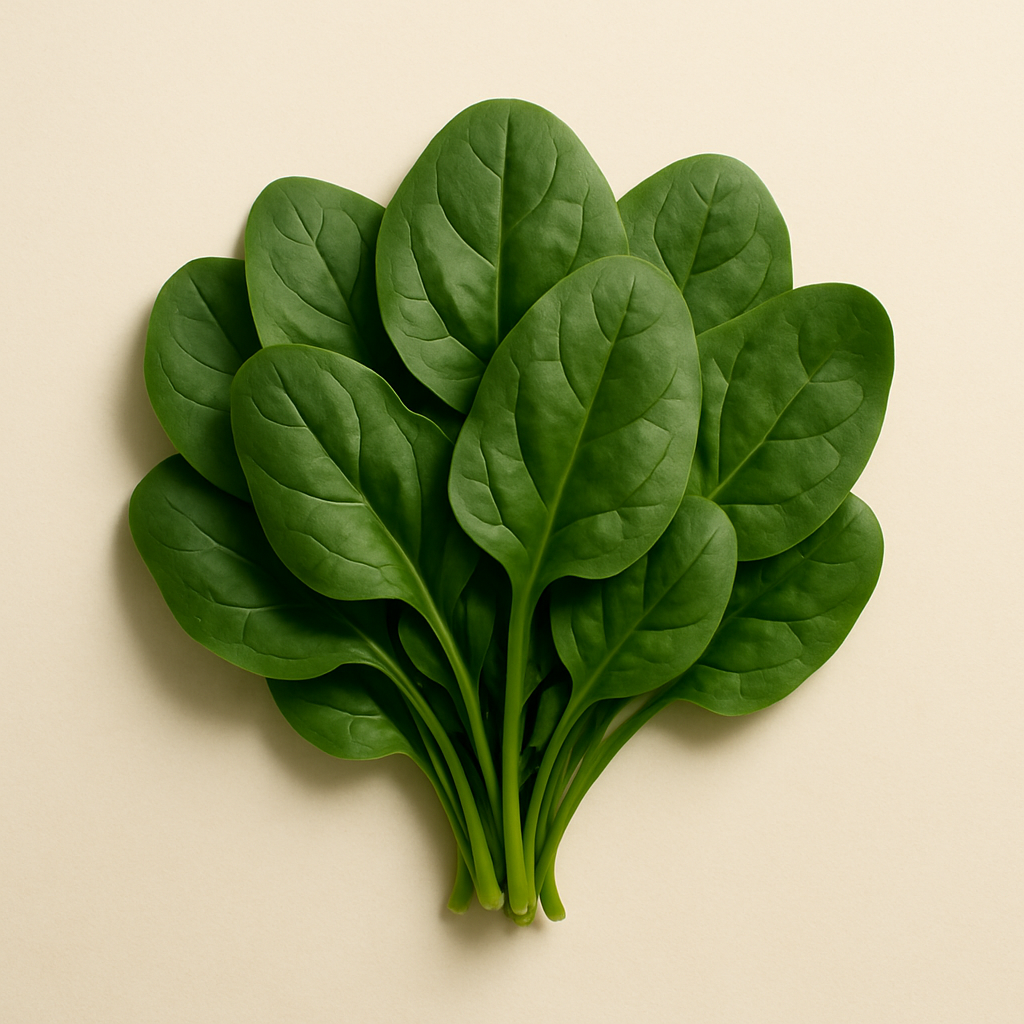
Spinach
Spinacia oleracea
Family: Amaranthaceae
Spinach is a nutrient-dense leafy green that thrives in cool weather. With dark green, tender leaves and a mild, slightly earthy flavor, it's incredibly versatile in the kitchen. Fast-growing and productive, spinach is perfect for spring and fall gardens.
Days to Harvest
35-50 days
Sun Needs
Full Sun to Partial Shade (4-6 hours)
moderate
Germination Temp
60°F optimal
Start Indoors
4 weeks before last frost
Germination
5-14 days
Seed Depth
1/2 inch
Light to Germinate
No
💡 Tip: Soak seeds for 24 hours before planting to speed germination. Can be sown as soon as soil can be worked in spring.
Soil Type
Rich, well-draining soil high in nitrogen
pH Range
6.5 - 7.5
Spacing
4-6 inches between plants, 12 inches between rows
⚠️ Avoid planting near:
History
Spinach (Spinacia oleracea) originated in ancient Persia (modern-day Iran) and was known to the ancient Persians as "aspanakh." The vegetable traveled east along the Silk Road, reaching China by the 7th century CE, where it was called "the Persian vegetable." The Moors introduced spinach to Spain around 1100 CE during their occupation of the Iberian Peninsula, and from there it spread throughout Europe during the medieval period. Catherine de' Medici, the Italian queen of France, was so fond of spinach that to this day dishes prepared on a bed of spinach are called "Florentine" (à la Florentine) in her honor—after Florence, her birthplace. In America, spinach became a cultural phenomenon thanks to E.C. Segar's cartoon character Popeye, who first appeared in 1929 and gained superhuman strength from eating canned spinach. The Popeye effect was so powerful that spinach consumption in the United States reportedly increased by 33% during the 1930s, and statues of Popeye were erected in spinach-growing regions. The myth that spinach is extraordinarily high in iron traces back to a decimal point error in 1870—the actual iron content is about one-tenth of what was originally reported—but the vegetable remains genuinely one of the most nutrient-dense foods available.
Nutritional Benefits
- ✓Exceptionally high in Vitamin K
- ✓Excellent source of Vitamin A
- ✓High in iron (non-heme)
Optimal Growing Temp
50°F - 70°F
Spinach thrives in cool weather between 50-70°F. Growth slows above 75°F and plants bolt quickly in sustained heat. Can germinate in soil as cool as 35°F.
Survival Range
35°F - 80°F
Can survive these temperatures
Frost Note: Spinach is very cold-hardy, tolerating hard frosts down to 20°F once established. Light frosts actually improve flavor by converting starches to sugars. Can overwinter in many climates with protection.
Best USDA Zones
Humidity
40-70%
Moderate humidity preferred. High humidity can increase downy mildew risk. Good air circulation important in humid climates.
Height
6-12 inches
Spread
6-10 inches
Growth Habit
upright
Germination
5-14 days
Seeds germinate in cool soil (40-70°F). Soaking seeds 24 hours before planting speeds germination. First sprouts emerge as small seed leaves.
Seedling Stage
Duration: 2-3 weeks
True leaves: First true leaves appear 7-10 days after sprouting with characteristic spinach shape
Transplant ready: Ready to transplant or thin when 2 inches tall with 2-3 true leaves. Direct sowing preferred over transplanting.
Vegetative Growth
Duration: 4-6 weeks
Rapid leaf production forming rosettes. Cool temperatures produce the best flavor and texture. Plants grow vigorously in spring and fall conditions.
Harvest Maturity
Timing: 35-50 days from seed
- Leaves are 3-6 inches long and deep green
- Plants have formed healthy rosettes
- Leaves are tender and flavorful
- No sign of elongation or bolting
Per Plant
4-6 oz of leaves per plant for full harvest
Per Square Foot
8-12 oz per square foot
Harvest Frequency
Continuous if harvesting outer leaves, or single harvest for whole plant
Factors Affecting Yield
- •Cool temperatures extend harvest window
- •Consistent moisture produces tender, mild leaves
- •Bolt-resistant varieties provide longer harvest
- •Succession planting ensures continuous supply
- •Heat and long days trigger bolting and end harvest
Seedling Stage
Keep soil consistently moist for germination, never letting surface dry out
Established Plants
1-1.5 inches per week, more in warm weather
Preferred Method
Water at base of plants to keep foliage dry. Drip irrigation ideal. Avoid overhead watering which promotes fungal diseases like downy mildew.
⚠️ Critical Watering Periods
- • Germination
- • Rapid leaf growth
Pro Tips
- Spinach has shallow roots and dries out quickly
- Water in morning so foliage dries before evening
- Mulch lightly to retain moisture and keep soil cool
- Never let spinach wilt—it affects flavor permanently
Feeding Schedule
At Planting
Balanced fertilizer or compost worked into soil
Once
3 Weeks After Planting
Nitrogen-rich fertilizer or fish emulsion
Once
If Growth Slows
Liquid fish emulsion or compost tea
Every 2 weeks
Organic Options
Side-dress with compost every 3 weeks. Apply diluted fish emulsion every 2 weeks for quick nitrogen boost. Blood meal for slow-release nitrogen.
Minimum Size
6 inch pot minimum
Recommended Size
8-10 inch pot or 6-8 inch deep container
Depth Required
At least 6-8 inches deep
Best Varieties for Containers
Container Tips
- Excellent for containers due to shallow roots
- Use fast-draining potting mix rich in organic matter
- Place in partial shade as containers warm quickly
- Water frequently—containers dry faster than garden beds
- Try compact varieties like Space for containers
- Grow in window boxes for cut-and-come-again harvest
Plant Every
Every 2 weeks
Sowings/Season
6-8 plantings in spring, 4-6 in fall
Duration
From 4-6 weeks before last frost through late spring; resume late summer for fall harvest
Tips
- Essential for continuous harvest since spinach bolts quickly
- Spring sowings: start early and plant every 2 weeks until weather warms
- Fall sowings: start in late summer when nights cool
- Use bolt-resistant varieties for late spring plantings
- Fall spinach often has superior flavor