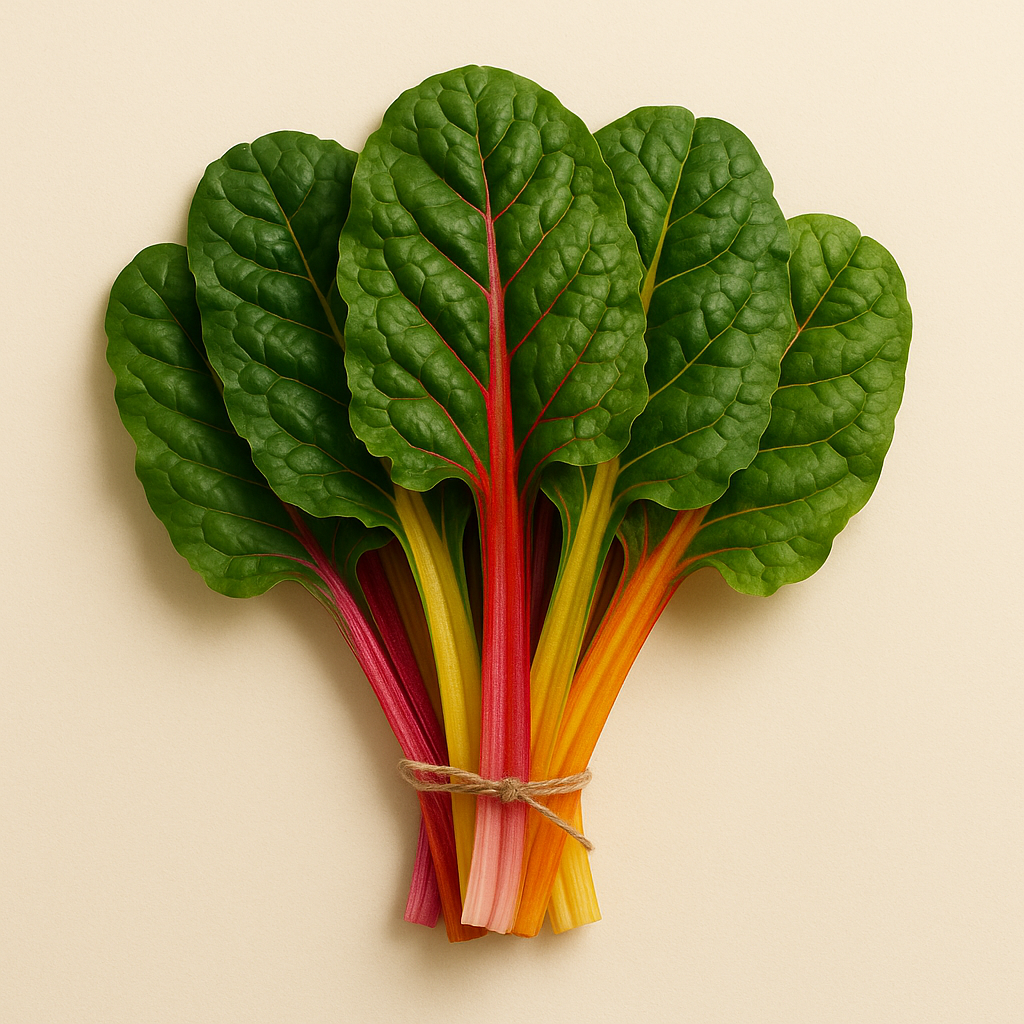
Swiss Chard
Beta vulgaris subsp. vulgaris
Family: Amaranthaceae
Swiss chard is a beautiful and versatile leafy green with colorful stems in shades of white, yellow, orange, pink, and red. Related to beets, it produces large, tender leaves with a mild, slightly earthy flavor. More heat-tolerant than spinach, it grows throughout the season.
Days to Harvest
50-60 days
Sun Needs
Full Sun to Partial Shade (4-6 hours)
moderate
Germination Temp
75°F optimal
Start Indoors
4 weeks before last frost
Germination
5-14 days
Seed Depth
1/2 to 1 inch
Light to Germinate
No
💡 Tip: Soak seeds overnight to speed germination. Each "seed" is actually a cluster that may produce multiple seedlings—thin to strongest.
Soil Type
Rich, well-draining soil with good organic matter
pH Range
6 - 7
Spacing
12-18 inches between plants, 18-24 inches between rows
⚠️ Avoid planting near:
History
Despite its name, Swiss chard is native to the Mediterranean region, not Switzerland. The "Swiss" designation came from a 19th-century Swiss botanist who gave it its scientific name. It has been cultivated since ancient times by Greeks and Romans.
Nutritional Benefits
- ✓Extremely high in Vitamin K
- ✓Excellent source of Vitamins A and C
- ✓High in magnesium
Optimal Growing Temp
50°F - 75°F
Swiss chard has an exceptionally wide temperature tolerance, growing in 50-75°F but surviving both light frosts and summer heat. It's one of the most versatile leafy greens for year-round production.
Survival Range
25°F - 90°F
Can survive these temperatures
Frost Note: Swiss chard tolerates frosts down to 25°F and sometimes lower. Outer leaves may be damaged by hard frost but plants survive and regrow. Can be grown through winter in mild climates with protection.
Best USDA Zones
Humidity
50-70%
Chard tolerates various humidity levels. Good air circulation helps prevent fungal issues in humid conditions.
Height
18-24 inches
Spread
12-18 inches
Growth Habit
upright
Germination
5-14 days
Chard seeds (actually seed clusters containing 2-4 seeds) germinate at 50-85°F. Soak seeds overnight to speed germination.
Seedling Stage
Duration: 3-4 weeks
True leaves: First true leaves appear 7-10 days after sprouting with characteristic smooth or crinkled edges
Transplant ready: Ready when 4-5 inches tall with 4-5 true leaves. Can be direct sown or transplanted.
Vegetative Growth
Duration: 8-10 weeks to first harvest
Continuous leaf and stem production from central crown. Colorful varieties develop stem colors early.
Flowering
Timing: Second year, or under stress
Duration: Tall flower stalks appear in year two
Chard is biennial, bolting in second year. First-year bolting is rare but can occur with extreme stress.
Harvest Maturity
Timing: 55-60 days from seed for first harvest
- Leaves are 6-10 inches long
- Stems are fully colored (if colored variety)
- Plants have multiple harvestable outer leaves
- Can begin harvesting baby leaves earlier
Per Plant
2-5 lbs over the season with continuous harvest
Per Square Foot
1-2 lbs per square foot per season
Harvest Frequency
Harvest outer leaves every 1-2 weeks
Factors Affecting Yield
- •Continuous harvest extends over many months
- •Both leaves and stems are edible
- •More heat-tolerant than other greens
- •Can produce through summer when other greens bolt
- •Regular harvesting promotes continued production
Seedling Stage
Keep consistently moist
Established Plants
1-1.5 inches per week
During Fruiting
Consistent moisture for best leaf quality
Preferred Method
Water at soil level. Chard is fairly adaptable to various watering methods.
⚠️ Critical Watering Periods
- • Establishment
Pro Tips
- Chard is more drought-tolerant than lettuce
- Consistent moisture produces tender, mild leaves
- Mulch to maintain even soil moisture
Feeding Schedule
At Planting
Compost worked into soil
Once
Monthly
Side-dress with compost or balanced fertilizer
Monthly during production
Organic Options
Side-dress with compost monthly. Fish emulsion every 2-3 weeks for faster growth.
Minimum Size
5 gallon minimum
Recommended Size
7-10 gallon for full production
Depth Required
At least 10 inches deep
Best Varieties for Containers
Container Tips
- Excellent container vegetable with long production
- Rainbow varieties make beautiful ornamental containers
- Water consistently—containers dry faster
- Feed every 2-3 weeks for continuous production
- Harvest outer leaves to keep compact
Why Prune
When
Harvest outer leaves when 6-10 inches long
How Often
Harvest weekly or as needed
Technique
Cut or snap outer leaves at base, leaving inner leaves and central crown.
Remove
- ✗ Outer mature leaves
- ✗ Yellowed or damaged leaves
Keep
- ✓ Central growing crown
- ✓ Inner leaves for continued growth