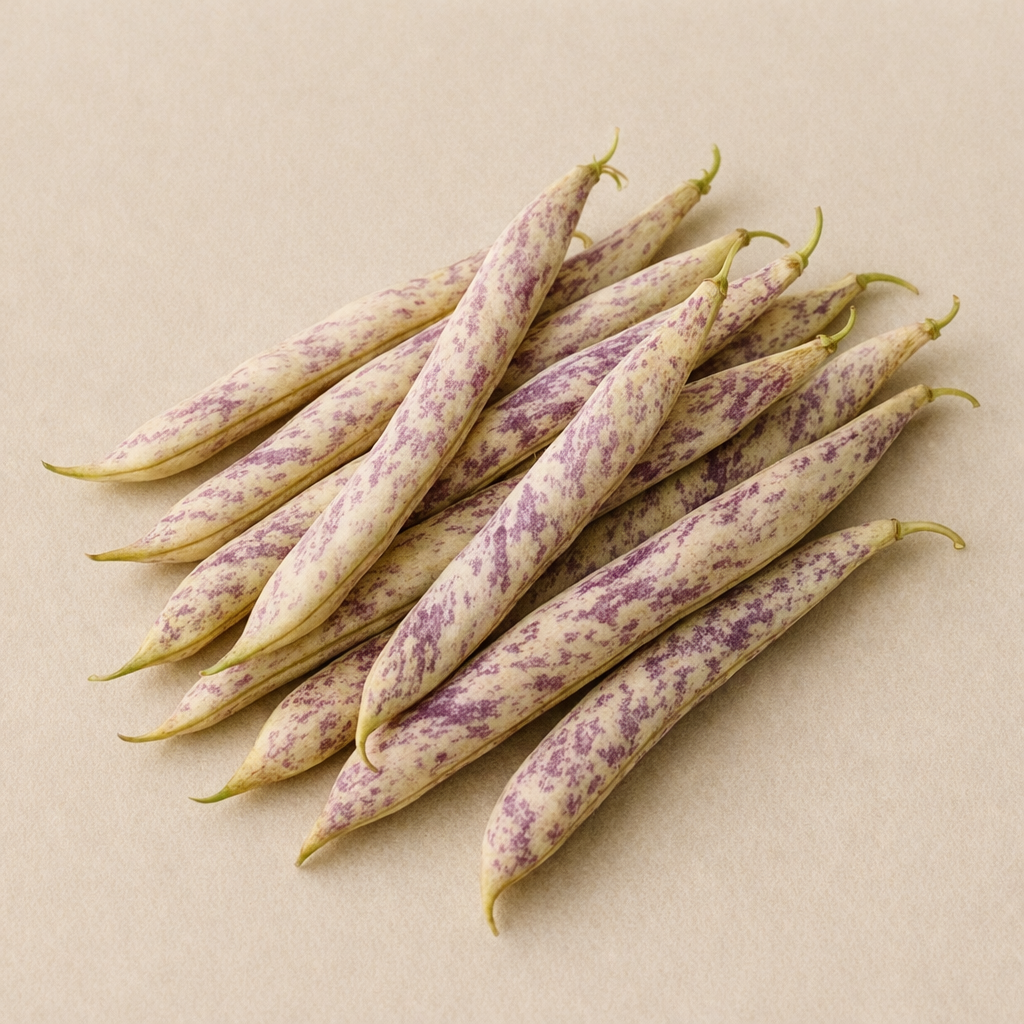
Dragon Tongue Beans
Phaseolus vulgaris
Family: Fabaceae
Dragon Tongue beans are a stunning Dutch heirloom with cream-colored pods streaked with purple. These dual-purpose beans can be eaten as snap beans when young or shelled as dried beans. The purple streaks fade when cooked.
Days to Harvest
55-65 days
Sun Needs
Full Sun (6-8 hours)
moderate
Germination Temp
75°F optimal
Start Indoors
0 weeks before last frost
Germination
6-14 days
Seed Depth
1 to 1.5 inches
Light to Germinate
No
💡 Tip: Direct sow only—beans do not transplant well. Can inoculate with rhizobium for better nitrogen fixation.
Soil Type
Well-draining soil with moderate fertility
pH Range
6 - 7
Spacing
4-6 inches between plants, 18-24 inches between rows
⚠️ Avoid planting near:
History
Dragon Tongue beans emerged from the rich tradition of Dutch heirloom vegetable breeding, developed and preserved by generations of Dutch farmers who selected for both beauty and utility. The striking cream pods dramatically streaked with purple-magenta represent one of the most visually arresting beans in any garden, resembling the forked tongue of a mythical dragon. Unlike purely ornamental varieties, Dragon Tongue offers genuine dual-purpose value: harvested young, the tender pods make excellent snap beans; left to mature, the cream-colored seeds with purple speckles can be shelled and dried for winter cooking. The purple coloration comes from anthocyanins, water-soluble pigments that unfortunately dissolve during cooking, turning the pods plain green—disappointing for those who hoped to serve purple beans, but delicious nonetheless. Dutch immigrants likely brought this variety to North America, where it remained a regional specialty until the heirloom seed movement of the 1980s-90s brought it wider attention. Seed Savers Exchange and other preservation organizations championed Dragon Tongue as an exemplar of heirloom beauty and practicality. Today it ranks among the most requested heirloom beans at farmers' markets, where shoppers are drawn by the dramatic appearance and stay for the exceptional flavor.
Nutritional Benefits
- ✓High in plant protein
- ✓Good source of fiber
- ✓Contains anthocyanins in purple streaks
Optimal Growing Temp
70°F - 85°F
Dragon Tongue beans thrive in warm weather between 70-85°F. Growth slows below 60°F and above 90°F. Germination requires soil temperature of at least 60°F, ideally 70-80°F.
Survival Range
50°F - 95°F
Can survive these temperatures
Frost Note: Dragon Tongue beans are frost-sensitive and killed by any frost. Plant only after all danger of frost has passed and soil has warmed to at least 60°F.
Best USDA Zones
Humidity
50-70%
Moderate humidity preferred. High humidity increases fungal disease risk. Good air circulation essential.
Height
18-24 inches
Spread
12-18 inches
Growth Habit
bush
Germination
6-14 days
Seeds germinate best at 70-80°F soil temperature. First shoots emerge as arched stems, followed by cotyledons (seed leaves) unfurling.
Seedling Stage
Duration: 1-2 weeks
True leaves: First true trifoliate leaves appear 7-10 days after sprouting.
Transplant ready: Direct sow only—beans do not transplant well. Transplanting stunts growth and reduces yields.
Vegetative Growth
Duration: 3-4 weeks
Rapid growth with characteristic bushy form. Nitrogen-fixing nodules develop on roots during this stage.
Flowering
Timing: 4-5 weeks after germination
Duration: 2-3 weeks
Self-pollinating. Small white or purple flowers in clusters. Pollination occurs before flowers open.
Fruit Development
Begins: 1-2 weeks after flowering
Duration: 3-4 weeks (snap) or 6-8 weeks (dry beans)
Beautiful cream pods with purple streaks develop. For snap beans, harvest young. For shell beans, leave to dry on plant.
Harvest Maturity
Timing: 55-65 days (snap) or 80-90 days (dry)
- Snap stage: Pods 6-7 inches with cream/purple streaks, seeds not bulging
- Dry stage: Pods papery brown, seeds rattling inside
- Purple streaks fade when cooked
- Pick snap beans when they snap cleanly
Per Plant
1/2 to 1 lb snap beans or 2-4 oz dried beans per plant
Per Square Foot
1-2 lbs snap beans per square foot
Harvest Frequency
Every 2-3 days for snap beans; once for dry beans
Factors Affecting Yield
- •Purpose—snap or dried—determines harvest timing
- •Warm soil at planting
- •Consistent moisture during flowering
- •Regular harvest extends snap bean production
- •Inoculation improves yields
Seedling Stage
Keep consistently moist until germination, then water every 2-3 days
Established Plants
1 inch per week through deep watering
During Fruiting
1-1.5 inches per week during flowering and pod development
Preferred Method
Drip irrigation or soaker hoses ideal. Water at base in morning. Avoid wetting foliage.
⚠️ Critical Watering Periods
- • Germination
- • Flowering
- • Pod development
Pro Tips
- Consistent moisture critical during flowering
- Mulch to retain moisture
- Avoid wetting foliage
- Deep watering encourages deep roots
- For dry beans, reduce water as pods mature
Feeding Schedule
At Planting
Bone meal or rock phosphate
Once
Mid-Season
Light compost if needed
Optional
Organic Options
Mix compost into soil before planting. Inoculate seeds with rhizobium bacteria.
Minimum Size
5 gallon (12 inches deep)
Recommended Size
10-15 gallon for multiple plants
Depth Required
At least 10-12 inches
Best Varieties for Containers
Container Tips
- Bush habit makes Dragon Tongue excellent for containers
- Plant 3-4 seeds per 5-gallon container
- Use well-draining potting mix
- No support needed
- Stunning ornamental value with purple-streaked pods
- Water more frequently than in-ground plants
Plant Every
Every 2-3 weeks
Sowings/Season
2-3 plantings
Duration
After last frost until 65 days before first fall frost
Tips
- Succession planting extends snap bean harvest
- For dry beans, single planting is sufficient
- Stop planting 65 days before expected frost
- In hot climates, skip mid-summer plantings