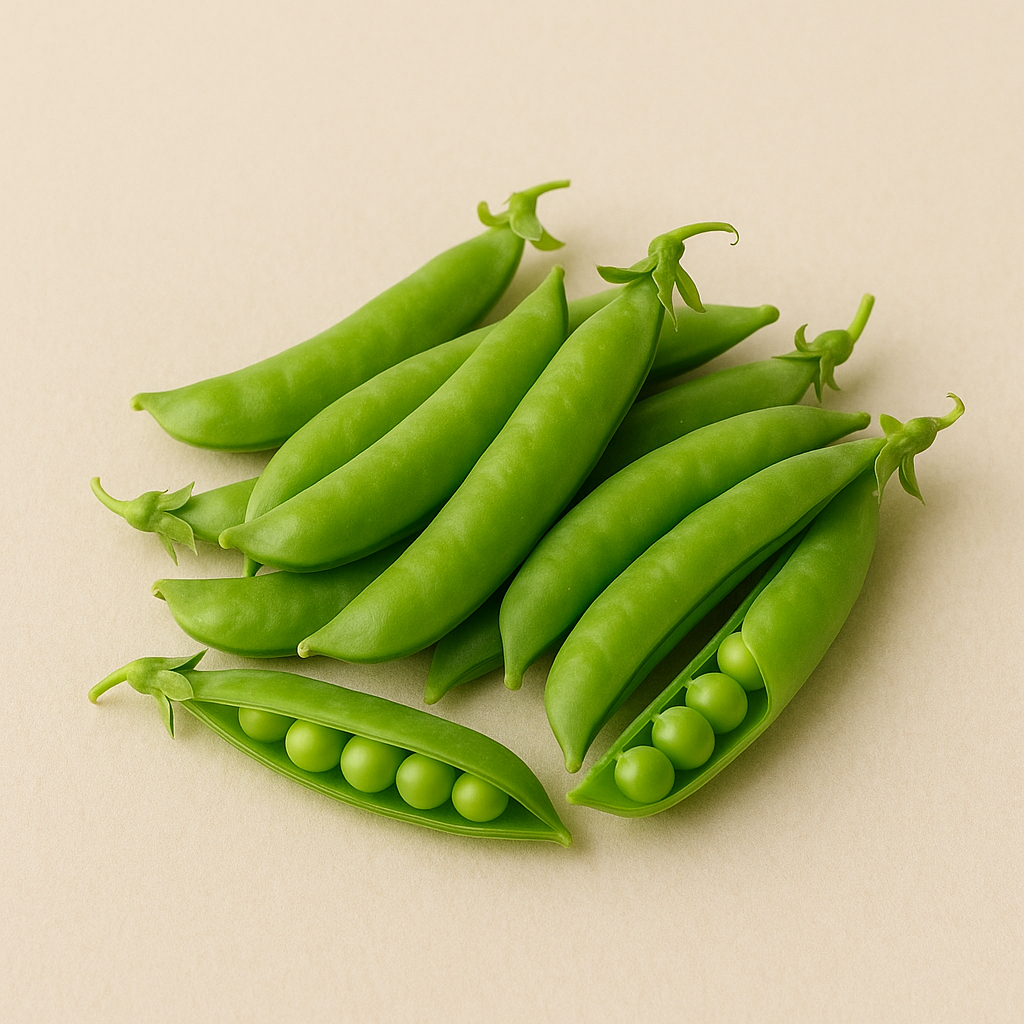
Sugar Snap Peas
Pisum sativum var. macrocarpon
Family: Fabaceae
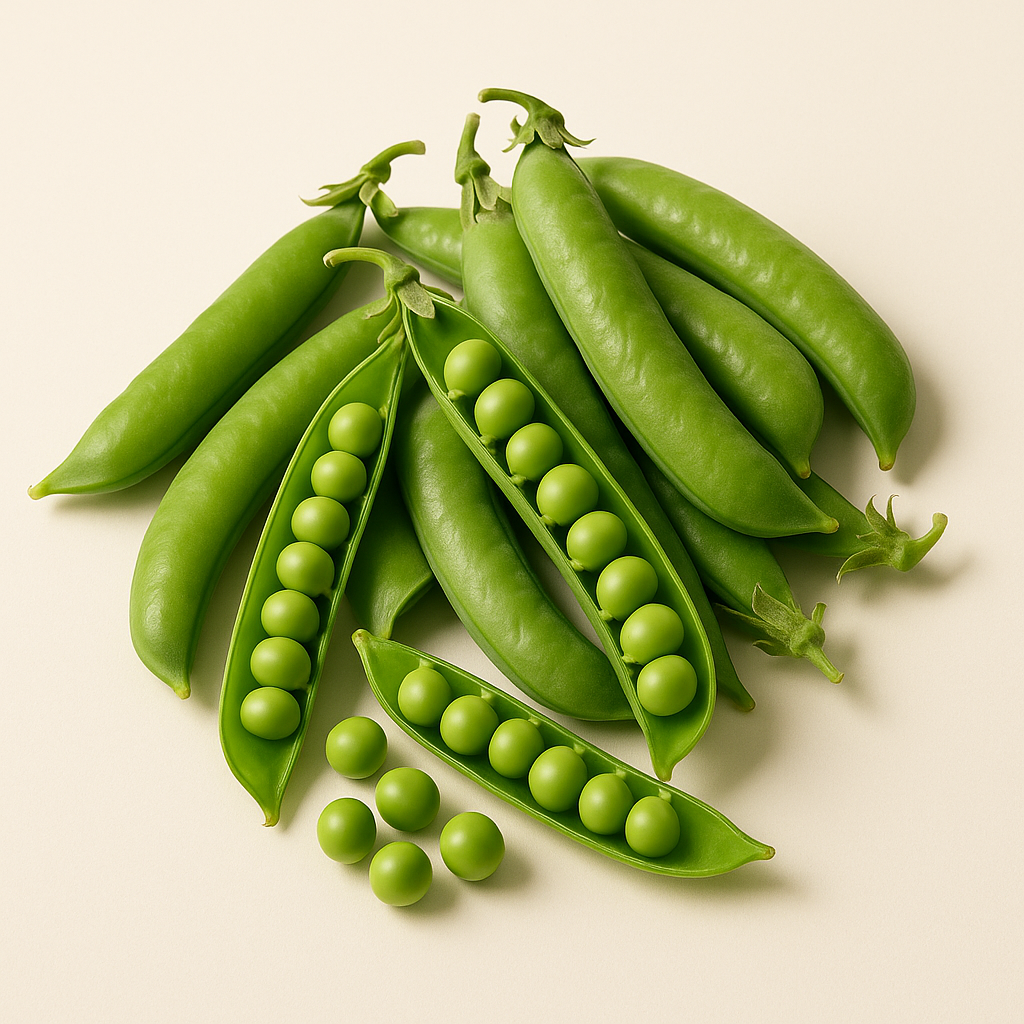
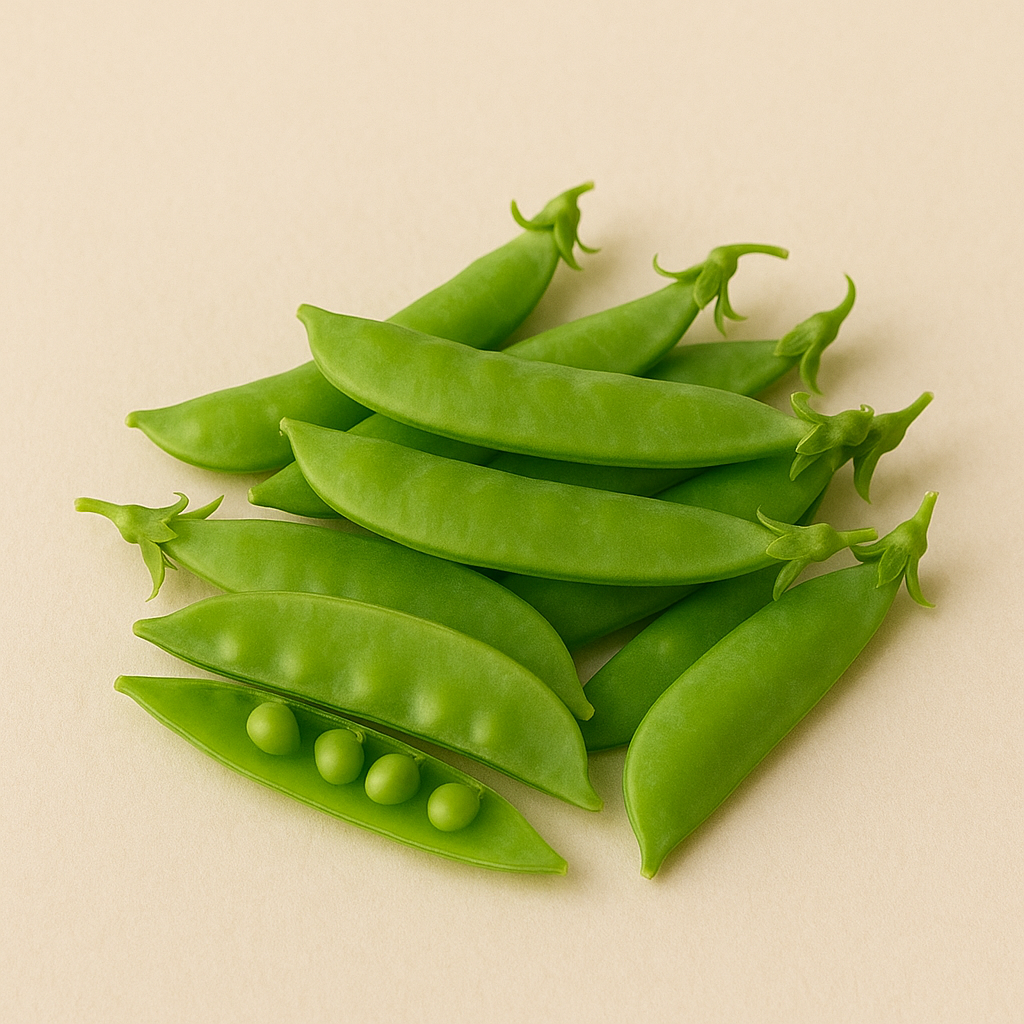
Sugar snap peas are edible-pod peas combining the sweetness of garden peas with the crunch of snow peas. The entire pod is eaten, making them a convenient snack and garden treat. Like all peas, they thrive in cool weather and stop when heat arrives.
Days to Harvest
55-70 days
Sun Needs
Full Sun (6+ hours)
moderate
Germination Temp
55°F optimal
Start Indoors
0 weeks before last frost
Germination
7-14 days
Seed Depth
1 inch
Light to Germinate
No
💡 Tip: Direct sow 4-6 weeks before last frost. Inoculate with pea/bean inoculant for best production.
Soil Type
Well-draining soil
pH Range
6 - 7.5
Spacing
2-3 inches between plants, 24 inches between rows
⚠️ Avoid planting near:
History
Sugar snap peas represent one of the most significant vegetable breeding achievements of the 20th century, developed by Dr. Calvin Lamborn at the Gallatin Valley Seed Company in Idaho. Lamborn spent years crossing snow peas with mutant shell pea varieties, seeking to create an edible-pod pea with the thick, sweet walls of garden peas. His breakthrough came in 1979 when he introduced "Sugar Snap"—a pea that could be eaten pod and all, combining the satisfying crunch of snow peas with the plump sweetness of shelling peas. The variety won the prestigious All-America Selections Gold Medal, one of the highest honors in the seed industry, and sparked what many consider a revolution in home vegetable gardening. Before sugar snaps, gardeners had to choose between the convenience of edible-pod snow peas (thin walls, limited sweetness) or the superior flavor of shelling peas (tedious to shell). Sugar snaps offered the best of both worlds. The original variety's tall vines prompted breeders to develop shorter, more manageable versions like "Sugar Ann" and "Cascadia." Within a decade, sugar snap peas had become a supermarket staple and garden essential. They remain one of the most child-friendly vegetables, often converting pea-skeptics with their candy-like sweetness straight from the vine.
Nutritional Benefits
- ✓High in Vitamin C
- ✓Good source of fiber
- ✓Contains Vitamin K
Optimal Growing Temp
55°F - 70°F
Sugar snap peas thrive in cool temperatures between 55-70°F. They struggle above 75°F and stop producing in sustained heat above 80°F. Can germinate in cool soil as low as 40°F.
Survival Range
28°F - 75°F
Can survive these temperatures
Frost Note: Sugar snap peas tolerate light frosts down to 28°F. Established plants handle cold well. This makes them excellent for early spring planting, 4-6 weeks before last frost.
Best USDA Zones
Humidity
50-70%
Moderate humidity preferred. High humidity promotes powdery mildew. Good air circulation is essential.
Height
4-8 feet (tall varieties) or 2-3 feet (dwarf)
Spread
6-12 inches
Growth Habit
climbing
Germination
7-14 days
Seeds germinate at 40-75°F soil temperature, optimally at 60-65°F. Seedlings emerge as curved shoots that straighten toward light.
Seedling Stage
Duration: 2-3 weeks
True leaves: First true leaves are compound with early-developing tendrils. Tendrils quickly seek support.
Transplant ready: Direct sow only. Snap peas do not transplant well due to sensitive root systems.
Vegetative Growth
Duration: 3-4 weeks
Rapid climbing growth with compound leaves and grasping tendrils. Nitrogen-fixing nodules develop on roots.
Flowering
Timing: 5-7 weeks after sowing
Duration: 2-4 weeks
Self-pollinating. White flowers appear in pairs or clusters. Pollination occurs before flowers fully open.
Fruit Development
Begins: 1-2 weeks after flowering
Duration: 3-4 weeks of harvest
Pods develop rapidly after flowering. Harvest when pods are plump, crisp, and sweet but before they become fibrous.
Harvest Maturity
Timing: 56-70 days from sowing
- Pods are plump and filled with sweet peas
- Pods snap crisply when bent
- Bright green color with no yellowing
- Pod walls are thick and juicy
- Strings (if present) pull away easily
Per Plant
1/2 to 1 lb per plant
Per Square Foot
2-3 lbs per square foot
Harvest Frequency
Every 1-2 days at peak production
Factors Affecting Yield
- •Variety selection—tall varieties produce more over longer periods
- •Cool temperatures during flowering and pod development
- •Adequate trellising for proper support
- •Regular harvesting encourages continued production
- •Consistent moisture during pod development
- •Seed inoculation improves plant vigor
Seedling Stage
Keep soil consistently moist during germination
Established Plants
1 inch per week through deep watering
During Fruiting
1-1.5 inches per week during flowering and pod set
Preferred Method
Water at soil level in morning. Drip irrigation ideal. Avoid overhead watering to prevent powdery mildew.
⚠️ Critical Watering Periods
- • Germination
- • Flowering
- • Pod development
Pro Tips
- Mulch to retain moisture and keep roots cool
- Water in morning so foliage dries
- Critical moisture period is flowering through harvest
- Consistent moisture produces sweet, tender pods
- Cool roots extend harvest window
Feeding Schedule
At Planting
Bone meal or rock phosphate
Once
Mid-Season
Light compost if needed
Optional
Organic Options
Work compost into soil before planting. Add bone meal to furrow. Inoculate seeds with rhizobium.
Minimum Size
5 gallon (12 inches deep)
Recommended Size
10-15 gallon for multiple plants
Depth Required
At least 10-12 inches deep
Best Varieties for Containers
Container Tips
- Choose dwarf varieties like Sugar Ann for containers
- Provide sturdy support structure—even dwarf types climb
- Use well-draining potting mix with compost
- Plant 4-6 seeds per 5-gallon container
- Water frequently in warm weather
- Best in cool spring or fall conditions
Plant Every
Every 10-14 days
Sowings/Season
3-4 spring plantings, possible fall crop
Duration
Early spring through 65-70 days before summer heat
Tips
- Plant as soon as soil can be worked in spring
- Make 3-4 successive plantings
- Stop planting when daytime temps approach 70°F consistently
- Fall plantings possible in mild climates
- Use quick-maturing varieties for later plantings