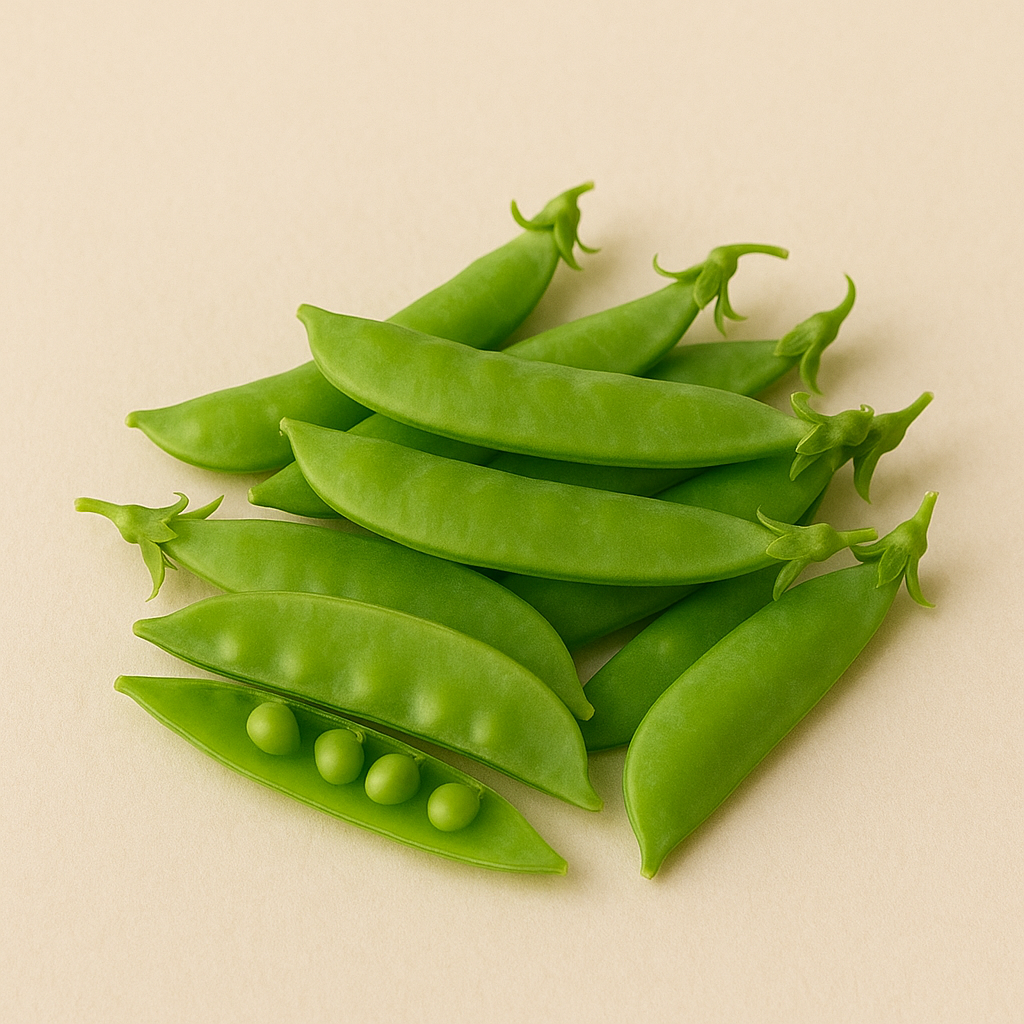
Snow Peas
Pisum sativum var. saccharatum
Family: Fabaceae
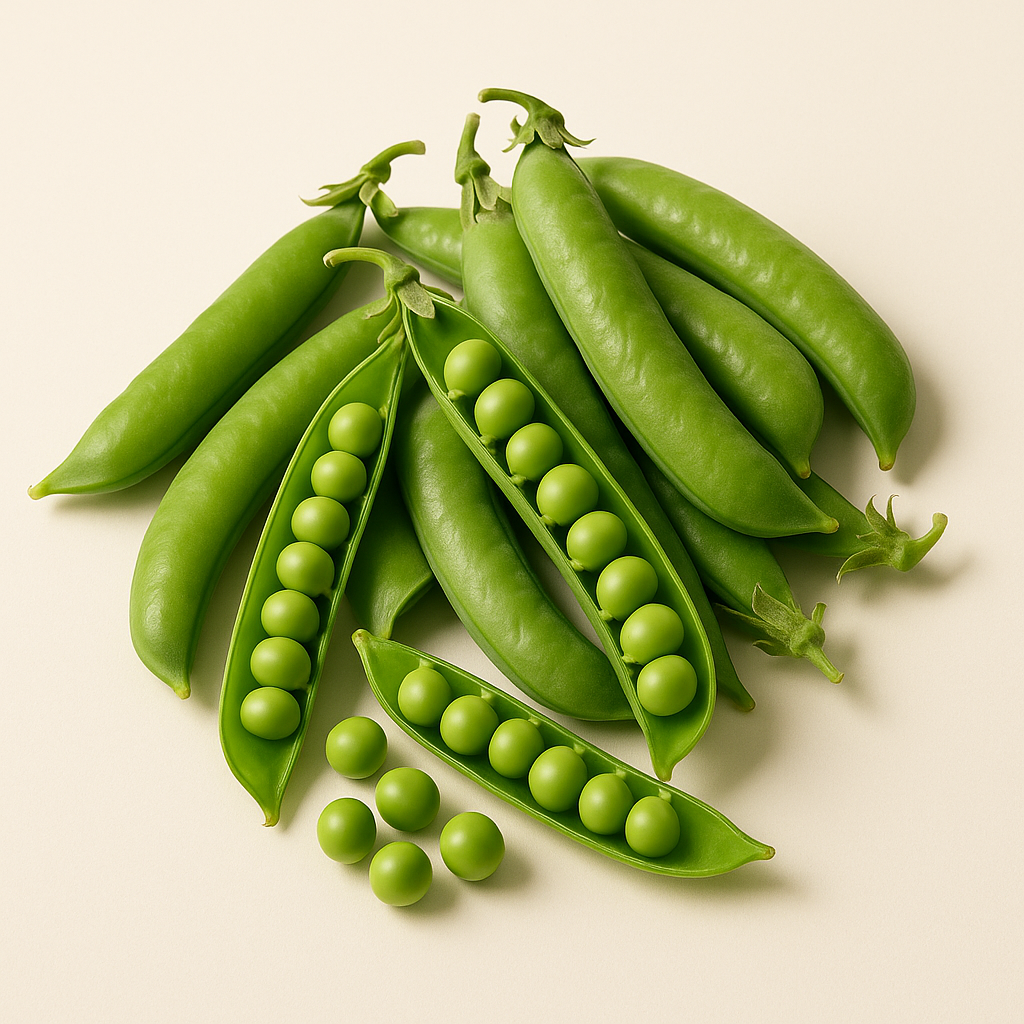
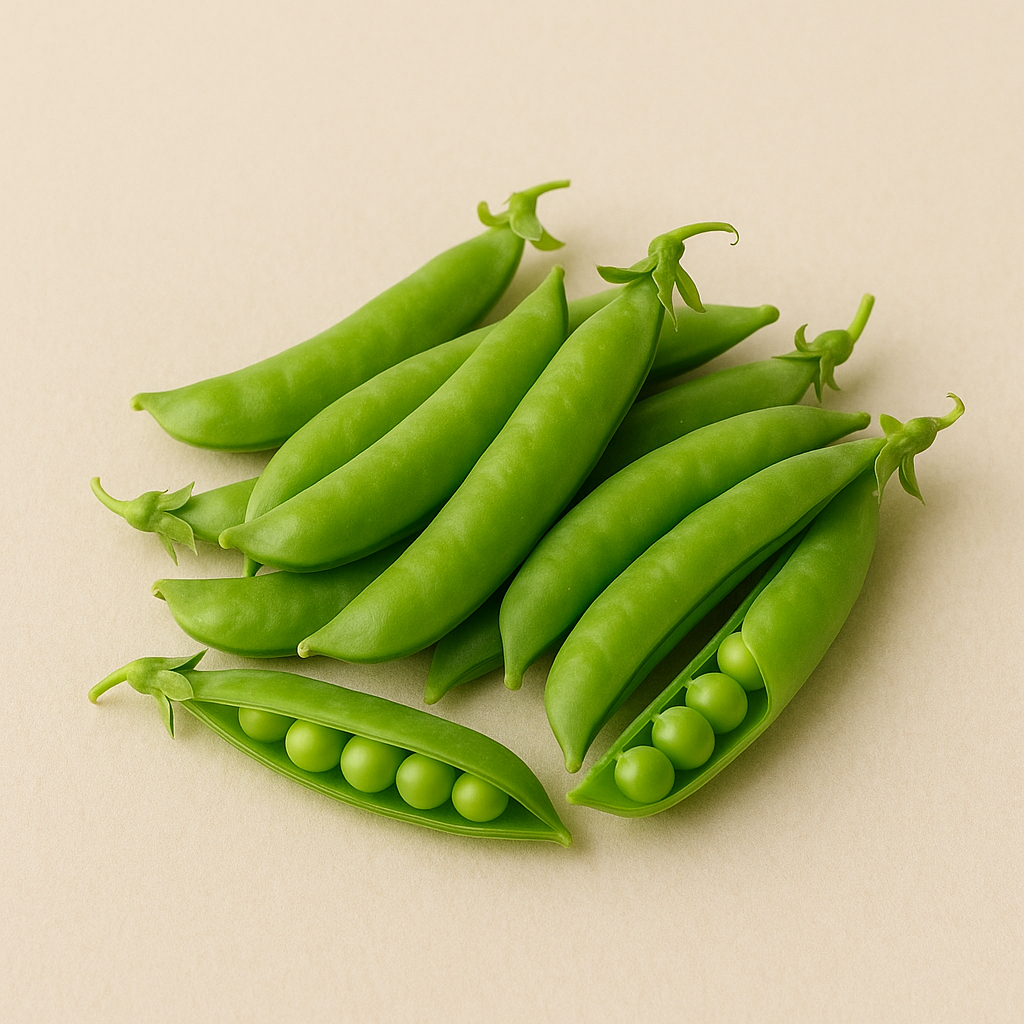
Snow peas are flat, edible-pod peas harvested before the peas inside develop fully. Essential for Asian cooking, their tender, crisp pods are perfect for stir-fries and salads. Like all peas, they're a cool-season crop that thrives in spring and fall.
Days to Harvest
55-70 days
Sun Needs
Full Sun (6+ hours)
moderate
Germination Temp
55°F optimal
Start Indoors
0 weeks before last frost
Germination
7-14 days
Seed Depth
1 inch
Light to Germinate
No
💡 Tip: Direct sow as early as soil can be worked. Inoculate for best nitrogen fixation.
Soil Type
Well-draining soil
pH Range
6 - 7.5
Spacing
2 inches between plants, 18-24 inches between rows
⚠️ Avoid planting near:
History
Snow peas represent the original edible-pod pea, cultivated for millennia before sugar snap peas were invented in 1979. Like all peas, they originated in the Mediterranean and Near East, but snow peas found their greatest culinary expression in China, where they've been cultivated since at least the 7th century Tang Dynasty. The Chinese name "荷兰豆" (hélándòu) translates to "Holland peas," reflecting their arrival via Dutch traders during the Age of Exploration—a reminder of how global vegetable trade shaped world cuisines centuries ago. Snow peas differ from shelling peas in having tender, edible pod walls with minimal fiber, harvested before the peas inside develop fully. This makes them ideal for the quick, high-heat cooking characteristic of Cantonese stir-frying, where the pods need only seconds of cooking to achieve the perfect crisp-tender texture. French cuisine also embraced snow peas (mangetout, meaning "eat all") as a refined spring vegetable. The flat shape makes snow peas particularly suitable for Asian preparations, as they cook evenly and absorb sauces effectively. American interest in snow peas exploded alongside the Chinese-American restaurant boom of the mid-20th century, though they remained specialty items until supermarket produce sections expanded in the 1980s-90s.
Nutritional Benefits
- ✓High in Vitamin C
- ✓Good source of Vitamin K
- ✓Contains fiber
Optimal Growing Temp
55°F - 70°F
Snow peas thrive in cool temperatures between 55-70°F. Growth and production decline above 75°F and cease above 80°F. Seeds germinate in soil as cool as 40°F.
Survival Range
28°F - 75°F
Can survive these temperatures
Frost Note: Snow peas tolerate light frosts down to 28°F. Seedlings are cold-hardy. Plant 4-6 weeks before last spring frost for best results.
Best USDA Zones
Humidity
50-70%
Moderate humidity preferred. High humidity promotes powdery mildew. Good air circulation helps prevent disease.
Height
3-6 feet
Spread
6-12 inches
Growth Habit
climbing
Germination
7-14 days
Seeds germinate at 40-75°F, optimally at 60-65°F. Shoots emerge as curved stems that straighten toward light.
Seedling Stage
Duration: 2-3 weeks
True leaves: First true leaves are compound with tendrils developing early. Tendrils actively seek support.
Transplant ready: Direct sow only. Snow peas do not transplant well due to sensitive roots.
Vegetative Growth
Duration: 3-4 weeks
Rapid climbing growth producing compound leaves and grasping tendrils. Nitrogen-fixing nodules form on roots.
Flowering
Timing: 5-7 weeks after sowing
Duration: 2-3 weeks
Self-pollinating. White or purple flowers appear in pairs. Pollination occurs before flowers fully open.
Fruit Development
Begins: 1-2 weeks after flowering
Duration: 3-4 weeks of harvest
Flat pods develop rapidly. Harvest when pods are flat and bright green but before peas inside develop.
Harvest Maturity
Timing: 60-70 days from sowing
- Pods are flat and about 3-4 inches long
- Pods are bright, glossy green
- Peas inside are tiny or barely visible
- Pods snap easily when bent
- Strings pull away easily
Per Plant
1/2 to 3/4 lb per plant
Per Square Foot
2-3 lbs per square foot
Harvest Frequency
Every 1-2 days at peak production
Factors Affecting Yield
- •Variety selection—some produce more than others
- •Cool temperatures during flowering
- •Adequate trellising
- •Regular harvesting to encourage production
- •Consistent moisture
- •Seed inoculation improves yields
Seedling Stage
Keep soil consistently moist during germination
Established Plants
1 inch per week through deep watering
During Fruiting
1-1.5 inches per week during flowering and pod development
Preferred Method
Water at base of plants in morning. Drip irrigation ideal. Avoid wetting foliage to prevent mildew.
⚠️ Critical Watering Periods
- • Germination
- • Flowering
- • Pod development
Pro Tips
- Mulch to retain moisture and keep roots cool
- Water in morning so foliage dries
- Consistent moisture critical during flowering
- Cool soil temperatures extend season
- Reduce watering slightly as harvest begins
Feeding Schedule
At Planting
Bone meal or rock phosphate
Once
Mid-Season
Light compost if needed
Optional
Organic Options
Mix compost into soil before planting. Add bone meal to row. Inoculate seeds with rhizobium.
Minimum Size
5 gallon (12 inches deep)
Recommended Size
10-15 gallon for multiple plants
Depth Required
At least 10-12 inches deep
Best Varieties for Containers
Container Tips
- Choose shorter varieties like Oregon Giant or Dwarf Gray Sugar
- Provide support structure for climbing
- Use well-draining potting mix with compost
- Plant 4-6 seeds per 5-gallon container
- Water frequently as containers dry quickly
- Best grown in cool conditions
Plant Every
Every 10-14 days
Sowings/Season
3-4 spring plantings, possible fall crop
Duration
Early spring through 65 days before summer heat
Tips
- Plant as soon as soil can be worked
- Make 3-4 successive plantings
- Stop planting when daytime temps approach 70°F
- Fall planting possible in mild climates
- Use early varieties for later plantings