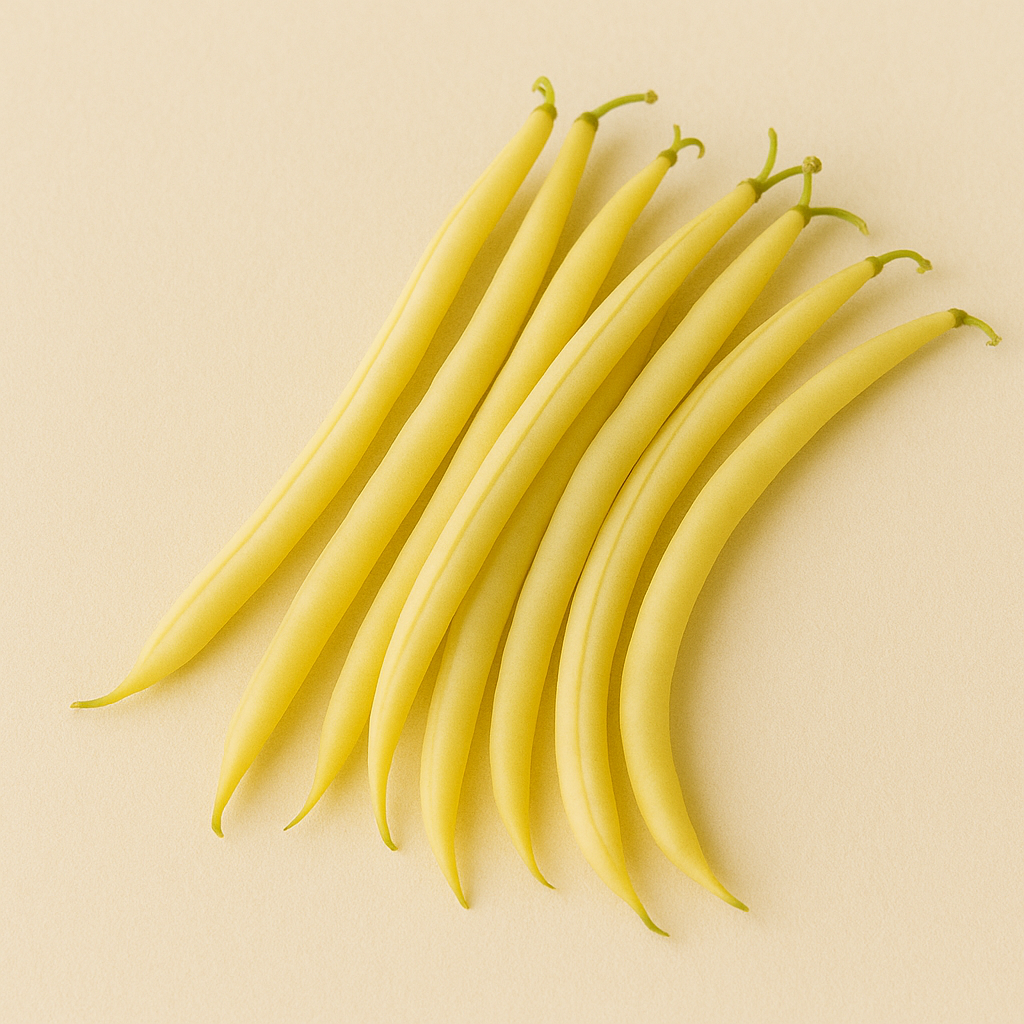
Yellow Wax Beans
Phaseolus vulgaris
Family: Fabaceae
Yellow wax beans are a classic garden variety with bright yellow pods and a mild, buttery flavor. They're just as easy to grow as green beans but add beautiful color to the garden and plate. The yellow color makes them easy to spot for harvesting.
Days to Harvest
50-60 days
Sun Needs
Full Sun (6-8 hours)
moderate
Germination Temp
75°F optimal
Start Indoors
0 weeks before last frost
Germination
6-14 days
Seed Depth
1 to 1.5 inches
Light to Germinate
No
💡 Tip: Direct sow after danger of frost. Inoculate for better nitrogen fixation.
Soil Type
Well-draining soil with moderate fertility
pH Range
6 - 7
Spacing
4-6 inches between plants, 18-24 inches between rows
⚠️ Avoid planting near:
History
Wax beans emerged as a distinct bean type in Europe during the mid-19th century, developed by selecting natural mutations that produced yellow rather than green pods. The name "wax" refers not to any coating but to the pods' smooth, slightly waxy, translucent appearance that resembles beeswax—indeed, some older literature calls them "butter beans" (not to be confused with lima beans of the same nickname). German immigrants brought wax bean varieties to America, where they became particularly popular in the Midwest and Northeast. The late 19th and early 20th centuries saw significant breeding work on wax beans, producing stringless varieties that made them more pleasant for fresh eating. Canning industry growth made wax beans a pantry staple, and the classic American three-bean salad (green beans, wax beans, and kidney beans) became a fixture at potlucks, barbecues, and picnics by the mid-20th century. Like purple beans, yellow wax beans offer the practical advantage of being easily visible against green foliage, simplifying harvest. The mild, slightly buttery flavor profile makes wax beans particularly versatile and popular with children and those who find green beans too "beany." French cuisine values wax beans (haricots beurre) for their delicate appearance in composed salads and fine dining preparations.
Nutritional Benefits
- ✓High in fiber
- ✓Good source of Vitamin C
- ✓Contains Vitamin K
Optimal Growing Temp
70°F - 85°F
Yellow wax beans thrive in warm weather between 70-85°F. Growth slows below 60°F and above 90°F. Soil must reach 60°F for germination, ideally 70-80°F.
Survival Range
50°F - 95°F
Can survive these temperatures
Frost Note: Yellow wax beans are frost-sensitive and killed by any frost. Plant only after all danger of frost has passed and soil has warmed to at least 60°F.
Best USDA Zones
Humidity
50-70%
Moderate humidity preferred. High humidity increases fungal disease risk. Good air circulation essential.
Height
15-20 inches
Spread
12-18 inches
Growth Habit
bush
Germination
6-14 days
Seeds germinate best at 70-80°F soil temperature. First shoots emerge as arched stems pushing through soil, followed by cotyledons unfurling.
Seedling Stage
Duration: 1-2 weeks
True leaves: First true trifoliate leaves appear 7-10 days after sprouting.
Transplant ready: Direct sow only—beans do not transplant well.
Vegetative Growth
Duration: 3-4 weeks
Rapid growth with compact, bushy form. Nitrogen-fixing nodules develop on roots during this stage.
Flowering
Timing: 4-5 weeks after germination
Duration: 2-3 weeks
Self-pollinating. Small white or yellow flowers appear in clusters. Pollination occurs before flowers fully open.
Fruit Development
Begins: 1-2 weeks after flowering
Duration: 2-3 weeks concentrated harvest
Bright yellow pods develop rapidly. The yellow color stands out against green foliage, making harvest easy.
Harvest Maturity
Timing: 50-60 days from sowing
- Pods are 5-6 inches long with bright yellow color
- Pods snap cleanly when bent
- Seeds not visibly bulging
- Easy to spot against green foliage
- Yellow color remains when cooked (unlike purple beans)
Per Plant
1/2 to 3/4 lb per plant
Per Square Foot
1-2 lbs per square foot
Harvest Frequency
Every 2-3 days at peak production
Factors Affecting Yield
- •Variety selection
- •Warm soil at planting
- •Consistent moisture during flowering
- •Regular harvesting encourages continued production
- •Easy visibility increases harvest efficiency
Seedling Stage
Keep consistently moist until germination, then water every 2-3 days
Established Plants
1 inch per week through deep watering
During Fruiting
1-1.5 inches per week during flowering and pod development
Preferred Method
Drip irrigation or soaker hoses ideal. Water at base in morning. Avoid wetting foliage.
⚠️ Critical Watering Periods
- • Germination
- • Flowering
- • Pod development
Pro Tips
- Consistent moisture critical during flowering
- Mulch to retain moisture
- Avoid wetting foliage to prevent disease
- Deep watering encourages strong roots
- Reduce watering slightly as pods mature
Feeding Schedule
At Planting
Bone meal or rock phosphate
Once
Mid-Season
Light compost if needed
Optional
Organic Options
Mix compost into soil before planting. Inoculate seeds with rhizobium bacteria.
Minimum Size
5 gallon (12 inches deep)
Recommended Size
10-15 gallon for multiple plants
Depth Required
At least 10-12 inches
Best Varieties for Containers
Container Tips
- Compact bush habit is perfect for containers
- Plant 3-4 seeds per 5-gallon container
- Use well-draining potting mix
- No support needed
- Bright yellow pods add ornamental value
- Buttery, mild flavor appeals to kids
Plant Every
Every 2-3 weeks
Sowings/Season
3-5 plantings
Duration
After last frost until 60 days before first fall frost
Tips
- Succession planting provides continuous harvest
- Bush beans mature all at once—multiple plantings essential
- Stop planting 60 days before expected frost
- In hot climates, skip mid-summer