Purple Coneflower
Echinacea purpurea
Family: Asteraceae
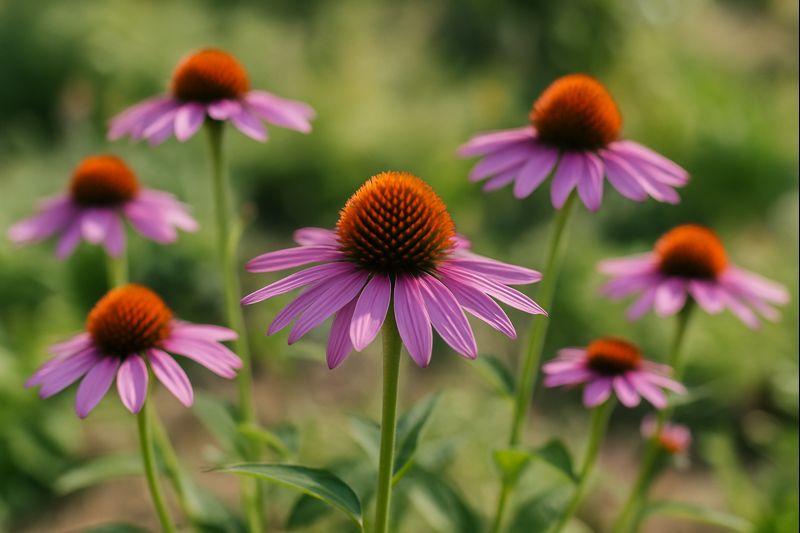
Purple Coneflower is a striking native North American perennial prized for both its beauty and powerful immune-supporting properties. With vibrant purple-pink petals surrounding distinctive spiky orange-brown cones, this hardy plant has been used medicinally for centuries while attracting pollinators to the garden.
Days to Harvest
90-120 days
Sun Needs
Full Sun (6-8+ hours)
low
Germination Temp
70°F optimal
Start Indoors
8 weeks before last frost
Germination
10-21 days
Seed Depth
1/4 inch
Light to Germinate
No
💡 Tip: Cold stratification dramatically improves germination. Mix seeds with moist sand in a plastic bag and refrigerate for 30 days before sowing. Seeds can also be sown in fall for natural stratification.
Soil Type
Well-draining soil, tolerates poor soil and drought once established
pH Range
6 - 7
Spacing
18-24 inches between plants for good air circulation
⚠️ Avoid planting near:
History
Echinacea purpurea, commonly known as Purple Coneflower, is indigenous to the central and eastern United States, where it thrived on prairies and open woodlands long before European settlement. Native American tribes, particularly the Great Plains nations including the Lakota, Cheyenne, and Comanche, recognized echinacea as one of their most versatile medicinal plants—using it to treat everything from snake bites and wounds to toothaches and infections. The Lakota people specifically used echinacea more than any other plant for medicinal purposes, chewing the root for pain relief and applying poultices to wounds. When European settlers arrived, they quickly adopted echinacea from indigenous healers, and by the late 1800s, it became one of the most popular medicines in America. Dr. H.C.F. Meyer, a patent medicine salesman from Nebraska, began promoting echinacea extracts in the 1870s, claiming it could cure snake bites—a claim he allegedly demonstrated by letting rattlesnakes bite him repeatedly while using echinacea as his only treatment. Though Meyer's claims were exaggerated, serious medical interest followed. Eclectic physicians (alternative practitioners of the era) championed echinacea, and by 1921, it was the most prescribed plant medicine in the United States. When antibiotics emerged in the 1940s, echinacea fell out of favor in America but found new life in Germany, where rigorous scientific studies began in the 1950s. German Commission E approved echinacea for treating colds, flu, and upper respiratory infections in 1994, reigniting American interest. Today, echinacea is one of the best-selling herbal supplements worldwide, with hundreds of scientific studies exploring its immune-modulating properties, though results remain mixed and debated in the medical community.
Nutritional Benefits
- ✓Rich in antioxidants including flavonoids and rosmarinic acid
- ✓Contains alkamides that support immune function
- ✓Provides polysaccharides with immune-modulating effects
Optimal Growing Temp
65°F - 80°F
Echinacea tolerates a wide range of temperatures. Native prairie plant adapted to heat and cold.
Survival Range
25°F - 95°F
Can survive these temperatures
Frost Note: Very cold hardy to zone 3. Dies back to ground in winter, regrows vigorously from roots in spring.
Best USDA Zones
Humidity
40-60%
Tolerates a wide range. Good drainage prevents root issues in humid climates.
Height
24-36 inches
Spread
18-24 inches
Growth Habit
clumping
Germination
10-21 days
Cold stratification improves germination. Seeds benefit from 4-6 weeks cold treatment.
Seedling Stage
Duration: 6-8 weeks
True leaves: Rough, hairy leaves emerge. Grow slowly first year.
Transplant ready: When 4-6 inches tall (10-12 weeks from sowing).
Vegetative Growth
Duration: First year focuses on root development
First-year plants produce foliage and roots but rarely flower. Second year and beyond produce flowers.
Flowering
Timing: Mid-summer to fall (year 2+)
Duration: 6-8 weeks
Large daisy-like flowers extremely attractive to bees and butterflies.
Harvest Maturity
Timing: 2-3 years for root harvest; flowers year 2+
- Abundant flowering
- Large root system
- Self-sowing
Per Plant
Multiple flowers per plant, plus roots for medicinal harvest after 3+ years.
Per Square Foot
1 plant per 2-3 square feet
Harvest Frequency
Harvest flowers as they bloom. Roots harvested in fall after 3+ years.
Factors Affecting Yield
- •Full sun
- •Well-draining soil
- •Age—older plants more productive
Seedling Stage
Keep moist until established.
Established Plants
Water when dry 2 inches deep. Every 5-7 days. Drought tolerant once established.
During Fruiting
Moderate water during flowering.
Preferred Method
Water deeply but infrequently.
Pro Tips
- Drought tolerant—native to prairies
- Good drainage essential
Feeding Schedule
Spring
Light compost
Once annually
Organic Options
Light feeding only. Echinacea thrives in lean soil.
Minimum Size
12 inch pot
Recommended Size
14-18 inch pot
Depth Required
At least 14-18 inches for taproot
Best Varieties for Containers
Container Tips
- Deep containers for taproot development
- Well-draining soil
- May need to transplant to ground for root harvest