Honeydew Melon
Cucumis melo var. inodorus
Family: Cucurbitaceae
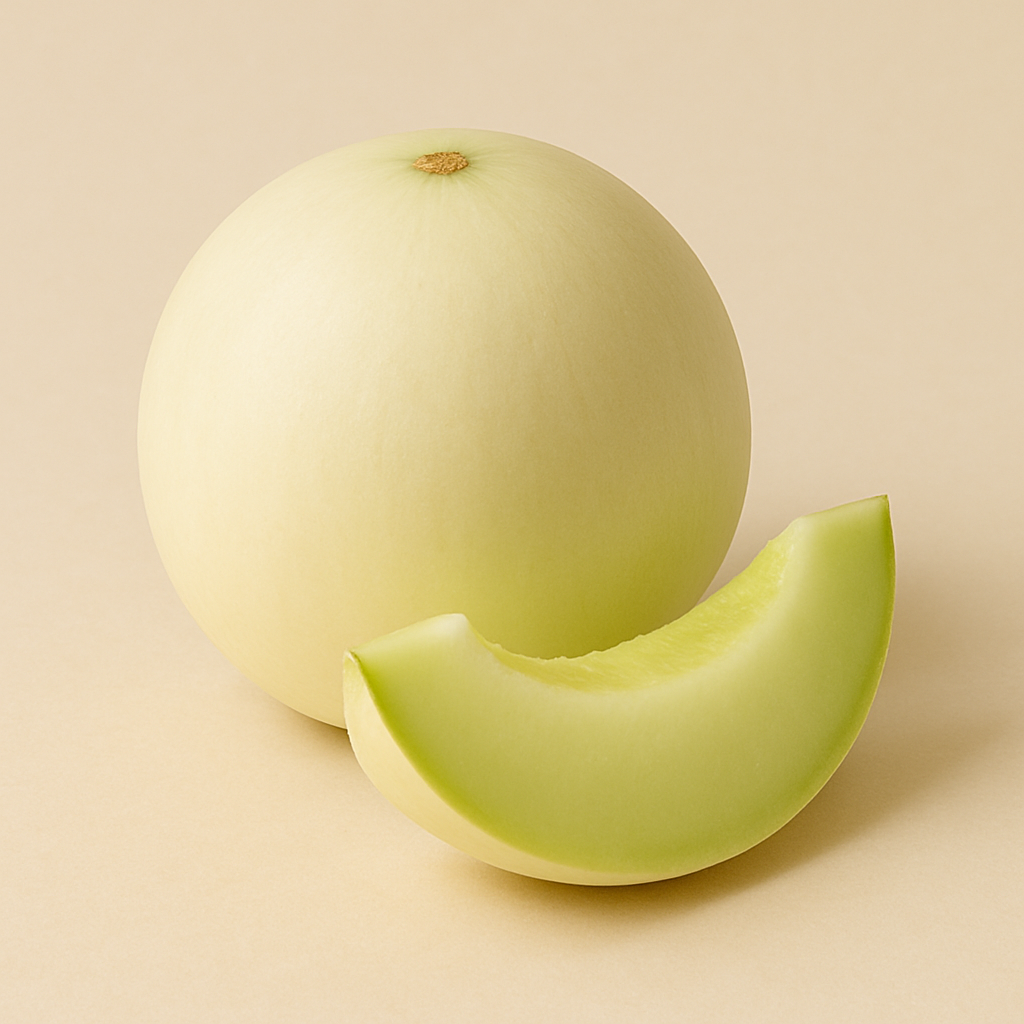
Honeydew melons have smooth, pale rinds and sweet, pale green flesh. They're less aromatic than cantaloupes but just as delicious when fully ripe. Honeydews need a longer, warmer growing season than cantaloupes to reach peak sweetness.
Days to Harvest
80-100 days
Sun Needs
Full Sun (8+ hours)
moderate
Germination Temp
85°F optimal
Start Indoors
4 weeks before last frost
Germination
5-12 days
Seed Depth
1 inch
Light to Germinate
No
💡 Tip: Requires longer, warmer season than cantaloupe. Start indoors in short-season areas. Use row covers and black plastic to extend season.
Soil Type
Sandy loam, well-draining, rich in organic matter
pH Range
6 - 6.8
Spacing
4-6 feet between plants, 6-8 feet between rows
⚠️ Avoid planting near:
History
Honeydew melons belong to the Inodorus group, meaning "no scent"—a slightly misleading name since perfectly ripe honeydews do offer subtle fragrance, just nothing like the perfumed intensity of cantaloupes. Their origins likely trace to the Middle East or West Africa, with cultivation spreading through Persia, where gardens celebrated melons as symbols of paradise on earth. Spanish and French colonizers introduced Inodorus-type melons to the Americas in the 16th century, though the specific variety we call honeydew didn't gain popularity in the United States until the early 20th century. The name "honeydew" evokes the sweetness of morning dew, though some trace it to the dew-like appearance of the mature melon's waxy skin. Algeria and southern France developed particularly sweet strains, and Chinese immigrants brought their own honeydew traditions to America, where the fruit became essential in Chinatown fruit shops. Unlike their cantaloupe cousins, honeydews don't "slip" from the vine when ripe, making harvest timing more challenging—and explaining why supermarket honeydews often disappoint, picked too early for shipping. The melon's pale green flesh provides a visual and textural contrast in fruit salads, and its subtle, clean sweetness has made it a favorite in Asian desserts and bubble tea shops worldwide.
Nutritional Benefits
- ✓High in Vitamin C
- ✓Good source of potassium
- ✓High water content
Optimal Growing Temp
75°F - 90°F
Honeydews thrive in warm to hot temperatures between 75-90°F. They require more heat than cantaloupes and grow best in consistently warm conditions. Growth slows significantly below 65°F.
Survival Range
60°F - 100°F
Can survive these temperatures
Frost Note: Honeydews are extremely frost-sensitive. Any frost kills plants instantly. Do not plant until soil temperature reaches 70°F and all frost danger has passed with confidence.
Best USDA Zones
Humidity
45-60%
Moderate humidity is best. High humidity promotes powdery mildew and other fungal diseases. Honeydews tolerate dry conditions better than most melons but still need consistent soil moisture.
Height
10-15 inches (vines spread horizontally)
Spread
5-10 feet
Growth Habit
vine
Germination
5-12 days
Seeds germinate best at 85-95°F soil temperature. Requires warmth - use heat mats and black plastic mulch. First sprouts emerge with large, rounded cotyledons.
Seedling Stage
Duration: 2-3 weeks
True leaves: First true leaves appear 8-12 days after sprouting
Transplant ready: Ready when 3-4 inches tall with 3-4 true leaves. Harden off thoroughly for 10-14 days. Transplant carefully using biodegradable pots to avoid root disturbance.
Vegetative Growth
Duration: 4-5 weeks after transplant
Moderate to vigorous vine growth with large, smooth-edged leaves. Vines extend 6-10 inches per week in warm conditions. Longer vegetative phase than cantaloupes.
Flowering
Timing: 5-6 weeks after transplant
Duration: 3-4 weeks of flowering
Honeydews produce separate male and female flowers. Males appear first with long stems, females have a visible bulge (baby melon) at the base. Requires bees or hand-pollination for fruit set.
Fruit Development
Begins: Begins 10-14 days after successful pollination
Duration: 40-55 days from pollination to ripe fruit
Fruits grow slowly at first, then rapidly. Rind remains smooth (no netting like cantaloupe). Color changes from dark green to creamy white or pale yellow when approaching ripeness.
Harvest Maturity
Timing: 80-110 days from transplant or direct sowing
- Rind color changes from green to creamy yellow or ivory
- Blossom end yields slightly to gentle pressure (gives about 1/4 inch)
- Surface develops slightly waxy feel
- Subtle sweet fragrance at blossom end (much less aromatic than cantaloupe)
- Does NOT slip from vine - must be cut
Per Plant
3-4 melons per plant (10-20 lbs total)
Per Square Foot
3-6 lbs per square foot
Harvest Frequency
Check every 2-3 days when approaching maturity - watch for color change
Factors Affecting Yield
- •Long, hot season - insufficient heat produces underripe, bland melons
- •Pollinator activity during flowering
- •Consistent watering throughout long growing season
- •Adequate spacing for good air circulation
- •Patience - honeydews need more time than other melons
- •Pruning to 3-4 fruits per vine increases size and quality
Seedling Stage
Keep soil consistently moist. Water gently daily in warm weather, twice daily in hot conditions.
Established Plants
1-2 inches per week through deep, infrequent watering. Deep watering 2-3 times weekly is better than daily shallow watering.
During Fruiting
Critical - maintain consistent moisture throughout long fruiting period. Reduce watering slightly when rind begins color change to help concentrate sugars.
Preferred Method
Drip irrigation or soaker hoses strongly recommended. Always water at soil level, never overhead. Water in morning so any splashed foliage dries before evening.
⚠️ Critical Watering Periods
- • Flowering and fruit set
- • Entire fruiting period (40-55 days)
Pro Tips
- Deep watering builds strong, drought-tolerant root systems
- Mulch heavily to retain moisture through long growing season
- Never overhead water - invites powdery mildew
- Slight reduction in watering as melons ripen can improve flavor
- Consistent moisture prevents stress that causes bland fruit
- In extreme heat, some midday wilting is normal even with adequate water
Feeding Schedule
At planting
Balanced 10-10-10 or compost-enriched soil
Once at transplanting
Vegetative growth (4-5 weeks)
Side-dress with compost or balanced fertilizer
Every 3 weeks
Flowering begins
Switch to low-nitrogen, high-potassium 5-10-10 or 5-10-15
Every 2-3 weeks
Fruit development
Continue potassium-rich fertilizer for sweetness
Every 3 weeks until 2-3 weeks before harvest
Organic Options
Side-dress with compost every 3-4 weeks throughout long season. Foliar feed with diluted fish emulsion during vegetative growth. Apply potassium sources when fruits begin developing.
Minimum Size
20 gallon minimum
Recommended Size
25-30 gallon for best results
Depth Required
At least 18 inches deep
Best Varieties for Containers
Container Tips
- Choose earlier, more compact varieties like Earlidew
- Containers must be very large - honeydews need space and time
- Provide sturdy trellis for vertical growing
- Support melons in slings when growing vertically
- Water daily in hot weather - never let soil dry completely
- Feed every 2 weeks, switch to low-nitrogen at flowering
- Position in absolute hottest, sunniest location
Support Type
Strong A-frame trellis or cattle panel (optional, space-saving)
Height Needed
5-6 feet tall
When to Install
Install before planting
Method
Train main vines upward, tying loosely with soft plant ties. When fruits reach softball size, support each melon in a fabric sling (old t-shirts work well). Secure sling firmly to trellis structure.
Tips
- Vertical growing works but requires very strong support
- Limit to 3 fruits maximum per vine when trellising
- Create slings early when melons are grapefruit-sized
- Check slings frequently - fruits continue gaining weight
- Smaller varieties (3-4 lbs) are much easier to trellis
- Benefits include better air circulation and space efficiency
Why Prune
When
When fruits reach softball size, select 3-4 best melons per plant and remove others
How Often
Once when fruits are sizing, plus ongoing removal of diseased foliage
Technique
Use clean pruners to remove excess developing melons, keeping only the 3-4 most promising fruits. Remove any late-forming flowers that won't have time to mature. Prune away diseased or yellowing leaves.
Remove
- ✗ Excess melons beyond 3-4 per vine
- ✗ Any flowers forming late in season (won't mature)
- ✗ Diseased or damaged leaves
- ✗ Weak or deformed fruits
Keep
- ✓ Abundant healthy foliage - needed to fuel fruit development
- ✓ The 3-4 best-positioned, healthiest fruits
- ✓ Main vines with good leaf coverage