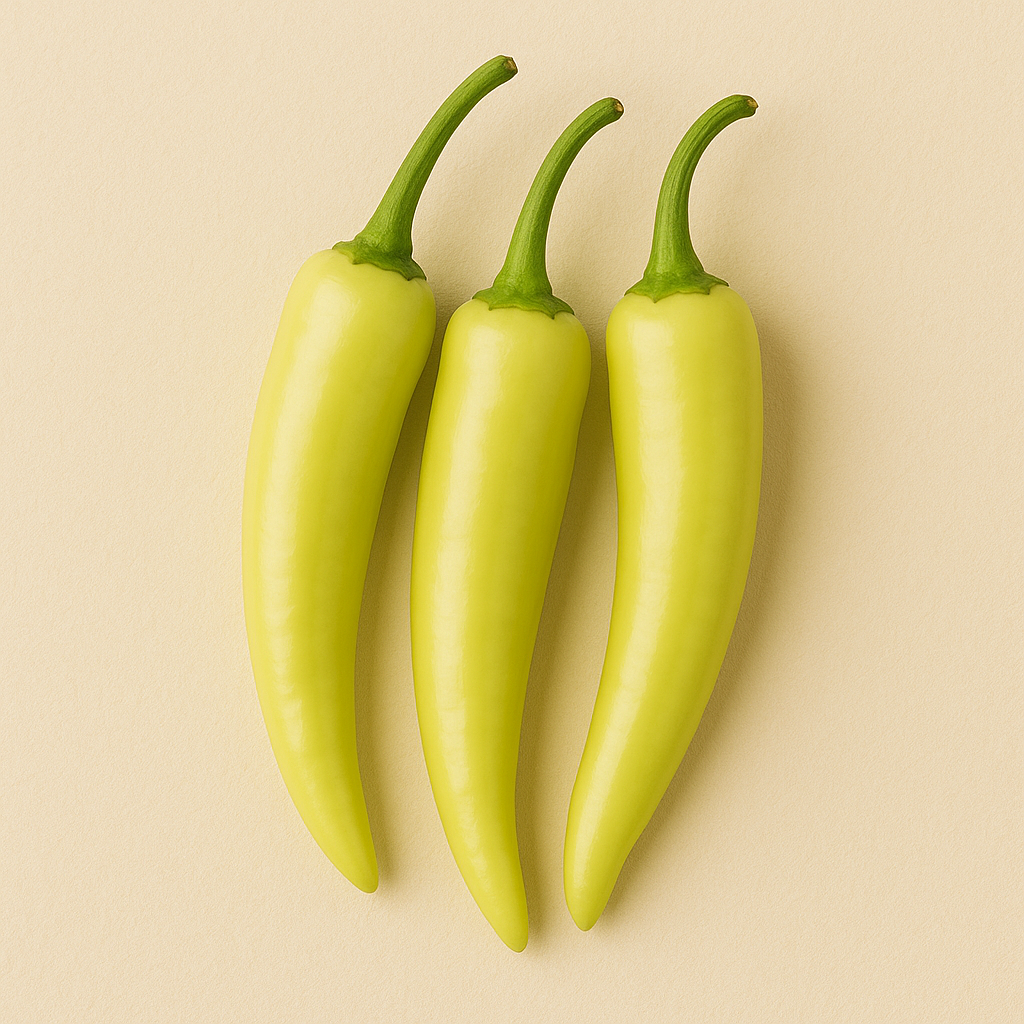
Banana Pepper
Capsicum annuum
Family: Solanaceae
Banana peppers are mild, tangy peppers (0-500 Scoville units) named for their yellow color and curved shape. Sweet varieties have no heat while hot varieties have mild spice. Perfect for pickling, sandwiches, and salads.
Days to Harvest
65-80 days
Sun Needs
Full Sun (6-8+ hours)
moderate
Germination Temp
80°F optimal
Start Indoors
8 weeks before last frost
Germination
7-14 days
Seed Depth
1/4 inch
Light to Germinate
No
💡 Tip: Easy to germinate. Very productive plants.
Soil Type
Well-draining, fertile soil
pH Range
6 - 6.8
Spacing
18-24 inches between plants
⚠️ Avoid planting near:
History
Banana peppers are believed to have originated in South America before being developed into their current elongated, curved form through cultivation in Hungary and other parts of Central Europe. The pepper's close relative, the Hungarian Wax pepper, points to this European development, where the mild, thick-walled character was refined for culinary use. Banana peppers became particularly popular in the United States during the 20th century, where they found their culinary niche as pickled toppings for sandwiches, particularly Italian-American submarine sandwiches and pizza. The pepper's mild heat (often completely absent in sweet varieties) makes it accessible to diners who enjoy pepper flavor without the burn, and its tangy, slightly sweet taste when pickled became a distinctive element of American deli culture. Major pizza chains like Papa John's and Subway include pickled banana peppers as standard condiment options, exposing millions of Americans to the pepper who might never have encountered it otherwise. The sweet and hot varieties look nearly identical, creating occasional surprises for those expecting mild and getting a bit of heat—though even "hot" banana peppers rarely exceed 500 Scoville units. Home gardeners appreciate banana peppers for their prolific production, attractive appearance as they transition from yellow to orange to red, and their versatility in both fresh and preserved applications.
Nutritional Benefits
- ✓High in Vitamin C
- ✓Good source of Vitamin B6
- ✓Contains fiber
Optimal Growing Temp
65°F - 80°F
Banana peppers are forgiving and tolerate cooler temps than many varieties. Soil temps should reach 60-65°F for transplanting.
Survival Range
50°F - 90°F
Can survive these temperatures
Best USDA Zones
Humidity
40-60%
Moderate humidity works well. Good air circulation prevents fungal issues.
Height
18-24 inches
Spread
15-18 inches
Growth Habit
bush
Germination
7-14 days
Good germination rate. Bottom heat (75°F) helps but not essential. Cotyledons emerge with typical pepper appearance.
Seedling Stage
Duration: 3-4 weeks
True leaves: First true leaves appear 2-3 weeks after germination with smooth edges
Transplant ready: Ready when 4-5 inches tall with 4-6 true leaves
Vegetative Growth
Duration: 4-5 weeks
Compact plants develop quickly. Feed lightly.
Flowering
Timing: 5-7 weeks after transplant
Duration: 2-3 weeks
Self-pollinating with white flowers. Tolerates cooler nights than many peppers.
Fruit Development
Begins: 7-10 weeks after transplant
Duration: 3-4 weeks per pepper
Long, curved peppers turn from green to yellow (to orange/red if left).
Harvest Maturity
Timing: 60-75 days from transplant
- Peppers reach 4-6 inches long
- Bright yellow color
- Firm and curved shape
- Snap easily from plant
Per Plant
30-50+ peppers per plant over the season
Per Square Foot
15-25 peppers
Harvest Frequency
Every 5-7 days once fruiting begins
Factors Affecting Yield
- •Very prolific producers
- •Regular harvest encourages more production
- •Consistent watering maximizes yield
- •Mild conditions produce more peppers than extreme heat
Seedling Stage
Keep evenly moist
Established Plants
Water when top inch dries
During Fruiting
Regular watering for best quality
Preferred Method
Careful watering at soil level
⚠️ Critical Watering Periods
- • Flowering and early fruit set benefit from consistent moisture
Pro Tips
- PRO TIP: Consistent water produces the crisp, mild peppers ideal for pickling
- Stress can trigger unexpected heat in normally sweet varieties
- Morning watering reduces disease
- Mulch to maintain even moisture
Feeding Schedule
Seedling
Dilute balanced fertilizer
Weekly
Vegetative
Light balanced feeding
Every 2-3 weeks
Flowering
Switch to bloom formula
Every 2-3 weeks
Fruiting
Light bloom formula
Every 3 weeks
Organic Options
Every 3-4 weeks during growth
Minimum Size
3 gallons
Recommended Size
5 gallons
Depth Required
At least 10 inches deep
Best Varieties for Containers
Container Tips
- Excellent container plants due to compact size
- Attractive yellow peppers add visual interest
- Good drainage essential
- Regular feeding in containers
Support Type
none
Height Needed
N/A
When to Install
Not typically needed—plants are naturally self-supporting
Method
Self-supporting compact plants
Tips
- Usually no support needed
- May appreciate stake if heavily laden
- Compact habit handles wind well
Why Prune
When
Minimal—early season pinching if desired
Technique
Pinch growing tips when young for bushier growth
Remove
- ✗ Damaged leaves
- ✗ Low branches touching soil
Keep
- ✓ All flowering branches
- ✓ Developing peppers
- ✓ Healthy foliage
Plant Every
2-3 weeks for continuous harvest
Sowings/Season
3-4 plantings
Duration
6-8 weeks of succession planting window
Tips
- Succession planting ensures fresh peppers for pickling all season
- Last planting 75-80 days before first frost
- Excellent for home picklers wanting steady supply