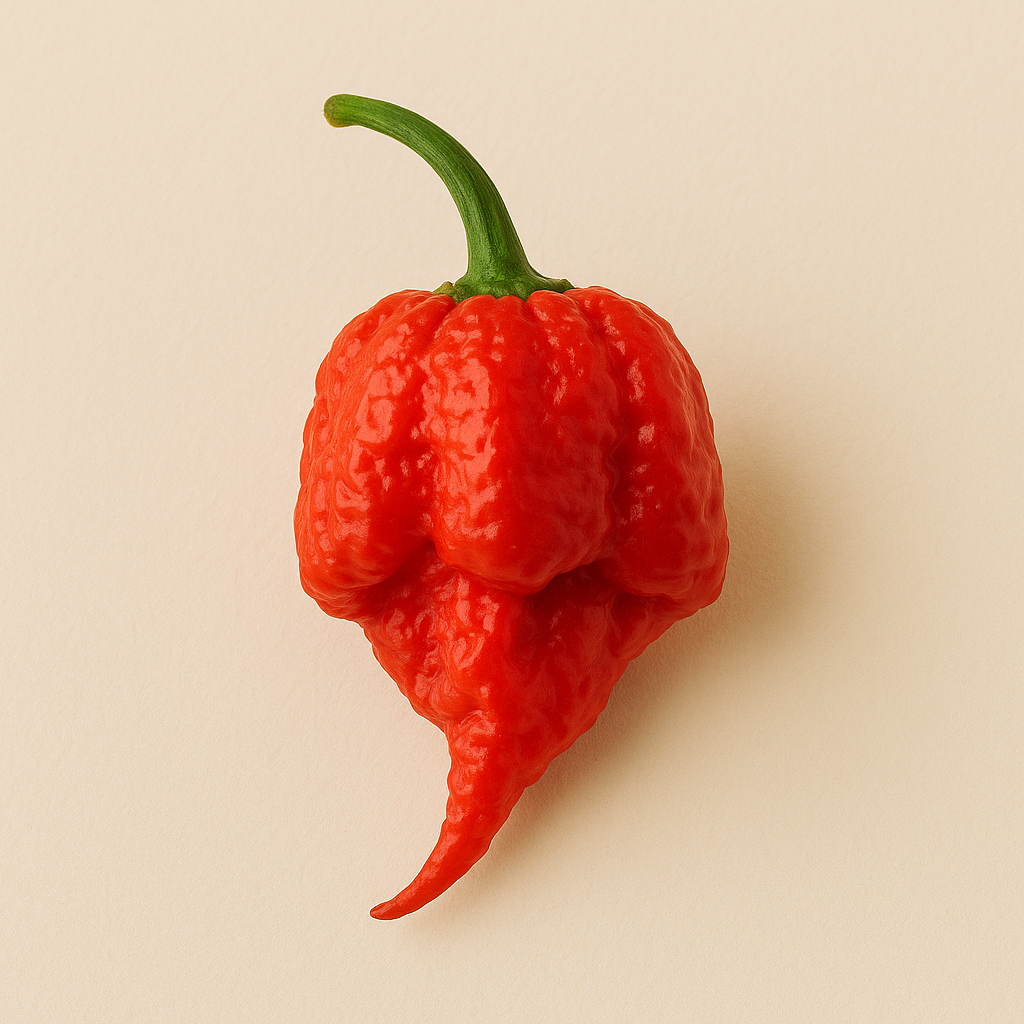
Carolina Reaper
Capsicum chinense
Family: Solanaceae
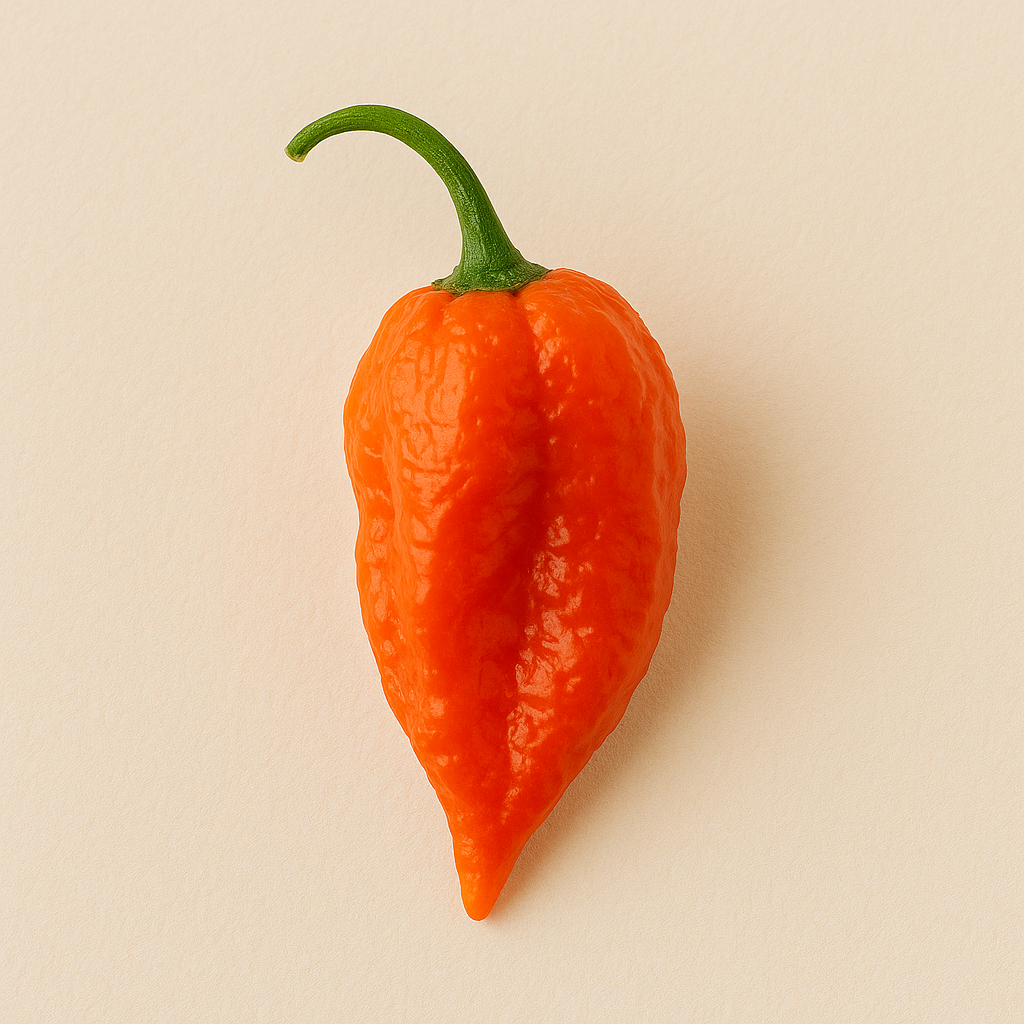
The Carolina Reaper held the Guinness World Record for the world's hottest pepper, averaging over 1.6 million Scoville units with some peppers exceeding 2.2 million. Developed in South Carolina, these distinctive scorpion-tailed peppers deliver extreme heat with a surprisingly sweet, fruity flavor.
Days to Harvest
100-150 days
Sun Needs
Full Sun (8+ hours)
moderate
Germination Temp
85°F optimal
Start Indoors
12 weeks before last frost
Germination
14-35 days
Seed Depth
1/4 inch
Light to Germinate
No
💡 Tip: Very long growing season required. Start seeds 12+ weeks early. Use heat mat for germination.
Soil Type
Rich, well-draining soil
pH Range
6 - 6.8
Spacing
24-36 inches between plants
⚠️ Avoid planting near:
History
The Carolina Reaper was created by Ed Currie, founder of the PuckerButt Pepper Company in Fort Mill, South Carolina, through over a decade of selective breeding beginning around 2003. Currie crossed a Pakistani Naga pepper with a Red Habanero, then spent years stabilizing the variety and selecting for maximum heat. In November 2013, Guinness World Records certified the Carolina Reaper as the world's hottest pepper at an average of 1,569,300 Scoville Heat Units, with individual peppers testing as high as 2.2 million SHU. The pepper's distinctive appearance—bright red, gnarled, and wrinkled with a pointed "scorpion tail" stinger—makes it instantly recognizable. What surprised many was that beneath the extreme heat lies a genuinely pleasant flavor: fruity, almost citrusy sweetness that reveals itself once the initial burn subsides. Currie, a self-described "hot sauce alchemist," originally pursued superhot peppers not for bragging rights but because capsaicin research suggested potential health benefits, including cancer-fighting properties. The Reaper became a viral sensation, spawning countless YouTube challenge videos, hot sauce product lines, and even a medical case report after a man experienced "thunderclap headaches" from eating one. While newer peppers like Pepper X (also bred by Currie) have since claimed higher heat records, the Carolina Reaper remains the most famous superhot pepper and the benchmark against which all others are measured.
Nutritional Benefits
- ✓Extremely high in capsaicin
- ✓Contains Vitamin C
- ✓Rich in Vitamin A
Optimal Growing Temp
75°F - 95°F
The Carolina Reaper demands intense heat. Soil temps must reach 85-90°F for germination. Plants thrive in conditions other peppers find stressful.
Survival Range
60°F - 105°F
Can survive these temperatures
Best USDA Zones
Humidity
50-70%
Tolerates humidity well but needs good air circulation. High humidity during flowering can reduce fruit set.
Height
3-5 feet
Spread
24-36 inches
Growth Habit
bush
Germination
14-35 days
Notoriously slow and inconsistent. Bottom heat (85-90°F) essential. Pre-soak seeds 12-24 hours. Patience required.
Seedling Stage
Duration: 6-8 weeks
True leaves: First true leaves appear 3-4 weeks after germination
Transplant ready: Ready when 4-6 inches tall. Extremely slow growth initially. Keep warm constantly.
Vegetative Growth
Duration: 8-12 weeks
Growth accelerates once plants establish. Feed regularly and maintain warmth.
Flowering
Timing: 10-14 weeks after transplant
Duration: 2-4 weeks
Self-pollinating. Night temps above 65°F essential for fruit set.
Fruit Development
Begins: 12-16 weeks after transplant
Duration: 5-7 weeks per wave
Peppers develop distinctive wrinkled, scorpion-tail appearance. Green to red color change.
Harvest Maturity
Timing: 120-150 days from transplant
- Full bright red color throughout
- Pronounced scorpion "tail" formed
- Wrinkled, gnarled skin texture
- Slight softening indicates peak ripeness
- World's hottest pepper—handle with extreme care
Per Plant
15-30 peppers per plant (fewer but hotter than most varieties)
Per Square Foot
8-15 peppers
Harvest Frequency
Multiple harvests over 8-10 weeks once fruiting begins
Factors Affecting Yield
- •Extreme heat and long season essential
- •Stress (water, heat) increases capsaicin dramatically
- •One pepper provides extreme heat for multiple batches
- •Quality over quantity with superhots
Seedling Stage
Keep consistently moist, never waterlogged
Established Plants
Deep watering when top 2 inches dry
During Fruiting
Strategic stress increases capsaicin
Preferred Method
Drip irrigation or careful hand watering at base
⚠️ Critical Watering Periods
- • Flowering needs consistent moisture
- • Reduce (but don't eliminate) during final ripening for maximum heat
Pro Tips
- PRO TIP: 10-14 days of reduced water before harvest dramatically increases heat levels
- Morning watering only
- Heavy mulch retains moisture and warmth
- Never let plants dry completely—kills capsaicin production
Feeding Schedule
Seedling
Dilute balanced fertilizer
Weekly
Transplant
Mycorrhizae and kelp for root establishment
Once
Vegetative
Balanced feed, slightly higher nitrogen
Every 2 weeks
Flowering
Switch to bloom formula (low N, high P-K)
Every 2 weeks
Fruiting
Continue bloom feed
Every 2 weeks
Organic Options
Every 2-3 weeks during active growth
Minimum Size
5 gallons
Recommended Size
7-10 gallons
Depth Required
At least 14 inches deep
Best Varieties for Containers
Container Tips
- Container growing allows maximizing heat exposure
- Move containers to capture sun throughout day
- Black containers increase soil temperature
- Can overwinter indoors with strong light
- WARNING: Keep containers away from children and pets
Support Type
stake
Height Needed
3-4 feet
When to Install
Install when plants are 12 inches tall or when fruiting begins
Method
Single stake or tomato cage for support
Tips
- Plants become heavy when loaded with peppers
- Branches can break under fruit weight
- Secure main stem loosely to stake
Why Prune
When
Early season shaping, ongoing maintenance
Technique
Pinch growing tips when young to encourage branching
Remove
- ✗ Low branches touching soil
- ✗ Interior congested growth
- ✗ Yellow or damaged leaves
Keep
- ✓ All flowering branches
- ✓ Main structural stems
- ✓ Developing fruit