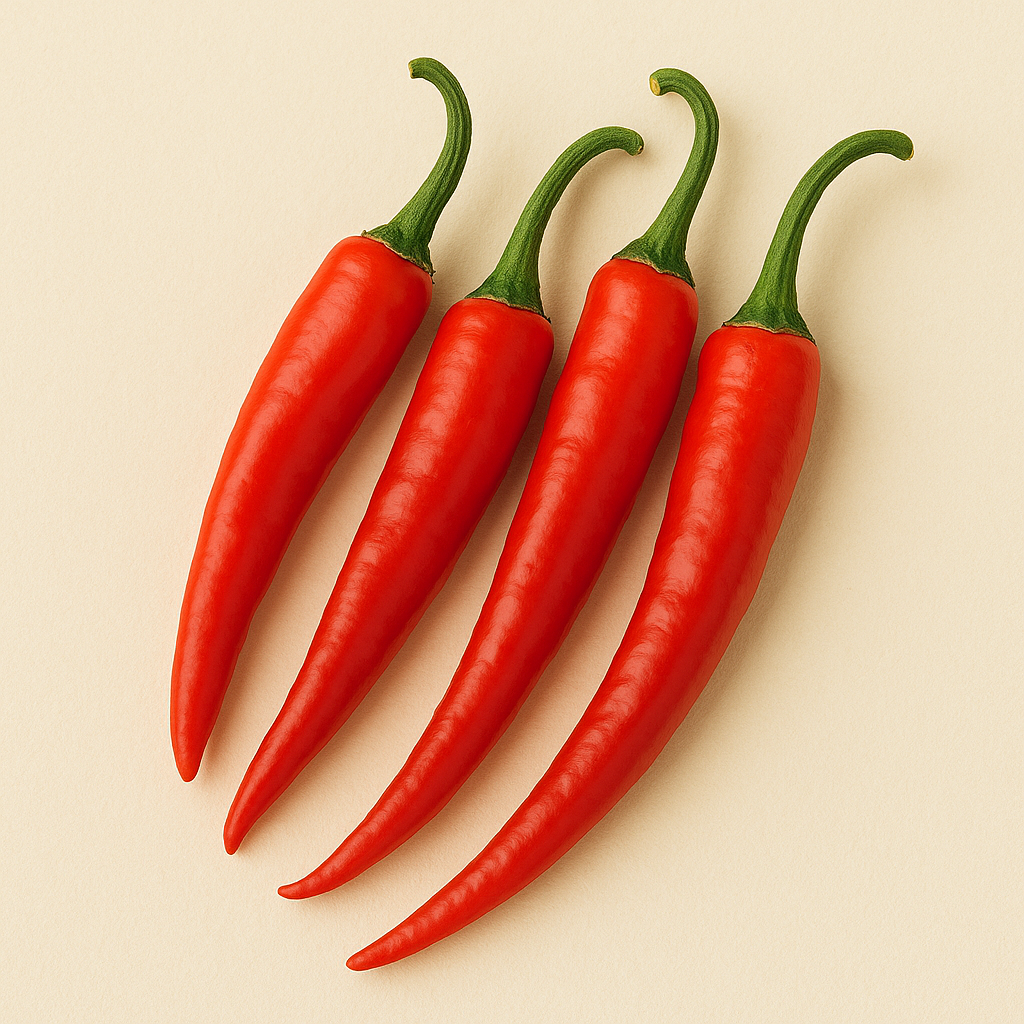
Cayenne Pepper
Capsicum annuum
Family: Solanaceae
Cayenne peppers are long, thin hot peppers (30,000-50,000 Scoville units) that are the basis for cayenne powder, a kitchen staple. Easy to grow and prolific producers, they're perfect for drying and grinding into spice that adds kick to any dish.
Days to Harvest
70-85 days
Sun Needs
Full Sun (6-8+ hours)
moderate
Germination Temp
80°F optimal
Start Indoors
8 weeks before last frost
Germination
7-14 days
Seed Depth
1/4 inch
Light to Germinate
No
💡 Tip: Use heat mat for faster germination. Cayenne is relatively easy to germinate.
Soil Type
Well-draining, moderately fertile soil
pH Range
6 - 6.8
Spacing
18-24 inches between plants
⚠️ Avoid planting near:
History
The cayenne pepper takes its name from the city of Cayenne, capital of French Guiana, though the pepper itself originated in Central and South America and was cultivated throughout the region for thousands of years before European contact. The thin-fleshed cayenne was ideally suited for drying—a preservation method used by indigenous peoples long before refrigeration—and this characteristic made it one of the first peppers to become a global commodity. Portuguese and Spanish traders spread cayenne throughout Africa and Asia during the 16th and 17th centuries, where it was rapidly adopted into local cuisines from India to China to West Africa. In traditional medicine systems worldwide, cayenne became prized for its supposed ability to improve circulation and digestion, and herbalist Samuel Thomson made it a cornerstone of 19th-century American botanical medicine. The pepper's clean, uncomplicated heat—lacking the fruity complexity of habaneros or the earthiness of dried Mexican chiles—made cayenne the default "hot pepper" for adding spice to any cuisine. Today, cayenne powder is found in virtually every spice rack in America, and the pepper serves as the base for iconic products from Louisiana hot sauce to Tabasco. Commercial cayenne production spans the globe, with major cultivation in India, Mexico, and the American South.
Nutritional Benefits
- ✓High in Vitamin A
- ✓Good source of Vitamin C
- ✓Contains capsaicin
Optimal Growing Temp
70°F - 85°F
Cayenne peppers are adaptable and productive. Soil temps should reach 65-70°F for planting. Growth slows below 55°F.
Survival Range
55°F - 95°F
Can survive these temperatures
Best USDA Zones
Humidity
40-60%
Thin-walled cayennes dry well in low humidity. Good air circulation important for disease prevention.
Height
24-36 inches
Spread
18-24 inches
Growth Habit
upright
Germination
7-14 days
Faster than Capsicum chinense varieties. Bottom heat (75-80°F) speeds germination significantly. Cotyledons emerge upright.
Seedling Stage
Duration: 3-4 weeks
True leaves: First true leaves appear 2-3 weeks after germination with serrated edges
Transplant ready: Ready when 4-6 inches tall with 4-6 true leaves and sturdy stems
Vegetative Growth
Duration: 4-6 weeks
Plants develop upright structure quickly. Feed regularly for strong stems.
Flowering
Timing: 6-8 weeks after transplant
Duration: 2-3 weeks
Self-pollinating with small white flowers. Temperatures above 55°F at night needed for fruit set.
Fruit Development
Begins: 8-10 weeks after transplant
Duration: 3-4 weeks per pepper
Long, thin peppers develop. Green to red color change (can harvest at either stage).
Harvest Maturity
Timing: 70-80 days from transplant
- Peppers reach 5-6 inches long
- Bright red color when fully ripe
- Firm texture
- Peppers snap easily from plant
Per Plant
40-100+ peppers per plant over the season
Per Square Foot
20-40 peppers
Harvest Frequency
Every 5-7 days once fruiting begins
Factors Affecting Yield
- •Prolific producers with good care
- •Frequent harvest encourages more production
- •Warm, consistent conditions maximize yield
- •Thin walls mean peppers develop quickly
Seedling Stage
Keep evenly moist
Established Plants
Water when top inch dries
During Fruiting
Regular watering, allow slight drying between
Preferred Method
Drip irrigation or careful hand watering at soil level
⚠️ Critical Watering Periods
- • Flowering through early fruiting requires consistent moisture
Pro Tips
- PRO TIP: Consistent watering prevents bitter taste in cayennes
- Morning watering reduces disease
- Mulch conserves moisture and keeps roots cool
- Thin walls mean peppers dry out faster than thick-walled types
Feeding Schedule
Seedling
Half-strength balanced fertilizer
Weekly
Vegetative
Balanced fertilizer to build strong stems
Every 2 weeks
Flowering
Switch to bloom formula
Every 2 weeks
Fruiting
Continue bloom formula
Every 2-3 weeks
Organic Options
Every 2-3 weeks during active growth
Minimum Size
3 gallons
Recommended Size
5 gallons
Depth Required
At least 10 inches deep
Best Varieties for Containers
Container Tips
- Excellent container plants
- Upright growth habit fits containers well
- Good drainage essential
- Regular feeding important in containers
Support Type
stake
Height Needed
2-3 feet
When to Install
Install when plants are 12 inches tall or beginning to produce fruit
Method
Optional single stake for support
Tips
- Usually self-supporting due to upright growth
- May benefit from support when heavily loaded
- Wind protection more important than staking
Why Prune
When
Early season pinching, ongoing maintenance
Technique
Pinch growing tips when young for bushier growth
Remove
- ✗ Low branches touching soil
- ✗ Damaged foliage
- ✗ Overcrowded interior growth
Keep
- ✓ Main stems
- ✓ All flowering branches
- ✓ Developing peppers
Plant Every
3-4 weeks for extended harvest
Sowings/Season
2-3 plantings
Duration
6-8 weeks of succession planting window
Tips
- Succession planting extends cayenne harvest season
- Last planting 80-90 days before first expected frost
- Early plantings for fresh use, later for drying