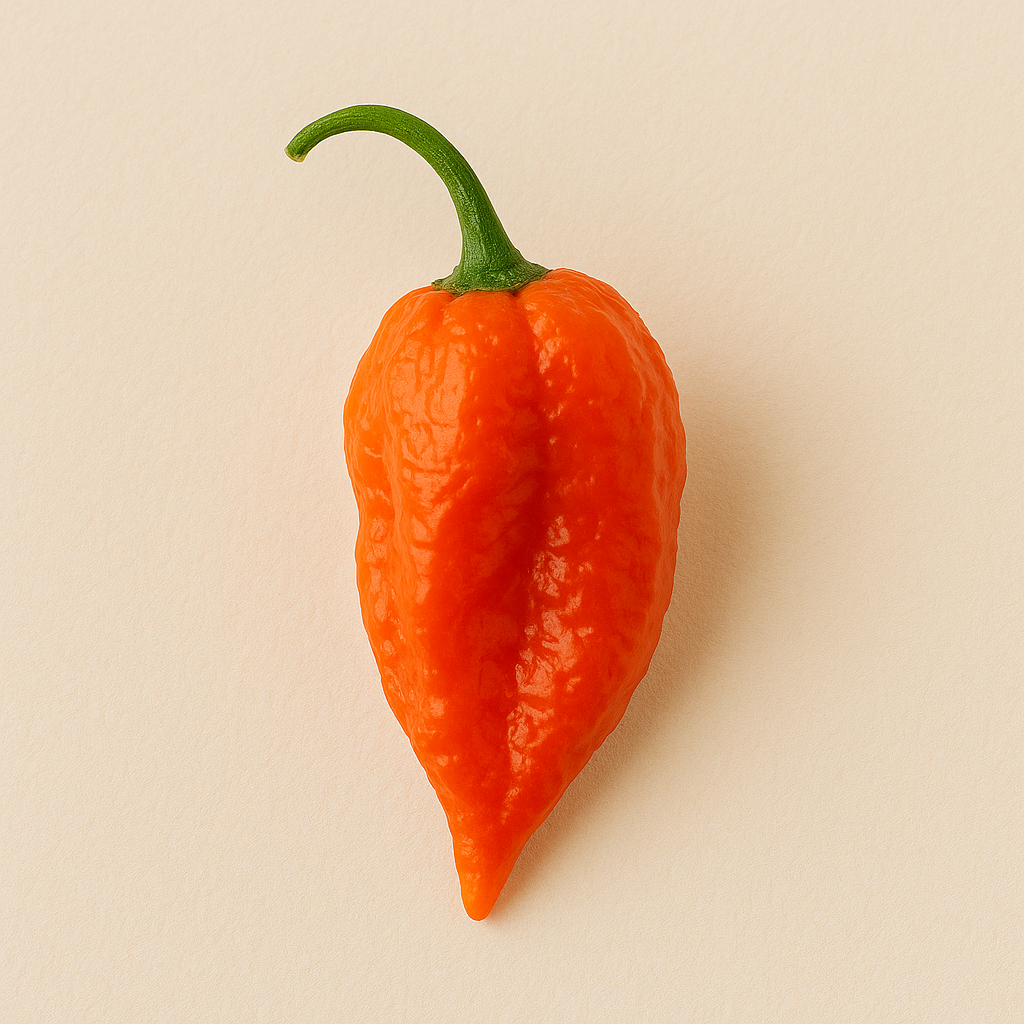
Ghost Pepper (Bhut Jolokia)
Capsicum chinense
Family: Solanaceae
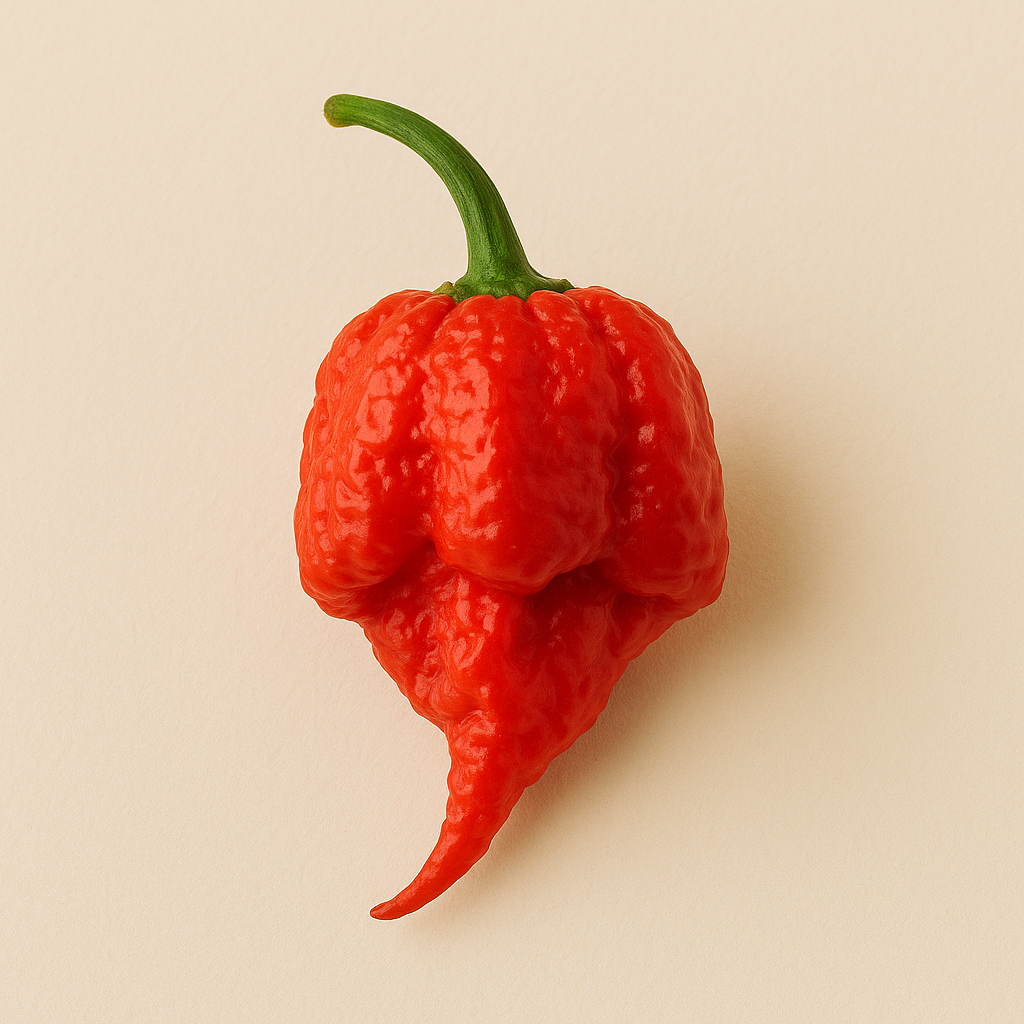
The Ghost Pepper, also known as Bhut Jolokia, is one of the world's hottest peppers, measuring over 1,000,000 Scoville units. Originally from Northeast India, these wrinkly, tapered peppers pack intense heat with a fruity, slightly smoky flavor underneath. Not for the faint of heart!
Days to Harvest
100-150 days
Sun Needs
Full Sun (8+ hours)
moderate
Germination Temp
85°F optimal
Start Indoors
12 weeks before last frost
Germination
14-35 days
Seed Depth
1/4 inch
Light to Germinate
No
💡 Tip: Ghost peppers require very long growing season. Start seeds early with heat mat. Germination can be slow and erratic.
Soil Type
Well-draining, fertile soil
pH Range
6 - 6.8
Spacing
24-36 inches between plants
⚠️ Avoid planting near:
History
The Ghost Pepper, known locally as Bhut Jolokia (where "bhut" means "ghost" in Assamese), has been cultivated for centuries in the Northeastern Indian states of Assam, Nagaland, and Manipur, as well as in neighboring Bangladesh. Local legend holds that the name derives from the way its heat "sneaks up on you like a ghost"—a slow burn that intensifies dramatically over several seconds. For generations, the pepper was used by indigenous peoples not only for cooking but also as a natural deterrent, rubbed on fences to keep wild elephants from damaging crops. The outside world remained largely unaware of Bhut Jolokia until 2000, when researchers at New Mexico State University's Chile Pepper Institute began testing samples sent from India. In 2007, Guinness World Records officially certified it as the world's hottest pepper at 1,041,427 Scoville Heat Units—more than twice as hot as the previous record holder, the Red Savina habanero. This certification launched the modern "superhot" pepper craze, inspiring breeders worldwide to create even hotter varieties like the Trinidad Scorpion and Carolina Reaper. The Indian military even explored using Bhut Jolokia in non-lethal weapons and tear gas. Today, while no longer the hottest, the Ghost Pepper remains legendary and serves as the gateway pepper for chiliheads exploring the superhot world.
Nutritional Benefits
- ✓Extremely high in capsaicin
- ✓Contains Vitamin C
- ✓Rich in Vitamin A
Optimal Growing Temp
75°F - 90°F
Ghost peppers demand extreme heat and long seasons. Soil temps must reach 80-90°F for germination. Growth stalls below 65°F.
Survival Range
60°F - 100°F
Can survive these temperatures
Best USDA Zones
Humidity
50-70%
Native to hot, humid India. Thrives in humidity but needs excellent air circulation to prevent fungal issues.
Height
3-4 feet
Spread
24-36 inches
Growth Habit
bush
Germination
14-35 days
Ghost pepper seeds are notoriously slow and erratic. Bottom heat (85°F) is essential. Soak seeds 24 hours in warm water before planting.
Seedling Stage
Duration: 6-8 weeks
True leaves: First true leaves appear 3-4 weeks after germination
Transplant ready: Ready when 4-6 inches tall with sturdy stems. Very slow—be patient.
Vegetative Growth
Duration: 8-10 weeks
Plants accelerate growth once established. Need consistent warmth and feeding.
Flowering
Timing: 10-14 weeks after transplant
Duration: 2-4 weeks
Self-pollinating. Maintain high temps for fruit set. Flowers may drop if temps fall below 65°F at night.
Fruit Development
Begins: 12-16 weeks after transplant
Duration: 4-6 weeks per wave
Peppers start green, ripen to red/orange. Full color change indicates maximum heat. Multiple harvests possible.
Harvest Maturity
Timing: 120-150 days from transplant
- Peppers reach full size (2-3 inches)
- Complete color change from green to red/orange
- Wrinkled, puckered skin texture
- Slight softening indicates peak ripeness
- One of the longest seasons of any pepper
Per Plant
20-50 peppers per plant in optimal conditions
Per Square Foot
10-20 peppers
Harvest Frequency
Multiple harvests over 8-12 weeks once fruiting begins
Factors Affecting Yield
- •Long, hot growing season essential
- •Consistent warmth increases yield dramatically
- •Slight water stress near harvest increases capsaicin
- •Extended daylight hours promote flowering
Seedling Stage
Keep consistently moist but not wet
Established Plants
Deep watering when top 2 inches dry
During Fruiting
Slight stress before harvest increases heat
Preferred Method
Drip irrigation or careful hand watering at soil level
⚠️ Critical Watering Periods
- • Flowering requires consistent moisture
- • Reduce slightly when peppers are sizing up for maximum heat
Pro Tips
- PRO TIP: Mild water stress 1-2 weeks before harvest increases capsaicin concentration
- Morning watering preferred to reduce disease
- Mulch heavily to retain soil warmth and moisture
- Avoid wetting foliage
Feeding Schedule
Seedling
Half-strength balanced fertilizer
Weekly
Vegetative
Higher nitrogen to build plant structure
Every 2 weeks
Flowering
Switch to low-nitrogen, high phosphorus/potassium
Every 2 weeks
Fruiting
Continue bloom formula
Every 2 weeks
Organic Options
Every 2-3 weeks during active growth
Minimum Size
5 gallons
Recommended Size
7-10 gallons
Depth Required
At least 14 inches deep
Best Varieties for Containers
Container Tips
- Containers allow moving plants to maximize sun and heat exposure
- Black containers absorb heat—beneficial for ghost peppers
- Can overwinter indoors in warm, bright locations
- Excellent drainage essential
Support Type
stake
Height Needed
3 feet
When to Install
Install when plants are 12 inches tall or when fruiting begins
Method
Single stake for support when heavily laden with fruit
Tips
- Ghost peppers have strong stems but benefit from support when loaded with peppers
- Use tomato cages for easy support
- Tie loosely to avoid stem damage
Why Prune
When
Early season for shaping, ongoing for air circulation
Technique
Pinch growing tips when young to encourage bushier growth
Remove
- ✗ Low-hanging branches touching soil
- ✗ Interior leaves blocking airflow
- ✗ Damaged or diseased material
Keep
- ✓ Main stems
- ✓ Healthy flowering branches
- ✓ Developing peppers