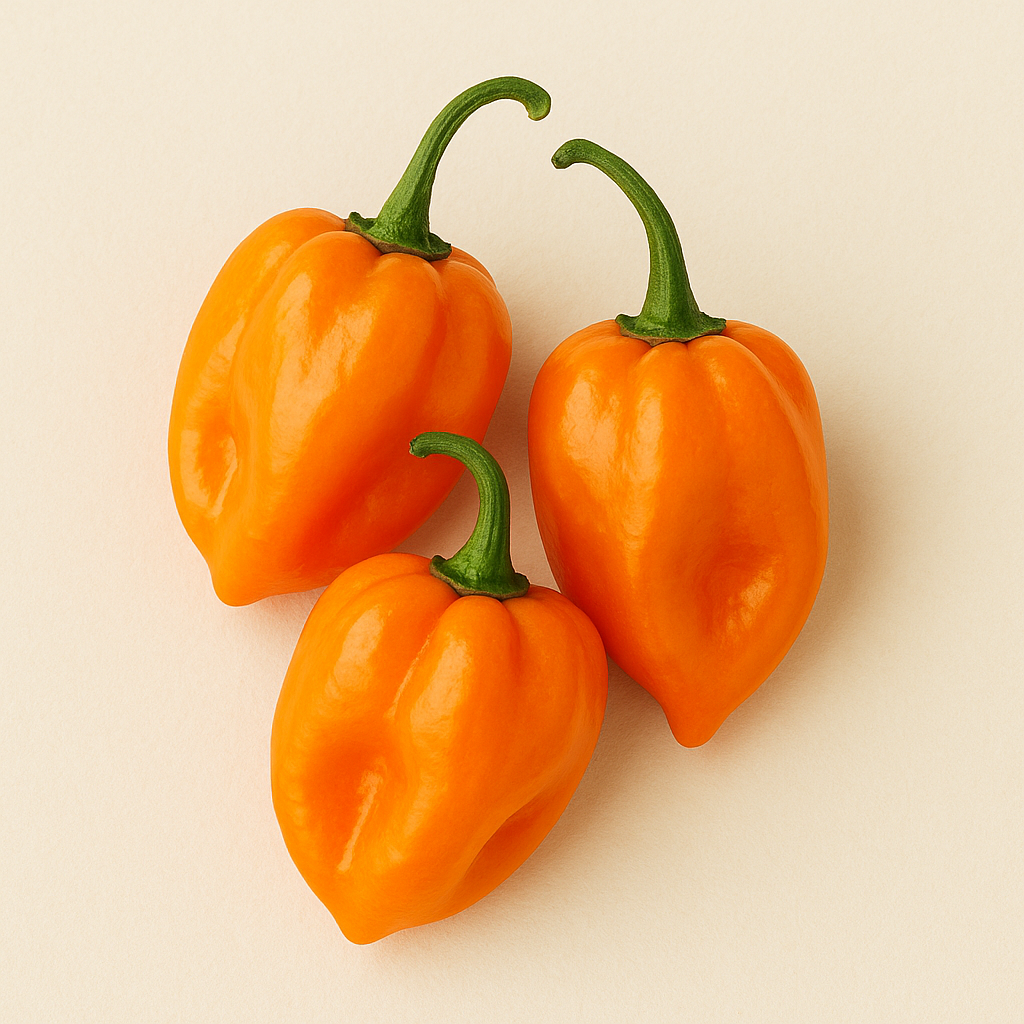
Habanero Pepper
Capsicum chinense
Family: Solanaceae
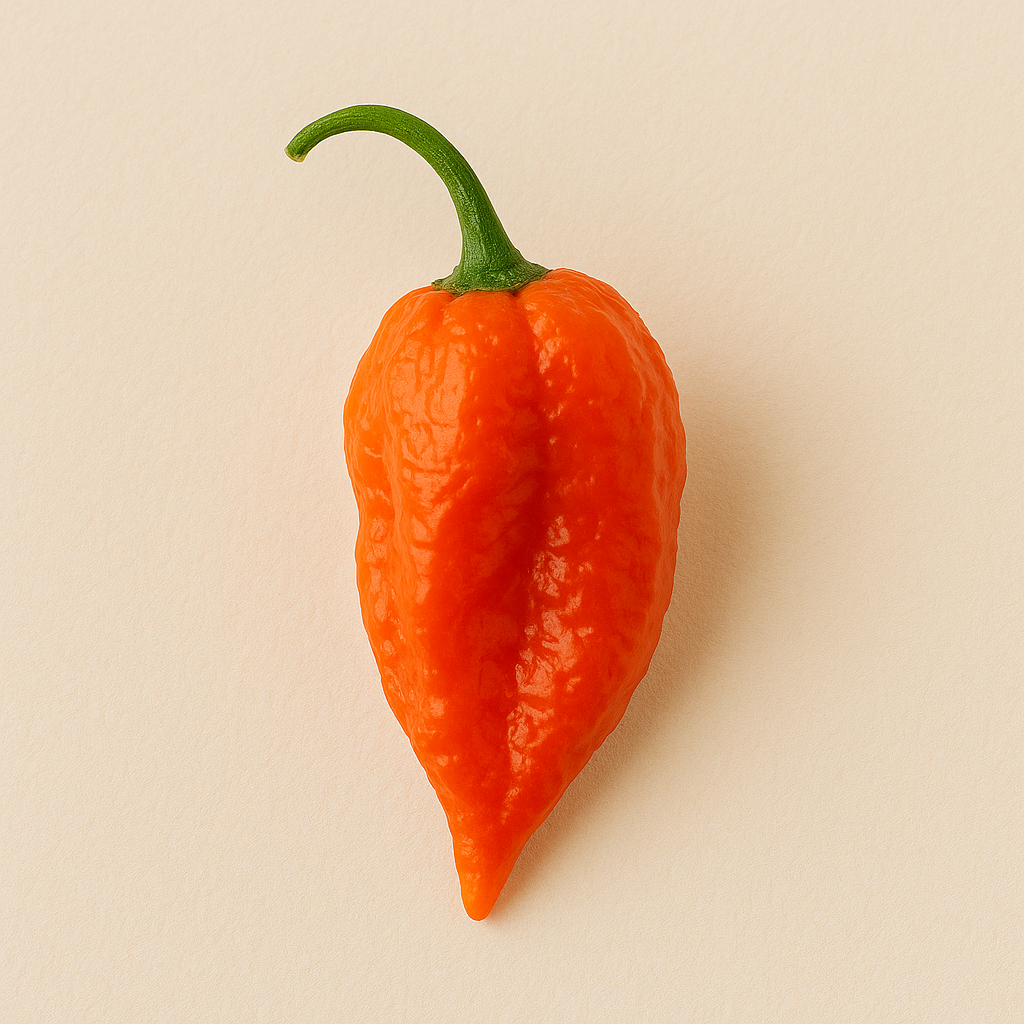
Habanero peppers are intensely hot (100,000-350,000 Scoville units) with a distinctive fruity, citrusy flavor that makes them a favorite for hot sauces. These lantern-shaped peppers come in various colors and pack serious heat along with delicious flavor.
Days to Harvest
90-120 days
Sun Needs
Full Sun (6-8+ hours)
moderate
Germination Temp
85°F optimal
Start Indoors
10 weeks before last frost
Germination
10-21 days
Seed Depth
1/4 inch
Light to Germinate
No
💡 Tip: Use heat mat for best germination. Habaneros need warm, long growing season.
Soil Type
Well-draining, fertile soil
pH Range
6 - 6.8
Spacing
18-24 inches between plants
⚠️ Avoid planting near:
History
The habanero pepper belongs to the species Capsicum chinense—a misnomer, as the species has no connection to China. Dutch botanist Nikolaus von Jacquin mistakenly believed specimens came from China when he named it in 1776. Habaneros actually originated in the Amazon basin and were domesticated between 6,500 and 8,500 years ago, spreading through trade to Mexico, Central America, and the Caribbean. The name "habanero" means "from Havana" in Spanish, though the pepper is most closely associated with Mexico's Yucatan Peninsula, where it has been cultivated for millennia and remains central to the region's cuisine. The ancient Maya likely bred the original habanero varieties, selecting for both heat and the distinctive fruity flavor that sets habaneros apart from other hot peppers. For decades, the Red Savina habanero (bred in California by Frank Garcia) held the Guinness World Record as the hottest pepper, from 1994 until 2007 when the Ghost Pepper dethroned it. Today, the habanero occupies a sweet spot in the chile world: hot enough to command respect, but with enough fruity complexity to contribute genuine flavor rather than just heat. The Yucatan Peninsula produces most of the world's habaneros, where they appear in virtually every traditional dish from cochinita pibil to xcatic sauce.
Nutritional Benefits
- ✓Very high in Vitamin C
- ✓Contains capsaicin
- ✓Rich in Vitamin A
Optimal Growing Temp
75°F - 90°F
Habaneros demand heat and long seasons. Soil temps should reach 80°F+ for best germination. Growth slows below 60°F.
Survival Range
55°F - 100°F
Can survive these temperatures
Best USDA Zones
Humidity
50-70%
Caribbean origin means habaneros tolerate humidity well. Good air circulation prevents fungal issues.
Height
24-36 inches
Spread
18-24 inches
Growth Habit
bush
Germination
10-21 days
Slower than annuum peppers. Bottom heat (80-85°F) significantly speeds germination. Keep moist but not wet.
Seedling Stage
Duration: 4-6 weeks
True leaves: First true leaves appear 2-3 weeks after germination
Transplant ready: Ready when 4-6 inches tall with sturdy stems. Keep warm and gradually harden off.
Vegetative Growth
Duration: 6-8 weeks
Plants develop strong structure. Feed regularly and maintain consistent warmth.
Flowering
Timing: 6-8 weeks after transplant
Duration: 2-3 weeks
Self-pollinating. Night temps above 60°F needed for good fruit set.
Fruit Development
Begins: 8-12 weeks after transplant
Duration: 4-6 weeks per wave
Lantern-shaped peppers develop. Color change (green to orange/red) indicates ripeness.
Harvest Maturity
Timing: 90-120 days from transplant
- Full color development (orange, red, or chocolate)
- Lantern shape fully formed
- Waxy, glossy skin
- Slight softening when gently squeezed
- Fruity aroma detectable
Per Plant
30-80 peppers per plant depending on variety and conditions
Per Square Foot
15-30 peppers
Harvest Frequency
Every 1-2 weeks once fruiting begins
Factors Affecting Yield
- •Long, warm season increases yield dramatically
- •Consistent moisture during fruit set
- •Proper fertilization throughout season
- •Harvesting encourages more production
Seedling Stage
Keep consistently moist but not waterlogged
Established Plants
Deep watering when top inch of soil dries
During Fruiting
Regular deep watering, slight stress before harvest acceptable
Preferred Method
Drip irrigation or hand watering at soil level
⚠️ Critical Watering Periods
- • Flowering and early fruit set require consistent moisture
Pro Tips
- PRO TIP: Slight water stress can intensify heat but don't overdo it
- Morning watering reduces disease pressure
- Mulch to maintain soil moisture and warmth
- Consistent water = consistent heat levels
Feeding Schedule
Seedling
Half-strength balanced fertilizer
Weekly
Vegetative
Balanced fertilizer to build plant structure
Every 2 weeks
Flowering
Switch to bloom formula (higher P-K)
Every 2 weeks
Fruiting
Continue bloom formula
Every 2-3 weeks
Organic Options
Every 2-3 weeks during active growth
Minimum Size
3 gallons
Recommended Size
5-7 gallons
Depth Required
At least 12 inches deep
Best Varieties for Containers
Container Tips
- Excellent container plants due to compact size
- Move containers to maximize sun exposure
- Can overwinter indoors in sunny windows
- Good drainage essential
Support Type
stake
Height Needed
2-3 feet
When to Install
Install when plants are 10 inches tall or when fruiting begins
Method
Optional stake for support when heavily laden
Tips
- Usually self-supporting but may lean when loaded with fruit
- Tomato cages provide easy support
- Tie loosely to avoid stem damage
Why Prune
When
Early season for shaping, ongoing for maintenance
Technique
Pinch growing tips when young for bushier growth
Remove
- ✗ Low branches touching soil
- ✗ Interior congested growth
- ✗ Damaged or diseased foliage
Keep
- ✓ Main stems
- ✓ Flowering branches
- ✓ Developing fruit