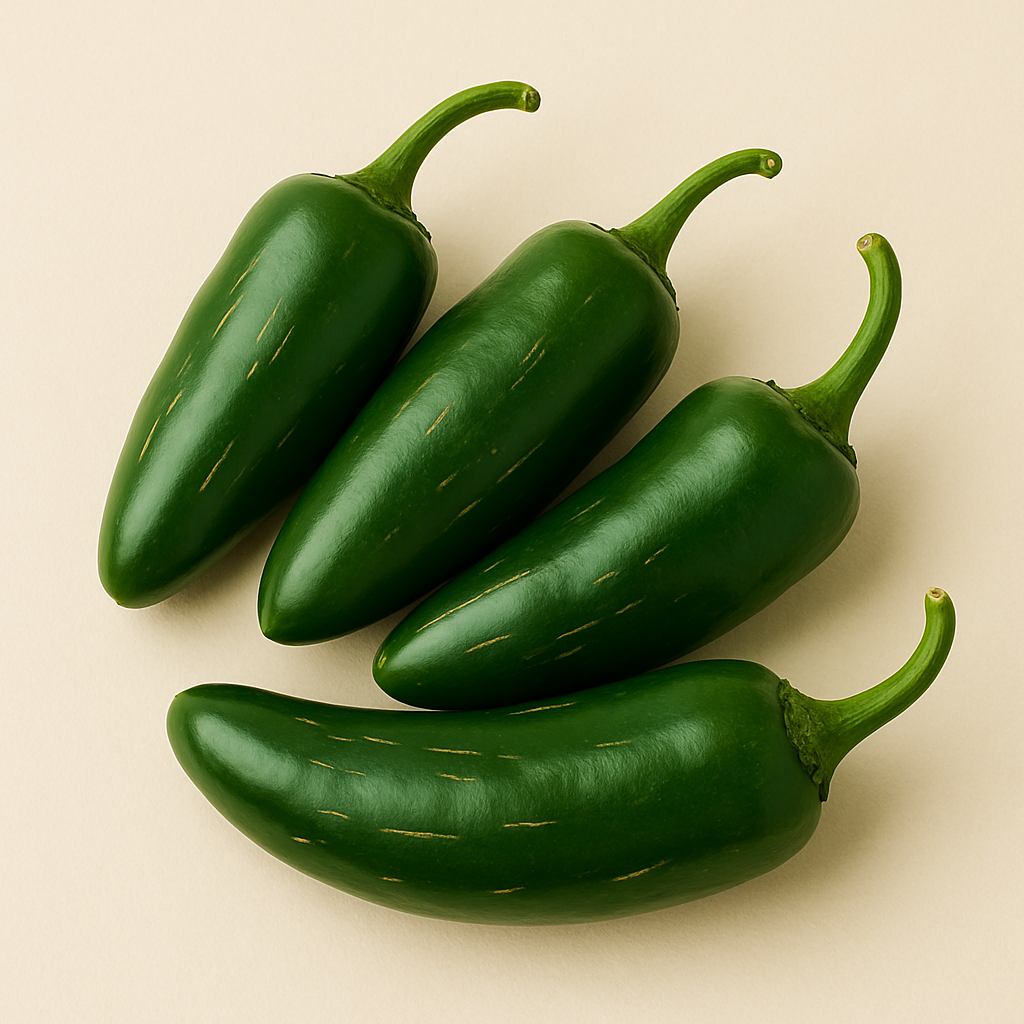
Jalapeño Pepper
Capsicum annuum
Family: Solanaceae
Jalapeño peppers are popular hot peppers with a moderate heat level (2,500-8,000 Scoville units). They are versatile in the kitchen and productive in the garden, with each plant producing 25-35 peppers.
Days to Harvest
65-80 days
Sun Needs
Full Sun (6-8+ hours)
moderate
Germination Temp
80°F optimal
Start Indoors
10 weeks before last frost
Germination
7-14 days
Seed Depth
1/4 inch
Light to Germinate
No
💡 Tip: Use a heat mat for consistent warm temperatures. Soak seeds for 8 hours before planting to speed germination.
Soil Type
Well-draining, moderately fertile soil
pH Range
6 - 6.8
Spacing
14-18 inches between plants
⚠️ Avoid planting near:
History
The jalapeño pepper derives its name from Xalapa (also spelled Jalapa), the capital city of Veracruz state in Mexico, where the pepper has been cultivated since pre-Columbian times. Archaeological evidence suggests that jalapeños and related Capsicum annuum varieties have been cultivated in Mexico for at least 6,000 years, making them one of the oldest cultivated crops in the Americas. The Aztecs used jalapeños extensively, preserving them by smoking—a technique that would eventually give rise to chipotle peppers. When Spanish conquistadors arrived in the 16th century, they documented the indigenous peoples' sophisticated use of multiple pepper varieties in their cuisine. Jalapeños remained relatively unknown outside Mexico until the 20th century, when increased Mexican immigration to the United States and the growing popularity of Tex-Mex cuisine brought them into American kitchens. Today, jalapeños are the most commercially cultivated hot pepper in the United States, with over 160,000 acres under cultivation worldwide. The pepper's moderate heat level—hot enough to provide excitement but mild enough for most palates—combined with its thick flesh ideal for stuffing, has made it the world's most versatile chili pepper.
Nutritional Benefits
- ✓High in Vitamin C
- ✓Contains capsaicin with metabolism-boosting properties
- ✓Good source of Vitamin A
Optimal Growing Temp
70°F - 85°F
Jalapeños thrive at 70-85°F. Night temperatures above 55°F essential for fruit set. Growth slows below 60°F and above 90°F.
Survival Range
55°F - 95°F
Can survive these temperatures
Frost Note: Killed by frost. Wait until soil is warm (65°F+) before transplanting. Use row covers if late cold snaps threaten.
Best USDA Zones
Humidity
40-70%
Moderate humidity acceptable. Good air circulation prevents fungal issues.
Height
2-3 feet
Spread
18-24 inches
Growth Habit
bush
Germination
10-21 days
Seeds germinate best at 80-85°F. Bottom heat speeds germination significantly.
Seedling Stage
Duration: 6-8 weeks
True leaves: First true leaves 14-21 days after sprouting
Transplant ready: Ready when 4-6 inches tall with multiple true leaves and sturdy stem.
Vegetative Growth
Duration: 4-6 weeks after transplant
Plants develop bushy form. Branching begins naturally.
Flowering
Timing: 6-8 weeks after transplant
Duration: Continuous once started
Self-pollinating. Small white flowers appear at branch nodes.
Fruit Development
Begins: 2-3 weeks after flowering
Duration: Continuous until frost
Green peppers appear within 2 weeks of flower. Ready to harvest at any color stage.
Harvest Maturity
Timing: 70-85 days from transplant (green), 90-100 days (red)
- Glossy appearance
- Firm flesh
- Dark green (or red if fully ripe)
- Slight corking/striations indicate heat development
Per Plant
25-50 peppers per plant
Per Square Foot
3-5 lbs per square foot
Harvest Frequency
Every 3-5 days during peak production
Factors Affecting Yield
- •Regular harvesting encourages continued production
- •Adequate warmth critical for fruit set
- •Consistent watering increases yield
- •Too much nitrogen reduces fruiting
Seedling Stage
Keep consistently moist
Established Plants
1-1.5 inches per week
During Fruiting
Consistent moisture—slightly drier encourages heat development
Preferred Method
Water at base. Drip irrigation ideal. Avoid wetting foliage.
⚠️ Critical Watering Periods
- • Flowering
- • Fruit set
Pro Tips
- PRO TIP: Slight water stress before harvest increases capsaicin (heat) production
- Consistent watering during fruit set prevents blossom drop
- Mulch to maintain soil moisture
Feeding Schedule
At Planting
Balanced fertilizer + compost
Once
Fruit Production
Low-nitrogen pepper/tomato fertilizer
Every 2-3 weeks
Organic Options
Side-dress with compost monthly. Epsom salt spray (1 tbsp/gallon) aids magnesium uptake.
Minimum Size
3 gallon
Recommended Size
5-7 gallon
Depth Required
At least 12 inches
Best Varieties for Containers
Container Tips
- Jalapeños are excellent container plants
- Compact size perfect for patios and balconies
- Use well-draining potting mix
- Water when top inch is dry
Support Type
Optional stake if heavy fruit load
Height Needed
2-3 feet if used
When to Install
At transplanting if using
Method
Single stake provides support for heavy-producing plants.
Tips
- Usually not needed for jalapeños
- Stake if branches bend under fruit weight
Why Prune
When
Optional
How Often
As needed
Technique
Pinching first flowers can encourage bushier growth. Remove suckers below first fork if desired.
Remove
- ✗ Optional: first flowers to encourage plant growth
- ✗ Suckers below main fork
Keep
- ✓ Main branching structure
- ✓ All upper growth