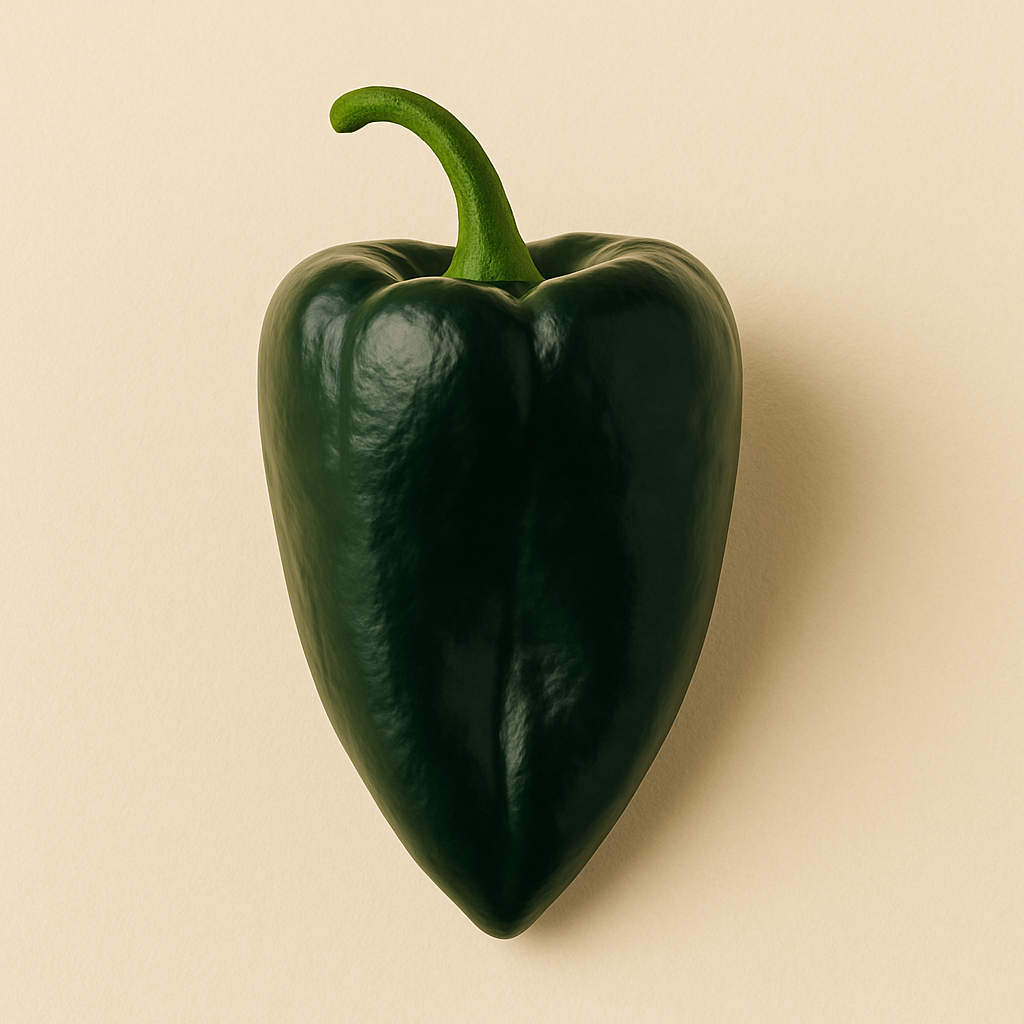
Poblano Pepper
Capsicum annuum
Family: Solanaceae
Poblano peppers are large, mild peppers (1,000-2,000 Scoville units) essential to Mexican cuisine. Fresh they're called poblanos; dried they become anchos. Their large size makes them perfect for stuffing, and their mild heat is family-friendly.
Days to Harvest
70-90 days
Sun Needs
Full Sun (6-8+ hours)
moderate
Germination Temp
80°F optimal
Start Indoors
8 weeks before last frost
Germination
7-14 days
Seed Depth
1/4 inch
Light to Germinate
No
💡 Tip: Use heat mat. Large plants need good spacing.
Soil Type
Rich, well-draining soil
pH Range
6 - 6.8
Spacing
18-24 inches between plants
⚠️ Avoid planting near:
History
The poblano pepper takes its name from Puebla, the central Mexican state where it has been cultivated since pre-Columbian times and remains a cornerstone of regional cuisine. The pepper holds a unique position in Mexican culinary culture as both a fresh and dried ingredient—when used fresh it's called poblano, but when dried it becomes the ancho chile (from "ancho" meaning "wide"), creating essentially two distinct ingredients from the same pepper. The dish chiles rellenos, featuring roasted poblanos stuffed with cheese or meat and coated in egg batter, originated in Puebla during the colonial period and has become one of Mexico's most beloved national dishes. The poblano's other famous culinary destination is mole poblano, the complex sauce containing dried anchos (and often two dozen other ingredients) that is considered one of Mexico's greatest culinary achievements. Interestingly, poblanos are sometimes mislabeled as "pasilla" peppers in California due to a regional naming convention that has persisted despite being technically incorrect (true pasillas are different dried chiles). The pepper's mild heat level—gentler than jalapeño—combined with its large size and thick flesh has made it ideal for the North American market, where it's now widely available in mainstream supermarkets and has become a popular gateway for Americans exploring Mexican cuisine beyond Tex-Mex.
Nutritional Benefits
- ✓High in Vitamin A
- ✓Good source of Vitamin C
- ✓Contains fiber
Optimal Growing Temp
70°F - 85°F
Poblanos thrive in moderate warmth. Soil temps should reach 65-70°F for transplanting. Can tolerate some cool nights better than hotter varieties.
Survival Range
55°F - 95°F
Can survive these temperatures
Best USDA Zones
Humidity
40-60%
Moderate humidity ideal. High humidity can cause fungal issues on large leaves and thick-walled fruit.
Height
24-36 inches
Spread
18-24 inches
Growth Habit
upright
Germination
7-14 days
Good germination rate. Bottom heat (75-80°F) helps. Cotyledons emerge with typical pepper appearance.
Seedling Stage
Duration: 4-5 weeks
True leaves: First true leaves appear 2-3 weeks after germination with larger leaves than hot peppers
Transplant ready: Ready when 5-6 inches tall with 4-6 true leaves and sturdy stems
Vegetative Growth
Duration: 5-6 weeks
Plants develop strong structure to support large peppers. Feed regularly.
Flowering
Timing: 6-8 weeks after transplant
Duration: 2-3 weeks
Self-pollinating with white flowers. Night temps above 55°F needed for fruit set.
Fruit Development
Begins: 8-12 weeks after transplant
Duration: 4-5 weeks per pepper
Large, heart-shaped peppers develop. Dark green, ripen to red-brown.
Harvest Maturity
Timing: 65-80 days from transplant
- Peppers reach 4-6 inches long
- Dark green glossy skin
- Firm to the touch
- Heart-shaped form fully developed
Per Plant
6-12 large peppers per plant over the season
Per Square Foot
3-6 peppers
Harvest Frequency
Every 1-2 weeks once fruiting begins
Factors Affecting Yield
- •Large pepper size means fewer per plant but substantial yield by weight
- •Consistent moisture and nutrition maximize size
- •Harvest promptly to encourage continued production
- •Warm conditions speed development
Seedling Stage
Keep evenly moist
Established Plants
Water when top inch dries
During Fruiting
Regular deep watering for large pepper development
Preferred Method
Drip irrigation or careful hand watering at soil level
⚠️ Critical Watering Periods
- • Flowering and fruit development need consistent moisture for maximum size
Pro Tips
- PRO TIP: Consistent water produces the large, thick-walled peppers ideal for stuffing
- Inconsistent watering causes blossom end rot
- Mulch heavily to maintain moisture
- Morning watering reduces disease
Feeding Schedule
Seedling
Half-strength balanced fertilizer
Weekly
Vegetative
Balanced fertilizer to build strong plant
Every 2 weeks
Flowering
Switch to bloom formula (higher P-K)
Every 2 weeks
Fruiting
Continue bloom formula
Every 2-3 weeks
Organic Options
Every 2-3 weeks during active growth
Minimum Size
5 gallons
Recommended Size
7-10 gallons
Depth Required
At least 12 inches deep
Best Varieties for Containers
Container Tips
- Needs larger container due to plant and pepper size
- Support may be needed when laden with fruit
- Regular watering essential in containers
- Good drainage critical
Support Type
stake
Height Needed
2-3 feet
When to Install
Install when plants begin setting fruit to prevent branch breakage
Method
Optional stake for support when heavily laden
Tips
- Large peppers can weigh down branches
- Tomato cages provide good support
- Stake central stem for extra stability
Why Prune
When
Early season shaping, ongoing maintenance
Technique
Remove lower leaves for air circulation, thin interior for light penetration
Remove
- ✗ Low branches touching soil
- ✗ Interior congested growth
- ✗ Damaged or diseased foliage
Keep
- ✓ Main stems
- ✓ All flowering branches
- ✓ Developing peppers
Plant Every
3-4 weeks for extended harvest
Sowings/Season
2-3 plantings
Duration
6-8 weeks of succession planting window
Tips
- Succession planting ensures fresh poblanos through the season
- Last planting 85-95 days before first frost
- Later plantings can be dried as anchos