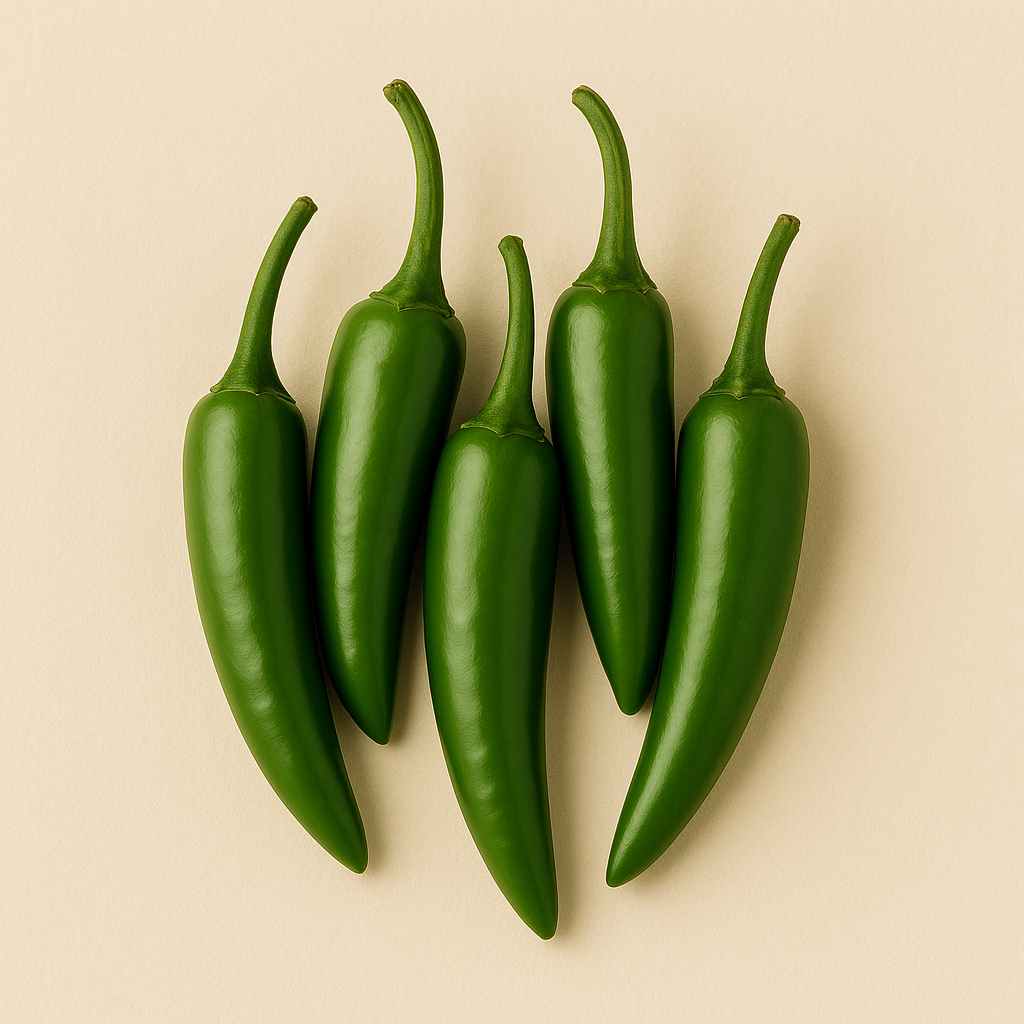
Serrano Pepper
Capsicum annuum
Family: Solanaceae
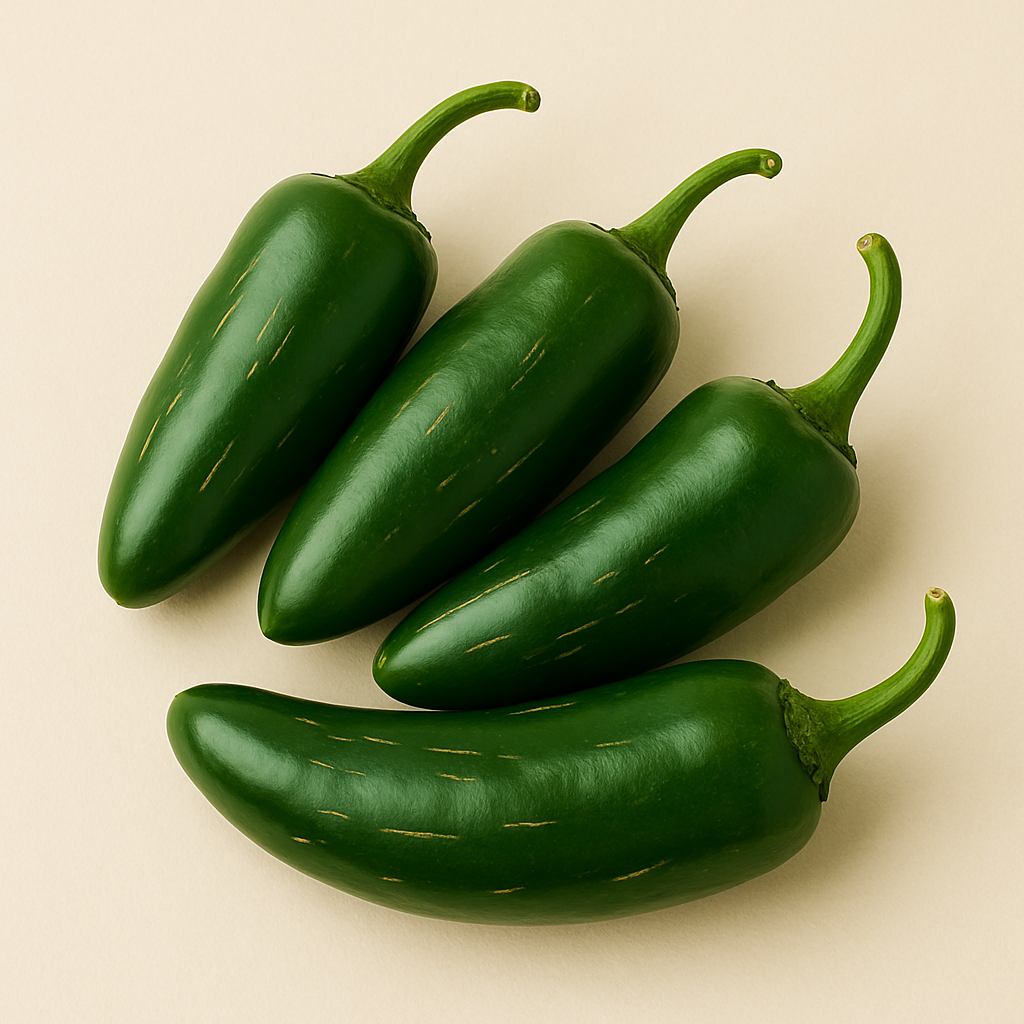
Serrano peppers are small, hot peppers (10,000-25,000 Scoville units) that are hotter than jalapeños but with a brighter, crisper flavor. They're a staple in Mexican cooking, perfect for salsas, and usually eaten fresh rather than dried.
Days to Harvest
70-90 days
Sun Needs
Full Sun (6-8+ hours)
moderate
Germination Temp
80°F optimal
Start Indoors
8 weeks before last frost
Germination
7-14 days
Seed Depth
1/4 inch
Light to Germinate
No
💡 Tip: Use heat mat for germination. Very productive plants.
Soil Type
Well-draining, fertile soil
pH Range
6 - 6.8
Spacing
14-18 inches between plants
⚠️ Avoid planting near:
History
The serrano pepper derives its name from the Sierra Madre mountain ranges ("sierra" means mountains in Spanish) that run through the Mexican states of Puebla and Hidalgo, where this variety was developed and has been cultivated for centuries. Unlike many Mexican peppers that are primarily used dried, serranos are traditionally consumed fresh, prized for their bright, clean heat and crisp texture that cuts through rich dishes. The pepper's thin walls—which make it unsuitable for drying—preserve well when pickled, leading to the proliferation of pickled serranos (chiles serranos en escabeche) throughout Mexican cuisine. Serranos are roughly two to five times hotter than jalapeños, which makes them the pepper of choice when Mexican cooks want more heat without changing the flavor profile significantly. In traditional Mexican cooking, serranos appear in countless regional dishes, from the fresh salsas of central Mexico to the green moles of Oaxaca. The pepper became the second-most popular chile in Mexico after jalapeños, and its popularity has spread globally as Mexican cuisine has gained international recognition. Home gardeners appreciate serranos for their prolific production—a single plant can yield 50 or more peppers—and their reliability in temperate climates.
Nutritional Benefits
- ✓High in Vitamin C
- ✓Contains Vitamin A
- ✓Rich in capsaicin
Optimal Growing Temp
70°F - 85°F
Serranos thrive in warm conditions. Soil temps should reach 65-70°F for transplanting. Growth slows below 55°F.
Survival Range
55°F - 95°F
Can survive these temperatures
Best USDA Zones
Humidity
40-60%
Serranos tolerate moderate humidity. Good air circulation prevents fungal issues in humid climates.
Height
24-36 inches
Spread
18-24 inches
Growth Habit
bush
Germination
7-14 days
Relatively fast germination. Bottom heat (75-80°F) helps. Cotyledons emerge within 2 weeks with good conditions.
Seedling Stage
Duration: 3-4 weeks
True leaves: First true leaves appear 2-3 weeks after germination with characteristic serrated edges
Transplant ready: Ready when 4-6 inches tall with 4-6 true leaves and sturdy stems
Vegetative Growth
Duration: 5-6 weeks
Bushy growth develops. Feed regularly and maintain warm conditions.
Flowering
Timing: 7-9 weeks after transplant
Duration: 2-3 weeks
Self-pollinating with small white flowers. Night temps above 55°F needed for fruit set.
Fruit Development
Begins: 9-12 weeks after transplant
Duration: 3-4 weeks per pepper
Small, bullet-shaped peppers develop. Usually harvested green, can ripen to red.
Harvest Maturity
Timing: 75-90 days from transplant
- Peppers reach 1-4 inches long
- Firm and glossy texture
- Bright green color (or red when fully ripe)
- Snap easily from plant
Per Plant
50-100+ peppers per plant over the season
Per Square Foot
25-50 peppers
Harvest Frequency
Every 5-7 days once fruiting begins
Factors Affecting Yield
- •Incredibly prolific producers
- •Regular harvest encourages continuous production
- •Warm, consistent conditions maximize yield
- •Small pepper size means fast development
Seedling Stage
Keep evenly moist
Established Plants
Water when top inch dries
During Fruiting
Regular watering, allow slight drying between
Preferred Method
Drip irrigation or hand watering at soil level
⚠️ Critical Watering Periods
- • Flowering and fruit set need consistent moisture for maximum production
Pro Tips
- PRO TIP: Consistent moisture produces crisp, juicy serranos perfect for fresh salsa
- Morning watering reduces disease pressure
- Mulch helps maintain even moisture
- Serranos are best eaten fresh, so consistent water = best quality
Feeding Schedule
Seedling
Half-strength balanced fertilizer
Weekly
Vegetative
Balanced fertilizer for bushy growth
Every 2 weeks
Flowering
Switch to bloom formula (higher P-K)
Every 2 weeks
Fruiting
Continue bloom formula
Every 2-3 weeks
Organic Options
Every 2-3 weeks during active growth
Minimum Size
3 gallons
Recommended Size
5 gallons
Depth Required
At least 10 inches deep
Best Varieties for Containers
Container Tips
- Excellent container plants
- Compact, bushy growth habit
- Move containers to maximize sun
- Good drainage essential
Support Type
stake
Height Needed
2-3 feet
When to Install
Install when plants begin to set fruit heavily
Method
Optional stake for support when heavily laden
Tips
- Usually self-supporting
- May lean when loaded with peppers
- Tomato cages provide easy support if needed
Why Prune
When
Early season pinching for bushier growth, ongoing maintenance
Technique
Pinch growing tips when young to encourage branching
Remove
- ✗ Low branches touching soil
- ✗ Yellow or damaged leaves
- ✗ Overcrowded interior growth
Keep
- ✓ Main stems
- ✓ All flowering branches
- ✓ Developing peppers
Plant Every
3-4 weeks for extended fresh harvest
Sowings/Season
2-3 plantings
Duration
6-8 weeks of succession planting window
Tips
- Succession planting ensures fresh serranos all season
- Last planting 90-100 days before first frost
- Serranos are best fresh, so stagger for continuous supply