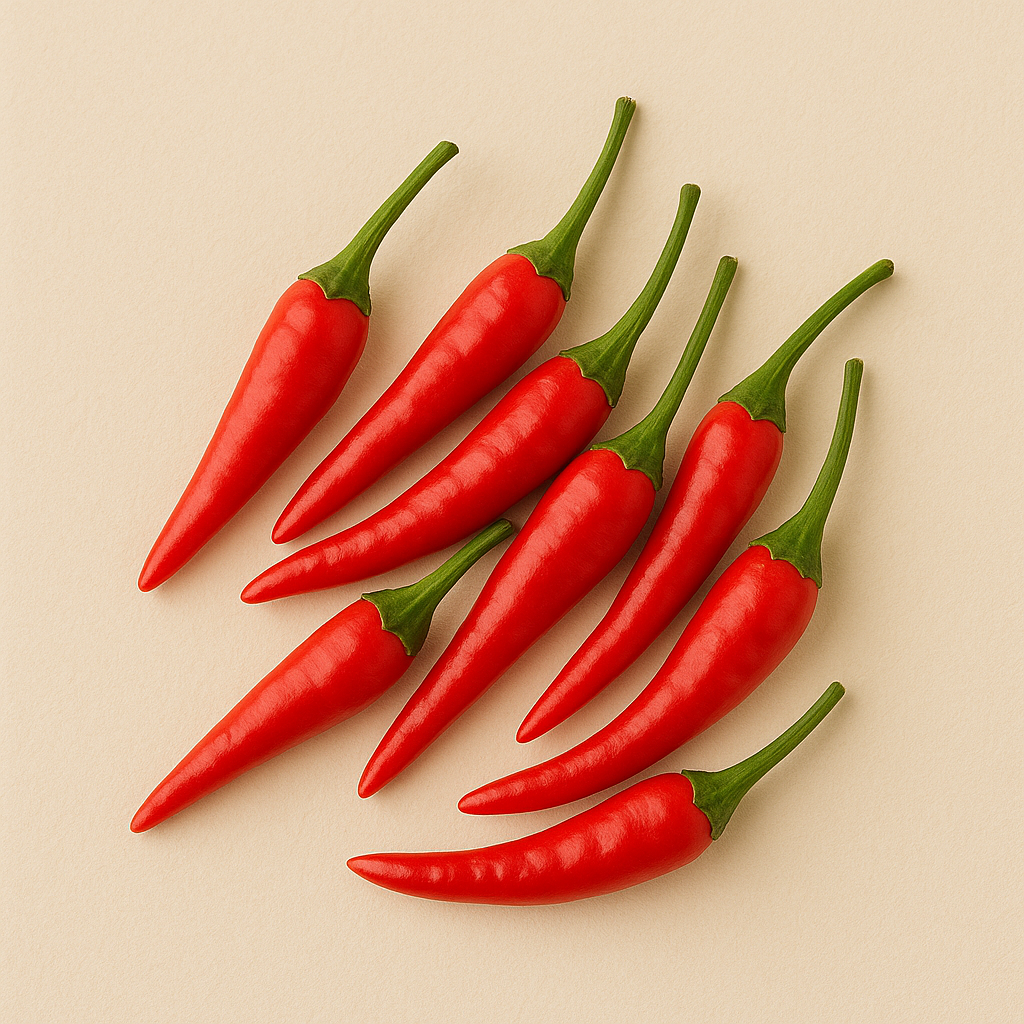
Thai Pepper (Bird's Eye)
Capsicum annuum
Family: Solanaceae
Thai peppers are small, extremely hot peppers (50,000-100,000 Scoville units) essential to Southeast Asian cooking. Despite their tiny size, they pack serious heat. Plants are ornamental with upward-pointing colorful peppers.
Days to Harvest
75-100 days
Sun Needs
Full Sun (6-8+ hours)
moderate
Germination Temp
85°F optimal
Start Indoors
10 weeks before last frost
Germination
10-21 days
Seed Depth
1/4 inch
Light to Germinate
No
💡 Tip: Use heat mat. Very ornamental plants with upward-pointing peppers.
Soil Type
Well-draining soil
pH Range
6 - 6.8
Spacing
14-18 inches between plants
⚠️ Avoid planting near:
History
Thai peppers, despite their name and central role in Southeast Asian cuisine, originated in the Americas like all Capsicum species. Portuguese traders introduced chile peppers to Asia during the 16th century, and the small, fiery varieties now known as "Thai peppers" or "bird's eye chiles" were adopted with remarkable speed. Within a century, these peppers had become so integrated into Thai, Vietnamese, and other regional cuisines that many Asians assumed they were native ingredients. The peppers thrived in tropical Southeast Asian climates and were particularly favored because their compact size and intense heat meant a little went a long way—economically important in developing agricultural societies. In Thai cuisine, the pepper became one of the defining ingredients, appearing in tom yum soup, green and red curries, and countless stir-fries. The name "bird's eye chile" comes from the fact that birds are unaffected by capsaicin and spread the seeds through their droppings, explaining how the peppers naturalized throughout the region. The distinctive upward-pointing growth habit of Thai peppers—where fruits point skyward rather than hanging down—is thought to be an adaptation to make them more visible to birds. Today, Thai peppers are grown throughout tropical Asia and have become popular with American gardeners who appreciate both their culinary value and their ornamental beauty as compact, colorful container plants.
Nutritional Benefits
- ✓High in Vitamin C
- ✓Contains capsaicin
- ✓Rich in Vitamin A
Optimal Growing Temp
75°F - 90°F
Thai peppers love heat—they thrive in tropical conditions. Soil temps should reach 70-75°F for transplanting. Growth slows below 60°F.
Survival Range
60°F - 100°F
Can survive these temperatures
Best USDA Zones
Humidity
50-70%
Southeast Asian origin means Thai peppers tolerate high humidity well. Good air circulation prevents fungal issues.
Height
12-24 inches
Spread
12-18 inches
Growth Habit
upright
Germination
10-21 days
Moderate germination time. Bottom heat (80°F) helps significantly. Cotyledons emerge upward-facing.
Seedling Stage
Duration: 4-5 weeks
True leaves: First true leaves appear 3-4 weeks after germination with small, compact form
Transplant ready: Ready when 3-4 inches tall with sturdy stems and 4-6 true leaves
Vegetative Growth
Duration: 4-6 weeks
Plants develop dense, bushy structure. Very ornamental foliage.
Flowering
Timing: 8-10 weeks after transplant
Duration: 2-3 weeks
Self-pollinating. Abundant small white flowers produce upward-pointing peppers.
Fruit Development
Begins: 10-14 weeks after transplant
Duration: 3-4 weeks per pepper
Tiny peppers change from green to red (sometimes yellow or purple depending on variety).
Harvest Maturity
Timing: 70-90 days from transplant
- Peppers reach 1-2 inches long
- Firm and glossy texture
- Bright color (green, red, or variety-specific)
- Easy to pick
Per Plant
100-200+ peppers per plant over the season
Per Square Foot
50-100 peppers
Harvest Frequency
Every 5-7 days once fruiting begins
Factors Affecting Yield
- •Extremely prolific producers
- •Small pepper size = fast development
- •Regular harvest encourages continued production
- •Heat and sun maximize yield
Seedling Stage
Keep evenly moist
Established Plants
Water when top inch dries
During Fruiting
Regular watering, allow slight drying between
Preferred Method
Careful watering at soil level
⚠️ Critical Watering Periods
- • Flowering and fruit set require consistent moisture
Pro Tips
- PRO TIP: Slight water stress can increase heat level in Thai peppers
- Container plants need more frequent watering
- Morning watering reduces disease
- Mulch containers to retain moisture
Feeding Schedule
Seedling
Half-strength balanced fertilizer
Weekly
Vegetative
Balanced fertilizer for compact growth
Every 2 weeks
Flowering
Switch to bloom formula
Every 2 weeks
Fruiting
Continue bloom formula
Every 2-3 weeks
Organic Options
Every 2-3 weeks during active growth
Minimum Size
2 gallons
Recommended Size
3-5 gallons
Depth Required
At least 8 inches deep
Best Varieties for Containers
Container Tips
- IDEAL container plants—compact and beautiful
- Perfect for patio and balcony gardens
- Upward-pointing peppers create stunning display
- Can grow on windowsills with bright light
Support Type
none
Height Needed
N/A
When to Install
Not typically needed—plants are naturally self-supporting
Method
Plants are self-supporting
Tips
- No support needed due to compact growth
- Strong stems support abundant fruit
- May appreciate shelter from strong winds
Why Prune
When
Minimal—plants are naturally compact
Technique
Remove any leggy growth or damaged leaves
Remove
- ✗ Damaged or diseased leaves
- ✗ Any leggy or etiolated growth
Keep
- ✓ All flowering branches
- ✓ Compact bushy growth
- ✓ Developing peppers