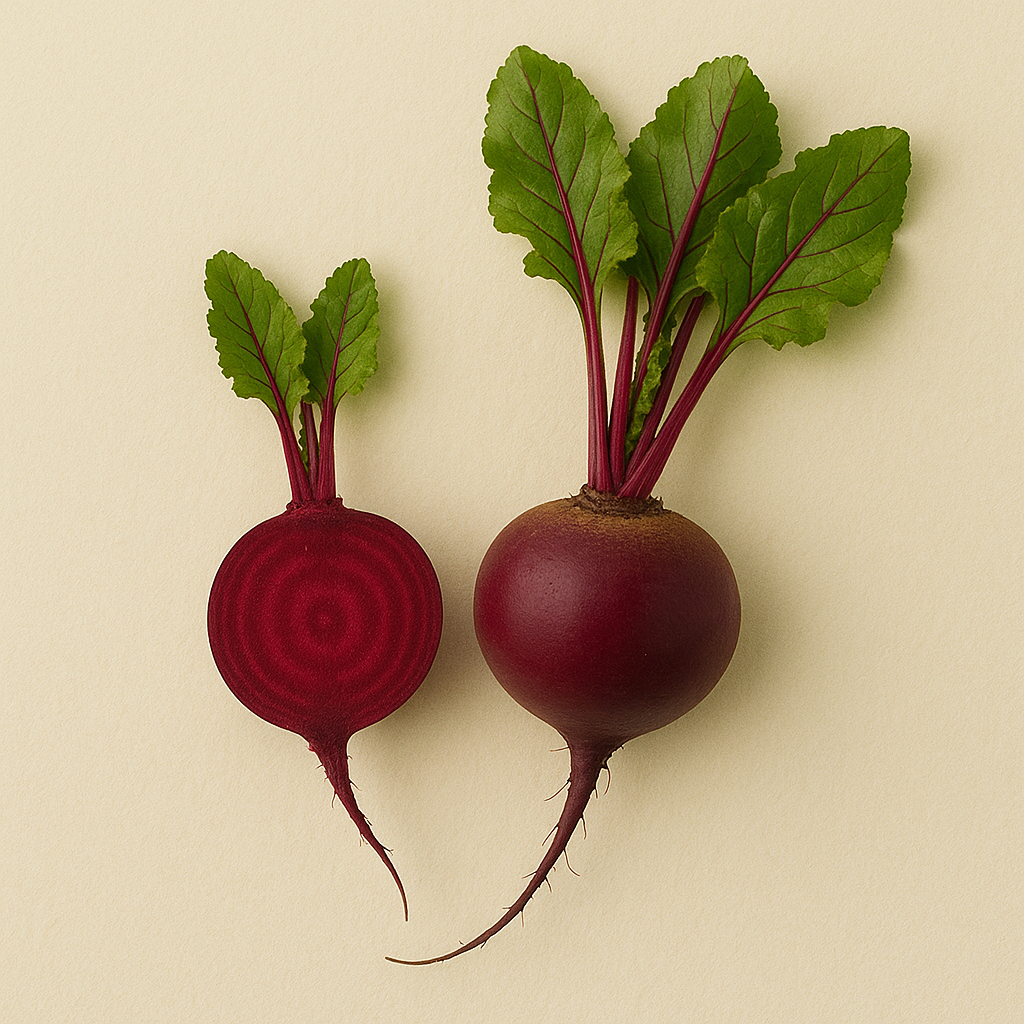
Beets
Beta vulgaris
Family: Amaranthaceae
Beets are a dual-purpose crop providing both nutritious roots and delicious greens. The sweet, earthy roots come in red, golden, white, and striped varieties. Fast-growing and cold-tolerant, beets are perfect for spring and fall gardens.
Days to Harvest
50-70 days
Sun Needs
Full Sun to Partial Shade (4-6 hours)
moderate
Germination Temp
65°F optimal
Start Indoors
4 weeks before last frost
Germination
5-14 days
Seed Depth
1/2 inch
Light to Germinate
No
💡 Tip: Each beet "seed" is actually a cluster of 2-4 seeds—thinning is essential. Soak seeds overnight to speed germination.
Soil Type
Loose, well-draining soil with good organic matter
pH Range
6 - 7.5
Spacing
3-4 inches between plants, 12-18 inches between rows
⚠️ Avoid planting near:
History
The beet's transformation from sea-cliff leafy green to ruby-red root vegetable represents one of agriculture's most dramatic crop evolutions. Wild sea beet (Beta vulgaris maritima) still grows along the coasts of Europe, North Africa, and Western Asia, and for thousands of years, it was cultivated solely for its leaves—similar to modern chard, which is actually the same species. The ancient Egyptians, Greeks, and Romans all grew beets, but exclusively as leaf crops; Hippocrates recommended beet leaves for binding wounds. Root cultivation didn't begin until around the 16th century in Germany and Italy, when gardeners began selecting plants with swollen roots. The Venetians were particularly instrumental in developing red beets, and the famous Chioggia beet with its candy-striped interior originated in a fishing village near Venice. The 18th century brought beets' most significant historical moment: in 1747, German chemist Andreas Sigismund Marggraf discovered that beet juice contained sucrose identical to sugarcane sugar. His student Franz Karl Achard developed the first sugar beet variety and built the first beet sugar factory in 1801 in Silesia. When Napoleon faced the British naval blockade that cut off Caribbean cane sugar, he mandated massive sugar beet cultivation across France, establishing an industry that now produces about 20% of the world's sugar. Eastern European cuisines embraced beets wholeheartedly—Ukrainian borscht, Russian vinegret salad, and Polish beet soup (barszcz) became cultural touchstones. Jewish immigrants brought borscht to America, where it became synonymous with the Catskills "Borscht Belt" comedy circuit. The beetroot's deep red color comes from betalains, powerful antioxidants now studied for their health benefits. Modern research on beetroot juice for athletic performance has made beets popular among endurance athletes, while golden and white varieties have brought beets to those who find the "earthy" flavor of red beets too intense.
Nutritional Benefits
- ✓High in folate
- ✓Contains nitrates that may lower blood pressure
- ✓Good source of manganese
Optimal Growing Temp
60°F - 65°F
Beets grow best in cool weather between 60-65°F. They tolerate heat better than many root crops but prefer cooler temperatures. Growth slows in hot weather above 75°F.
Survival Range
40°F - 75°F
Can survive these temperatures
Frost Note: Beets are very cold-hardy. Tops tolerate light frosts down to 28°F, and roots can survive hard frosts under mulch. Young plants can handle temperatures in the mid-20s. Fall-grown beets often have better flavor.
Best USDA Zones
Humidity
50-70%
Beets tolerate varying humidity levels. They perform well in both humid and dry climates with proper watering. Leaf diseases can develop in very humid conditions.
Height
12-18 inches
Spread
6-8 inches
Growth Habit
upright
Germination
5-10 days
Beet "seeds" are actually seed clusters containing 2-4 seeds. Multiple seedlings emerge from each cluster in 5-10 days at optimal temperatures. Thinning will be necessary.
Seedling Stage
Duration: 2-3 weeks
True leaves: First true leaves appear 7-10 days after germination
Transplant ready: Beets can be transplanted but prefer direct sowing. If transplanting, do so when seedlings have 3-4 true leaves and roots are still small.
Vegetative Growth
Duration: 5-7 weeks
Beets develop their leafy tops while the root swells underground. Both the greens and roots are edible throughout this stage. Consistent moisture promotes smooth, even root growth.
Harvest Maturity
Timing: 50-70 days from seed depending on variety
- Roots are 1.5-3 inches in diameter (check by gently brushing soil away)
- Tops are full and lush
- Baby beets can be harvested at 1 inch diameter (35-45 days)
- Greens can be harvested throughout the growing period
Per Plant
1 root plus greens per plant (roots 4-12 oz each depending on variety and harvest size)
Per Square Foot
9 beets per square foot when properly thinned
Harvest Frequency
Continuous - harvest baby beets first, leaving some to mature. Greens can be harvested multiple times.
Factors Affecting Yield
- •Variety selection - some produce larger roots, others are bred for greens
- •Thinning - each seed cluster produces multiple plants that compete if not thinned
- •Soil quality - loose soil with adequate phosphorus promotes good root development
- •Spacing - proper spacing prevents crowding and allows full-sized roots
- •Harvest timing - young beets are sweeter and more tender than overmature roots
- •Water consistency - even moisture prevents woody texture
Seedling Stage
Keep soil consistently moist until germination and through early growth
Established Plants
1 inch per week, consistent moisture is key for tender roots
Preferred Method
Drip irrigation or soaker hoses are ideal for consistent moisture. Overhead watering is acceptable but can spread leaf diseases. Water at the base when possible.
⚠️ Critical Watering Periods
- • Germination
- • Root swelling phase (weeks 3-7)
Pro Tips
- Mulch around plants to maintain even moisture
- Never let soil completely dry out during root development
- Consistent moisture prevents zoning and woody texture
- Water in morning to allow foliage to dry during the day
Feeding Schedule
Soil Preparation
Compost and rock phosphate worked into soil
Once before planting
Seedling Stage
Light compost tea
Once at thinning
Mid-Growth
Side-dress with 5-10-10
Once at 4 weeks
Organic Options
Work compost into soil before planting. Add bone meal or rock phosphate for phosphorus. Side-dress with compost mid-season. Avoid high-nitrogen fertilizers.
Minimum Size
10 inches deep minimum
Recommended Size
12-14 inches deep and at least 12 inches wide
Depth Required
At least 10-12 inches deep to accommodate root development
Best Varieties for Containers
Container Tips
- Choose smaller varieties like Detroit Dark Red or Chioggia for containers
- Use light, well-draining potting mix enriched with compost
- Thin seedlings to 3-4 inches apart for proper root sizing
- Containers need consistent moisture - check daily in hot weather
- Feed every 2-3 weeks with balanced liquid fertilizer
- Harvest baby beets at 1-2 inches for space efficiency
Plant Every
Every 2-3 weeks
Sowings/Season
5-7 plantings for continuous harvest
Duration
From 4-6 weeks before last frost through mid-summer (stop 8 weeks before first frost)
Tips
- Spring plantings: Start 4-6 weeks before last frost, continue every 2-3 weeks
- Summer plantings: In cool climates only - beets can bolt in heat
- Fall plantings: Resume in late summer for best-tasting fall crop
- Each planting provides harvest over 2-3 weeks
- Stagger varieties with different maturity dates for extended harvest