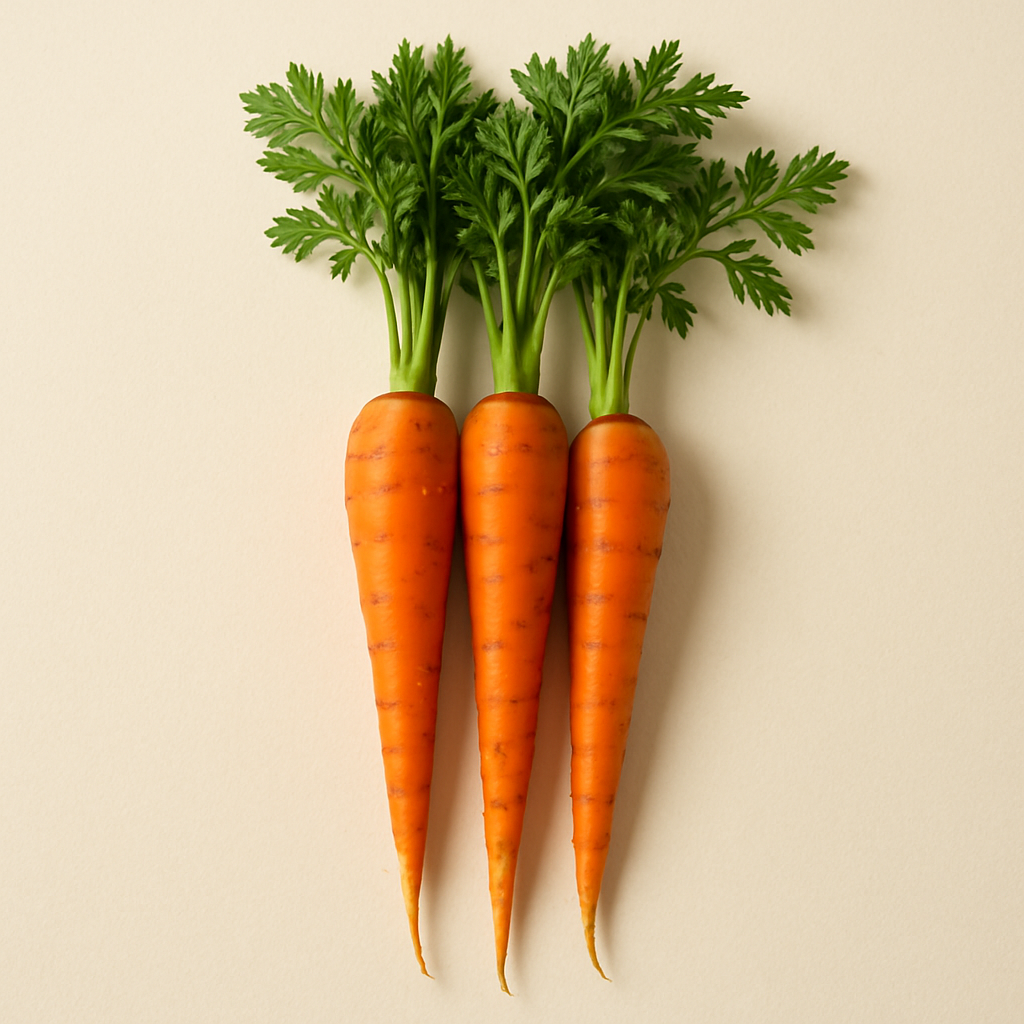
Carrots
Daucus carota subsp. sativus
Family: Apiaceae
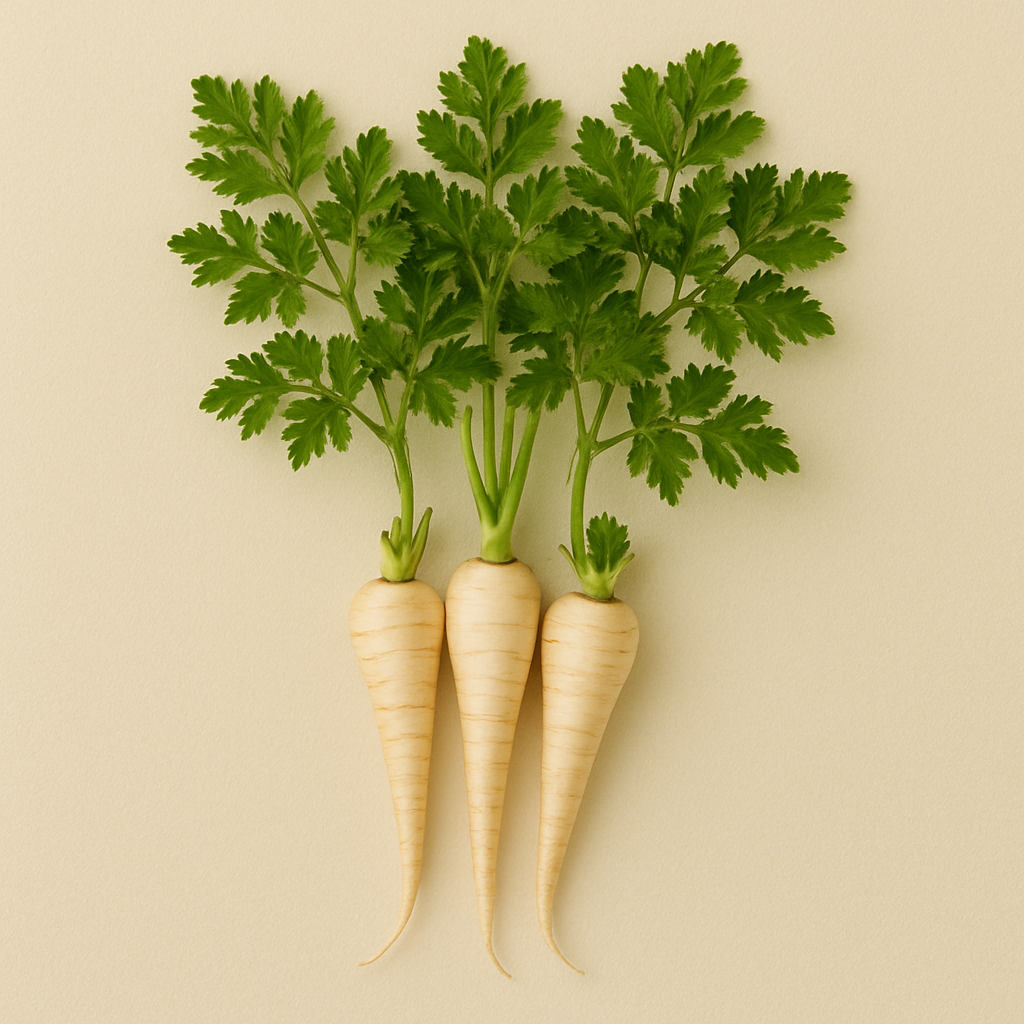
Carrots are one of the most rewarding root vegetables to grow, offering sweet, crunchy roots in a rainbow of colors. While orange is most common, carrots also come in purple, red, yellow, and white. They require loose soil but are relatively easy to grow and store well.
Days to Harvest
55-80 days
Sun Needs
Full Sun (6+ hours)
moderate
Germination Temp
70°F optimal
Start Indoors
0 weeks before last frost
Germination
10-21 days
Seed Depth
1/4 inch
Light to Germinate
No
💡 Tip: Carrot seeds are slow to germinate. Keep soil consistently moist until germination. Mix tiny seeds with sand for even distribution. Never let soil crust over.
Soil Type
Deep, loose, sandy loam free of rocks and debris
pH Range
6 - 6.8
Spacing
2-3 inches between plants, 12-18 inches between rows
⚠️ Avoid planting near:
History
The carrot's journey from bitter, forked wild root to sweet, straight garden vegetable spans over 5,000 years of cultivation across three continents. Wild carrots (Queen Anne's Lace) originated in the highlands of Afghanistan and Persia, where they were initially gathered not for their thin, white or purple roots, but for their aromatic seeds and leaves used as medicine and flavoring. Archaeological evidence from Swiss lake dwellings suggests carrots were being cultivated in Europe by 3000 BCE, though these early roots bore little resemblance to modern carrots—they were forked, woody, and came in purple, yellow, red, and white, but never orange. The Romans cultivated a yellowish variety they called "pastinaca" (confusingly, the same name they used for parsnips), and Apicius's first-century cookbook includes recipes for fried carrots with cumin. Arab traders spread purple and yellow carrots throughout the Mediterranean and into Spain, where Moorish agriculturalists improved cultivation techniques. The orange carrot we know today was developed in the Netherlands during the 16th and 17th centuries, with popular legend attributing the color choice to honoring William of Orange, though this patriotic story is likely apocryphal—orange carrots simply had better flavor and didn't "bleed" color in cooking. The discovery of beta-carotene in 1831 by German chemist Heinrich Wilhelm Ferdinand Wackenroder, who named it after the carrot (Daucus carota), established carrots' reputation as a health food. During World War II, the British government promoted carrots as the secret behind RAF pilots' night vision—a propaganda campaign to hide the existence of radar, though carrots do contain vitamin A essential for eye health. Today, carrots are the second most popular vegetable worldwide after potatoes, with China producing over 45% of the global supply. The revival of heirloom varieties has brought purple, red, yellow, and white carrots back to farmers' markets, reconnecting modern gardeners with the carrot's colorful ancient heritage.
Nutritional Benefits
- ✓Extremely high in beta-carotene (Vitamin A)
- ✓Good source of fiber
- ✓Contains Vitamin K1
Optimal Growing Temp
60°F - 70°F
Carrots thrive in cool weather between 60-70°F. Seeds germinate slowly below 50°F but will still grow. Growth slows above 80°F and roots can become bitter in extreme heat.
Survival Range
45°F - 85°F
Can survive these temperatures
Frost Note: Carrot tops can tolerate light frosts down to 28°F. In fact, a light frost sweetens the roots by converting starches to sugars. Roots can survive in the ground under heavy mulch through winter in zones 7 and warmer.
Best USDA Zones
Humidity
50-70%
Carrots tolerate a range of humidity levels. High humidity at soil surface during germination helps seeds sprout. Excessive moisture can lead to leaf diseases but is rarely an issue.
Height
8-12 inches
Spread
3-4 inches
Growth Habit
upright
Germination
10-21 days
Carrot seeds are notoriously slow. First grass-like seedlings emerge in 10-21 days depending on soil temperature. Keep soil consistently moist during this period to prevent crusting.
Seedling Stage
Duration: 3-4 weeks
True leaves: First true ferny leaves appear 2-3 weeks after germination
Transplant ready: Carrots do not transplant well—always direct sow. Thin seedlings when 2 inches tall to proper spacing to avoid crowding.
Vegetative Growth
Duration: 6-10 weeks
The carrot develops its feathery foliage while simultaneously growing the taproot underground. This is when the root expands and develops its characteristic shape and color. Consistent moisture is critical during this phase.
Harvest Maturity
Timing: 55-80 days from seed
- Root shoulders visible at soil line indicating diameter
- Foliage is full and lush green
- Shoulders are 1/2 to 1 inch in diameter (check by gently brushing soil away)
- Color is fully developed (orange, purple, yellow, or white depending on variety)
Per Plant
1 carrot per plant (4-8 oz each)
Per Square Foot
16 carrots per square foot if thinned properly
Harvest Frequency
Harvest as needed once roots reach usable size. Can leave in ground and harvest over several weeks.
Factors Affecting Yield
- •Soil quality - loose, deep soil produces long straight roots
- •Thinning - crowded carrots produce small, deformed roots
- •Consistent moisture - irregular watering causes cracking and splitting
- •Variety selection - some varieties are higher yielding than others
- •Soil fertility - too much nitrogen causes hairy, forked roots with poor flavor
- •Growing season length - longer season allows for larger roots
Seedling Stage
Keep soil surface consistently moist until germination, may require light watering daily
Established Plants
1 inch per week, increase to 1.5 inches during root development
Preferred Method
Drip irrigation or soaker hoses are ideal to maintain even moisture. Avoid overhead watering which can promote leaf diseases and crust the soil surface, preventing germination.
⚠️ Critical Watering Periods
- • Germination
- • Root sizing phase (weeks 4-8)
Pro Tips
- Mulch after seedlings are 2-3 inches tall to maintain consistent moisture
- Water deeply rather than frequently to encourage deep root growth
- Never let soil crust over during germination period
- Morning watering is best to allow foliage to dry during the day
Feeding Schedule
Soil Preparation
Compost or aged manure worked in deeply
Once before planting
Seedling Stage
None needed
N/A
Mid-Growth
Light side-dress with 5-10-10 if growth is slow
Once at 4-6 weeks
Organic Options
Work compost into soil before planting. Avoid fresh manure which causes forked, hairy roots. Light side-dress with compost tea mid-season if needed.
Minimum Size
12 inches deep minimum
Recommended Size
12-18 inches deep and at least 12 inches wide
Depth Required
Depth depends on variety: Short/round varieties need 8-12 inches, standard varieties need 12-18 inches deep
Best Varieties for Containers
Container Tips
- Choose shorter varieties like Paris Market, Thumbelina, or Little Finger for containers
- Use light, fluffy potting mix - never garden soil which compacts
- Ensure excellent drainage with holes in bottom of container
- Thin seedlings to 1-2 inches apart for proper root development
- Keep soil consistently moist but not waterlogged
- Feed lightly with low-nitrogen fertilizer if growing more than 60 days
Plant Every
Every 2-3 weeks
Sowings/Season
4-6 plantings for continuous harvest
Duration
From 3 weeks before last frost through midsummer (stop 10 weeks before first frost)
Tips
- Spring sowings: Start 3 weeks before last frost, continue every 3 weeks until late May
- Summer sowings: In hot climates, skip June-July and resume in August for fall crop
- Fall sowings: Best flavor comes from fall crops that mature in cool weather
- Mark rows with radish seeds mixed in for quick germination markers
- Each sowing can be harvested over 2-3 weeks once roots size up